

I never expected my graduation night to end with being slut-shamed and bombarded with racialized insults by a woman twenty years my senior, someone who had been in a one-sided competition with me that I didn’t know existed until it was too late.
By the time I realized what was happening, I was walking alone to my accommodation, in the dead of night, in a foreign country, after a day of drinking and celebrating with people I thought were safe. I had come to Costa Rica to earn a second teaching certification, a TEFL (Teaching English as a Foreign Language), travel, and learn more about myself, others, and the world.
But that night forced me to see how even among women who presented themselves as a safe space of feminist and anti-racist values, a Black woman’s autonomy, especially sexual autonomy, was not protected from being monitored, moralized, and punished.
The program cohort was small, and two people quickly stood out. Roman, a Latino American man in his mid-forties with whom I began a brief, consensual fling, and Teresa, a Latina American woman in her mid-fifties who was often mistaken by locals and expats for being Afro-Latina. Teresa claimed she had been mocked throughout her life for looking “racially ambiguous” and adamantly rejected any association with Black ancestry, insisting she was a non-Black Latina.
She shuddered at even the suggestion and frequently misused the term “featurism” to describe those who misidentified her features as being possibly Black. Her defensiveness revealed her deep-seated discomfort with racial proximity to Blackness, mirroring a familiar pattern among some lighter-skinned people of color. Given the global reach of anti-Blackness, her reaction was unsurprising. Publicly, Teresa presented herself as maternal and ultra-progressive. Privately, she monitored and manipulated my every move.
Early in the program, two things became clear. The first was that Teresa would inevitably become a source of tension. She had frequent, inappropriate outbursts toward others in class and in public, often insisting that classmates, instructors, and even strangers were somehow disrespecting her. She framed this behavior as “keeping it real,” as if being an emotionally unregulated bully were simply a harmless personality quirk.
I tried not to judge her too harshly at first. I genuinely felt sorry for her, reminding myself that she was a deeply broken woman who had been, in her own words, beaten down by life and had yet to find peace. The second was that Roman and I shared a mutual attraction. Maybe it was the excitement of being in Costa Rica, or a shared sense of freedom, but eventually we slept together once.
Afterward, we both realized we had gone too far too soon we had only just met so we decided to scale things back. We remained friendly both fully aware that whatever this was would not last beyond the month-long course.
I saw Roman as a complex person and, in many ways, felt more at ease spending time with him than with the other women. Being around them often felt forced, as if everyone were performing rather than being themselves. One girl even admitted early on that she had no sense of self a fact that would become painfully obvious.
Conversations routinely circled back to insulting whoever wasn’t in the room. With Roman, we spent hours talking about life, not the other participants. He opened up about grief, loss, and a desire to change his career; I shared my own struggles and future aspirations. We were opposites in almost every way, yet our connection became a temporary refuge for both of us.
Eventually, I learned that Roman and I’s differences extended to politics, which, admittedly, was disappointing. On top of that, a miscommunication arose between us, and against my better judgment I sought perspective from Teresa and another classmate I had grown friendly with. Almost immediately, Teresa became overinvested, not in the miscommunication I had asked about, but in the fling itself. She asked highly invasive questions and aggressively encouraged me to end my friendship with Roman. Sensing that there was more to her reaction than she let on, I ended the conversation by asking them to keep what I shared private, and they agreed. Naturally, that trust was broken almost immediately.
My situation with Roman was gossiped about and reframed by Teresa as far more dramatic than it was. She acted as if I were in love with him, warning me that he would never commit. Newsflash: I didn’t want him to. She told others I had hooked up with him because I didn’t love myself, projecting her own insecurities onto me.
Teresa often spoke at length about her troubled romantic past: the abusive relationships, the depression, the anger. She said she used to fall asleep with her hands balled into fists because she was always in fight-or-flight mode. She claimed she hadn’t been with a man in ten years, framing her abstinence as a moral accomplishment a stark contrast to my own choices, which she later used to justify her judgment and resentment toward me.
During the period of miscommunication between Roman and me, we had stopped speaking entirely, much to Teresa’s delight. Previously, Teresa and the other women had made Roman’s politics the vocal centerpiece of their distaste for him. Yet once I was no longer cordial with him, Teresa and my fellow coursemates began accompanying him to lunches and dinners, giddily inviting me along only to remind me, insincerely, that Roman and I weren’t talking.
They faked sympathy, claiming the feminist in them would rather go out with me than with him but still chose him anyway. Most strikingly, Teresa began accompanying Roman to church, both of them Catholic and even borrowed a substantial amount of money from him, claiming she couldn’t access her accounts.
Though I could feel her animosity and jealousy, I chose to remain cordial, friendly, and professional as she was my elder, I had to spend nine hours a day, five days a week in the classroom with her and on top of that, I was already navigating an uncomfortable situation with Roman. For a while, playing nice seemed to keep the peace and at that moment I hadn’t realized that I had fallen into the trap of Respectability Politics.
Respectability politics is the demand for women, especially Black women, to behave “properly,” to be polite, modest, and agreeable. Especially in professional or classroom settings, like the TEFL program I was enrolled in. However, respectability politics often extend into the private lives of Black women and are frequently enforced by both white and POC women.
From the people we spend time with to the ways we express ourselves, there is an unspoken expectation that our choices must align with what is expected from Black women at all times, often falling into stereotypical territory. For example, the idea that all Black women are expected to only like hip-hop and r&b music, and that even liking another genre, in addition, is somehow “weird”.
When we step outside these invisible rules and make choices that make others uncomfortable, we risk criticism, shaming, social exclusion, or even being put into dangerous situations as I would be. Respectability politics enforce control over our behavior and our autonomy as a whole.
Eventually, Roman and I spoke again and resolved our previous misunderstanding. But instead of the peace I had expected, Teresa spiraled. Suddenly, she began spending time with my elderly landlord, Carla, under the pretense of friendship but in reality, I would later learn that she was using Carla to collect information about me: where I was going, when I was going, and with whom.
In class, she would passive-aggressively mention that she knew what I had done the previous evening, much to my confusion, then would look dumb when I ignored her, because I had no clue what she was talking about.
In the days leading up to the graduation blowout, Teresa performed the role of a protective maternal figure. She frequently brought up her mixed-race, half-Black daughter, who was around my age, and encouraged me to see her as a second mother. It didn’t go over my head that someone who had been so turned off by being mistaken for having Black ancestry had given birth to a half-Black daughter. I found everything about Teresa bizarre. No one could stand her and voiced their distaste for her behind her back. It was hard to like someone who constantly excused their rudeness by calling herself “real,” someone who talked endlessly about fighting people like an undisciplined teenager who hadn’t yet grasped the consequences of her actions—as if she weren’t already five years into her AARP benefits and should have known better. How she had made it this far in life, seemingly unchecked, was a mystery.
Teresa began staring at me with a forced smile and made constant comments about my body, framed as compliments but clearly laced with resentment. Around this time, she became vocal about her frustration at being called “the older one” and “the mature one” by locals who often mistook her for my mother when we went out dancing, for drinks, or to sing karaoke. She was deeply sensitive about being the oldest participant in the program.
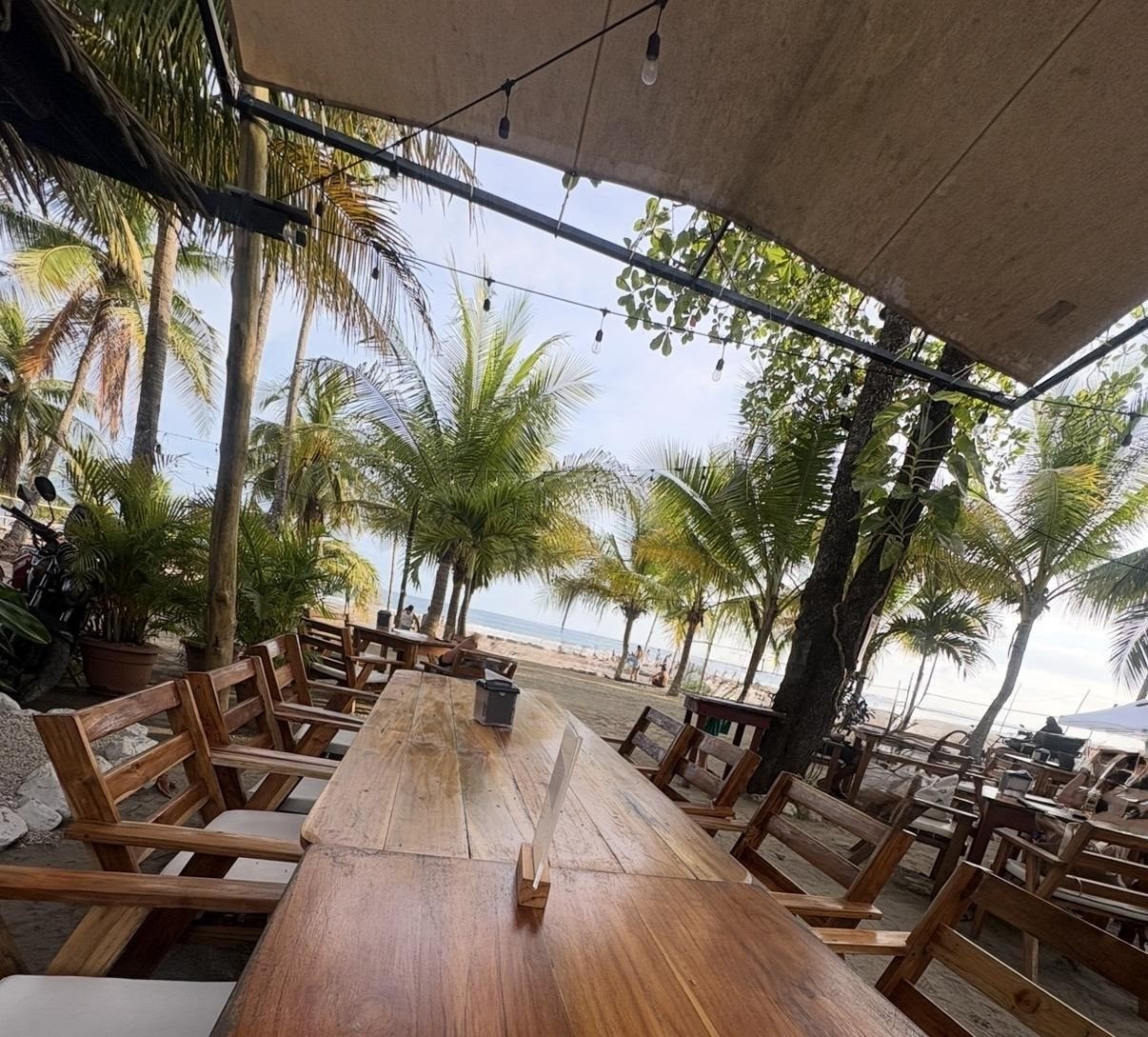
Graduation night took place at a beachfront restaurant, the ocean crashing loudly nearby, beautiful and mesmerizing, but the calm didn’t last. Teresa, drunk and always needing to be the loudest in the room, seized the moment to launch into a drunken tirade by weaponizing the group’s differences in politics. Out of nowhere she made unfounded accusations of racism toward Roman and urged others to join in. Then Teresa turned her rage on me, her true target.
She called me a Black w**** and a Black s***, casually dropping the n-word repeatedly, as if her proximity to Blackness gave her license to speak with such violent, racist language. Everyone that was in our party at the restaurant had been drinking since midday so I wasn’t sure if in their drunken stupor they were choosing to ignore what was happening right in their faces or if they just didn’t want to get involved in the drama of it all.
Meanwhile, I couldn’t help but notice how stark Teresa’s hypocrisy was. A woman who prided herself on being progressive, and who was the mother of a half-Black daughter, had accused Roman of unfounded racism while simultaneously engaging in racism. She took it upon herself not only to police my sexuality but also to expose her anti-Blackness openly and without restraint. As easily as the words came to her, I couldn’t help but wonder… had she ever spoken to her half-Black daughter this way? As I had learned even before this incident, proximity to Blackness, even through motherhood, does not automatically negate racism.
I was not humiliated for myself, as Teresa had hoped, instead, I was humiliated for her. Earlier that day, after we had taken the final exams, she had one of her infamous outbursts in which she argued with an instructor who was trying to help her with the exam. When the instructor allegedly suggested that she seek help for her poor emotional regulation, she stormed out of the classroom and ran to the bathroom. I walked in on her crying, and in a rare moment of vulnerability, she confessed that she knew she needed help. Remembering all of that during dinner, I realized Teresa’s antics were never about Roman, politics, or even me. They were about her insecurities, her jealousy, the poor choices she had made in life, and her lack of control.
Later that night, the women in the program left for a bar. I was hesitant to go but didn’t want to let Teresa ruin my evening. We had all been planning to go dancing at a club afterward since it was graduation night. Teresa, still drunkenly belligerent, continued to passive-aggressively throw sexist and racist insults at me—loudly telling them to the others but never directly to me. She grew more and more frustrated by my refusal to feed into her drama. The others, shaken and unwilling to challenge her, kept their heads down. Their silence felt deeper than discomfort. They had heard the abusive language, seen me singled out and targeted and yet said nothing.
Teresa had spent the entirety of the program unable to admit the truth: that she was jealous of me and felt threatened by my presence. Instead, she did the next best thing and in doing so, accomplished exactly what she had set out to do since I’d confided to her about the fling: dehumanize me in the eyes of everyone else through racist and sexist language and by weaponizing my brief fling with Roman.
Once I had been dehumanized, my safety was no longer something the group thought I deserved. Their silence might as well have been an endorsement. Instead of standing up for what was right these self proclaimed feminists chose instead to protect themselves from becoming Teresa’s next target. At that moment, I decided to protect myself from the collective harm of a mob mentality. I left.
At the beginning of the program, we all made one rule: no one walks home alone, due to the potential danger it posed. We would always go in groups or pairs, or have someone we knew drop us off on a motorcycle since it was nearly impossible, in such a small town, to casually call a taxi. I had spent countless nights staying out later than I wanted just to walk others home so they wouldn’t be alone. The danger wasn’t hypothetical. Street harassment of women was common knowledge in town, and less than a year earlier, a young woman had gone missing after leaving a bar and walking alone along the beach toward her home.
As I stood to leave the bar, one of the girls asked, “Isn’t anyone going to walk with her?” Her question felt less like concern and more like a request for permission—too cowardly to act without Teresa’s approval. Teresa sneered, “Who cares? She’s just going to go hang out with Roman like she does every day, according to Carla.” She leaned into me and said, “I’m his future.”
Her words only confirmed what I already knew: Teresa had a pathetic unrequited crush on Roman. It was all so high school that it would have been hilarious if the situation hadn’t presented the very real danger that I had been placed in. In the first few days of the program, Teresa had repeatedly inquired about Roman’s relationship status, commenting on how she thought he was handsome and how impressed she was by his career. She wondered out loud if being older than him was weird, but later claimed it didn’t matter, as she wasn’t interested in dating a younger man—and so no one thought anything of it.
I represented everything Teresa once was and longed to be again. I represented freedom and sexual autonomy, the life she claimed to have willingly given up. I represented youth, while she was in visible distress about aging. To her, I was the Black “whore,” the Black “slut,” someone to be dismissed as less than, while she positioned herself as the non-Black Latina who was “his future.” She had been competing with me the entire time, convinced she ranked higher on the desirability hierarchy, and it drove her insane to watch that worldview dismantle in real time. My Blackness and my autonomy had become a threat.
I left the bar. At that point, walking home alone in the dead of night in a foreign country with full knowledge of that missing girl in the back of my mind felt safer than staying with a group of women who positioned themselves as feminist champions, yet proved themselves to be one of the most dangerous types of people: bystanders who prioritized their own social standing over another woman’s safety, bystanders who were grossly complicit in enabling misogynoir and the endangerment of a fellow woman. The moment felt extra ironic considering that Teresa herself was so worried at even the thought of possibly having to walk home alone that she’d rented a bike from her host family for twenty-five dollars a week. She complained about the price, but said the peace of mind was worth it. I thought maybe I should have rented a bike too.
As I walked off the main road, men catcalled me, as expected. That missing girl was in the back of my mind the whole time. I’d heard people in the program essentially victim blaming her saying things like, “that’s why you never walk home alone.” Now walking alone to my accommodation I couldn’t help but wonder if maybe she’d been in a similar situation as the one I was in.
I wondered if she’d also been with people that she’d thought were friends but who turned out to be worse than enemies. One car slowed, the driver motioning for me to get in. I wrapped my arms around myself, nervous, my heart pounding. Another car approached, and just as I prepared to cross the street, I heard a familiar voice call my name. Like a moment from a movie, it was Roman. At first, I thought how crazy it was that he had pulled up right when I could use a ride but then I remembered how in a town this small you just ran into everyone you knew all the time.
Roman had been on his way back to his place and happened to pass by where we were. I hopped into his car, grateful and relieved, and spent the rest of the evening with him at his place, listening to music and going over everything that had happened with Teresa and the others. In trying to ruin my evening, Teresa had only made it better. Roman and I laughed about how she was probably at the club obsessing over me to anyone who would listen, and how she would have lost her mind if she’d known I had ended up spending the evening with him. We laughed at her immature behavior and her claims that she was his “future.”
Later, he told me about what had happened at dinner. Teresa hadn’t paid her bill, telling the server privately that Roman would cover it. He was understandably upset and initially refused, but he felt sorry for the waiter, who explained that without payment he would have to cover it out of the small tips he’d made. So Roman paid for her meal. That one small incident said everything about Teresa’s lack of character. She was nothing more than an entitled user, a manipulator, with no respect for anyone including herself.
That night clarified everything…respectability politics had failed me. Being polite, agreeable, and “good” offered no protection against Teresa’s jealousy, misogynoir, or the mob mentality that had placed me in danger. Women who claimed feminist values while harboring wild hypocrisy had decided that my choices, my autonomy, and someone else’s jealousy toward me were reason enough to dismiss me and place me in a potentially dangerous situation. For Black women, owning our autonomy and our sexuality is often policed, judged, and weaponized as justification for harm. It quickly becomes punishment when we refuse to make choices that make others comfortable. Black women are expected to be obedient and compliant even when it costs us our safety.
In the days following graduation, people hung around town for the weekend or traveled to teach elsewhere. I completely removed myself from the group, blocking numbers, leaving group chats, and spending time with new people. Later that week, I left Costa Rica having learned that harm does not always come from obvious enemies. Respectability politics will never protect me, and misogynoir does not disappear simply because groups claim to be progressive.
What protected me was claiming my autonomy and my right to make my own decisions without seeking approval. That night, I left the bar when I felt in danger with people who should have felt safe. Ironically, I’d felt safer walking alone through the streets of a foreign country than I ever had with them. Choosing myself and forgoing resectability politics was worth it.