
Success is not how high you climb. It is how deeply you impact.”
She has seen success from the inside and learned that titles alone are not enough. In this interview, she shares her journey through leadership, purpose, emotional intelligence, and the deeper meaning of fulfilment.
Can you tell us a little about yourself and the work you do?
I am an entrepreneur, public speaker, facilitator, teacher, mentor, and coach, although I find it fascinating how quickly we define ourselves by roles. If there is one thing I deeply believe in, it is that we are far more than any title we carry. My work revolves around empowerment. I help people recognize that many of the limitations they believe in are learned, not inherent. We are not fixed beings. We are dynamic. At any moment in time, we have the freedom to change, to redefine ourselves, and to step into a new version of who we are.
Professionally, I specialize in systemic constellation work, a modality developed in Germany in the 1970s. It is a profound and transformative approach that looks beyond the individual and into the larger system they belong to: family, ancestry, relationships, work, collective dynamics. I am also trained in hypnotherapy, life coaching, and trauma-informed facilitation, and I have studied psychology privately from a very young age. Yet nothing has impacted me as deeply as systemic constellations.
Today, I run my own company, lead workshops and seminars internationally, and train others in this modality. My home base is Dubai, where I am also developing my newest project: S.O.L. The School of Life. It is my vision to create a new model of education that teaches not only professional skills, but the deeper principles of life, consciousness, and systemic awareness. I believe our current education systems are incomplete. We teach information, but not integration.
Ultimately, my work is about freedom and empowerment. Freedom from inherited burdens. Freedom from unconscious patterns, to help people “unlearn” what we have learned, and find your own truth. And with this the freedom to consciously create a new future
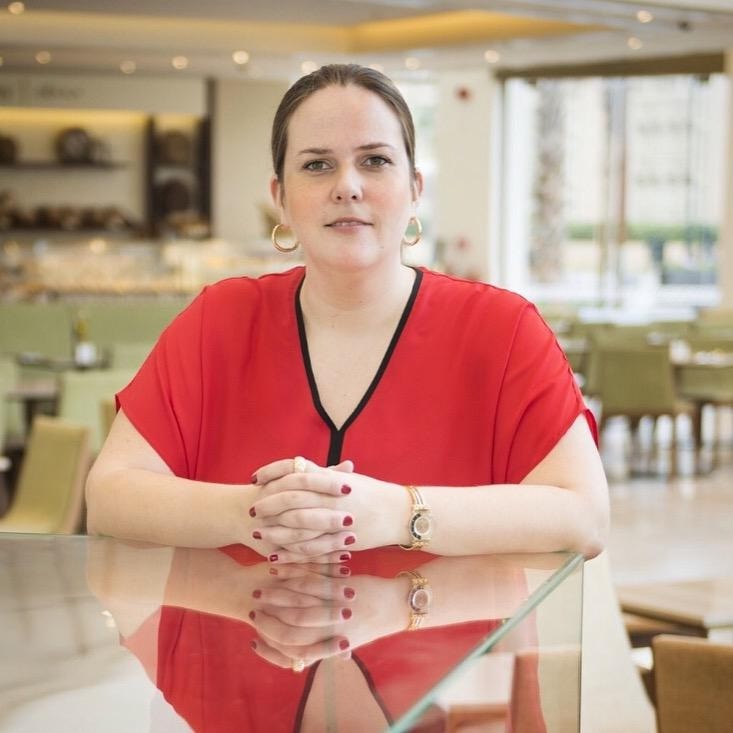
You spent many years in senior executive leadership. What shaped you most during that chapter of your career?
I genuinely loved that chapter of my life. I loved the responsibility, the pressure, the scale. I look back with immense pride at what we built as a team: transforming a local Arabic heritage brand into a global success story. To this day, Bateel, remains the strongest privately owned Arabic brand worldwide. That legacy lives on, and that means a lot to me.
What shaped me most during those years was not only the business growth, it was the realization that corporations become toxic when we forget that they are built by human beings for human beings. In most corporate environments, we are taught to leave our emotions at the door. “Keep it professional.” “Keep it rational.” But this is a fundamental misunderstanding of what makes us human. We are not productive despite our emotions, we are powerful because of them.
Every organization has a body, a mind, and a spirit. And so does every employee. When companies ignore one of those dimensions, an imbalance begins. Throughout my leadership journey whether in multimedia, IT, or later in luxury retail and F&B, I was always searching for the deeper “why.” An early NLP training shaped me profoundly. It taught me that intrinsic motivation cannot come from the product itself; it comes from the meaning behind it.
Even when we were selling something as simple as date fruits – we were not selling dates. We were offering culture, hospitality, generosity, a piece of Arab heritage. We were creating an experience rooted in love and tradition. That meaning mattered. And people felt it. But to create that externally, it had to exist internally.
I treated my employees like family, not in words, but in structure. Fair pay. Fair hours. No exploitation. A transparent commission system. Training opportunities, including NLP programs, to empower them personally and professionally. We had a team of over 350 people with an employee turnover rate below three percent, almost unheard of in our industry. That spoke the language of loyalty, joy and belonging.
When you truly care for your people, they go the extra mile, not because they have to, but because they want to. And because you as a true leader, walk the extra mile for them too. The most important lesson from that chapter was this: sustainable success is never built on numbers alone. It is built on humans who feel seen, valued, and respected.
No matter how advanced technology becomes, business will always be human at its core. And when we remember that, companies become not only profitable, but powerful.
What was your experience as a woman leading at a high level in a traditionally male-dominated environment?
Stepping into senior leadership at a young age was both empowering and confronting. I became General Manager of Retail at 26, leading teams of experienced professionals, many of whom were older men. In hindsight, I believe my age was often more triggering than my gender.
When a young woman steps into authority, it challenges existing hierarchies. And in environments where leaders are not trained to understand their own emotional triggers, tension can arise quickly. What I observed repeatedly is that conflict is rarely about the visible situation it is about what that situation awakens internally.
Leadership positions often come without emotional training. We are taught strategy, numbers, operations, but not self-awareness. And when someone feels threatened, overlooked, or displaced, that reaction belongs to them. It is not caused by the other person; it is activated within. There were moments that were challenging. There were attempts to undermine me. There were environments where I had to prove myself more rigorously than a male counterpart might have. When I later took responsibility for retail operations in Saudi Arabia, it was initially a cultural shock for some men to report to a young woman. I had to establish authority quickly, sometimes through competence, sometimes through compassion, and sometimes through firmness.
Looking back, I recognize that I carried a very strong inner masculine energy.
I was fierce, driven, almost untouchable in my determination. That strength protected me and allowed me to navigate competitive dynamics with clarity and precision. My early NLP training and background in psychology became invaluable tools.
I understood how to communicate strategically, how to de-escalate tension, how to bring people on board rather than push them aside. Ultimately, performance speaks. Results speak. Knowledge speaks. And I earned the respect of my teams. But I would be dishonest if I said it came without cost.
I worked twelve-hour days, weekends included. I operated at a machine-like level of output. I am proud of what I achieved, yet I also recognize how exhausting it was to constantly prove one’s capability. So being in my “masculine” energy went on to the expense of my feminine side. I became the leader, the boss, the strong one, it’s hard for any man to find himself placed next to such a women. So the expense was on my personal life.
Today, I see that true leadership must include emotional literacy. Leaders should not be allowed into high-responsibility roles without coaching or self-awareness training. Understanding your triggers, your wounds, your ego responses, this is not optional. It is essential.
Being a woman in that environment shaped me profoundly. It sharpened me. It strengthened me. And it taught me that real authority does not come from dominance, it comes from inner alignment.
Contributing to the global growth of an Arabic heritage brand is significant. What responsibility did you feel while representing that culture internationally?
It was a profound honor to represent Bateel – a brand so deeply rooted in Arabic heritage on an international stage. When I joined the company, it was already beautifully positioned, but still in a strong growth phase. As we expanded globally, I became increasingly aware that we were not simply exporting a product, we were carrying culture.
In many parts of the world, the depth of Arab hospitality, craftsmanship, and generosity is not fully understood. Through our work, we had the opportunity to express that heritage in a tangible way. Every detail mattered, from hand-painted wooden boxes to the careful sourcing of organic ingredients. Nothing was accidental. It was a reflection of pride, respect, and tradition.
The brand stood for more than luxury. It stood for care, for the land, for quality, for people. Even the ownership embodied this ethos through their conscious lifestyle choices and long-term thinking. That alignment made it easy to lead with authenticity. I felt a deep responsibility to ensure that what we presented internationally was not a stereotype, but a true expression of the region’s warmth, refinement, and generosity. We were offering an experience, one that told a story of heritage, craftsmanship, and attention to detail.
I was also fortunate to receive immense trust from the founders and leadership. That trust empowered me to operate with confidence and integrity. And I firmly believe that this is where leadership begins, at the top. When trust and values are modeled at the highest level, they cascade naturally throughout the organization.
Representing that culture globally was not just a business expansion. It was stewardship. And Bateel till today is deeply engrained in my heart. The gifts I make to people, the cakes I buy for celebration, the brand of my choice is and always will be Bateel. That’s loyalty you can only create from authenticity.
Was there a specific moment when you began redefining success for yourself beyond titles and revenue?
Like many ambitious young professionals, I once had a very clear list of what success should look like, title, office, car, home. I was driven, focused, and determined. I believed in myself deeply, and through continuous personal development, I achieved those goals quickly. One by one, I checked them off. The ocean-view office – done! The beautiful apartment – done! The fancy car – done! Etc. etc. And yet, at some point, I felt an unexpected emptiness.
On paper, everything was there. Internally, something was missing. That was the beginning of a deeper inquiry. I realized that success measured purely through revenue or status is incomplete. You can exceed your sales targets by 20% or 100% and still feel unfulfilled. True success, I discovered, is fulfillment, and fulfillment cannot be purchased or promoted into existence.
And yes, there was one moment in particular that crystallized this for me: After hosting a team celebration, a situation arose where I had to step in to ensure someone was disciplined. As a leader, I felt responsible for their safety. The situation escalated unexpectedly, and what moved me most was what happened next: my entire team instinctively stepped in to protect and support me. Not out of obligation. Not out of fear. But out of loyalty and care. In that moment, I understood something profound.
They stood up for me because they felt valued. Because they knew I genuinely cared for them. The bond was not transactional, it was relational. This is true leadership. When your team is willing to stand up for you, the same way you stand up for them. Your people, are your mirror. That realization changed my definition of success forever.
Success is not how high you climb. It is how deeply you impact. It is significance. It is growth. It is knowing that the people around you feel seen and supported. From that point on, I knew I wanted to create something bigger, something that would help develop more conscious, compassionate leaders. Leaders who understand that performance and humanity are not opposites, but allies. That was the moment I began redefining success, not as accumulation, but as alignment and contribution.
What is one leadership myth you strongly disagree with?
Perfectionism.
In corporate culture, we have romanticized perfection. In job interviews, people often say, “My weakness is that I’m a perfectionist,” as if that is something admirable. But perfectionism is not strength. It is fear, beautifully dressed.
When someone feels the need to be perfect, it usually comes from a deep fear of rejection, criticism, or failure. It is often rooted in early childhood imprinting, when we learned that love or approval might be conditional. So we try to perform flawlessly to feel safe.
In leadership, perfectionism creates dangerous environments. When mistakes are not allowed, they are hidden. When they are hidden, teams start blaming instead of solving. Innovation shrinks. Creativity dies. Fear grows. Strong leadership is not about being flawless. It is about creating psychological safety.
It is about allowing mistakes, learning openly, and modeling accountability. Perfection is impossible. Growth is not.
The moment we stop worshipping perfection, we start building cultures of trust, responsibility, and real excellence.
Do you believe traditional corporate systems are truly ready to embrace emotional intelligence, or is the shift still slow?
I believe corporate systems are absolutely ready, not only philosophically, but economically. The cost of ignoring emotional intelligence has become too high.Across industries, we are witnessing increasing employee turnover, rising burnout rates, and significant mental health challenges among mid- to senior-level leaders. In regions like the UAE, where recruitment, visa processing, and training costs are substantial, frequent turnover is not just a cultural issue, it is a financial one.
When employees leave quickly, it signals something deeper than compensation dissatisfaction. It often reflects a lack of psychological safety, imbalance, and emotional awareness within the organization. For decades, corporate culture has glorified overwork. We celebrated workaholism. I myself was part of that culture for many years. But people do not live to work, they work to live. Sustainable long-term success cannot be built on chronic stress and emotional suppression.
Burnout, anxiety, and depression are increasingly common among senior executives. And this is not a weakness of individuals; it is a systems issue. When emotional intelligence is absent, tension accumulates. When tension accumulates, people disengage or collapse. At the same time, the new generations entering the workforce are no longer willing to accept outdated models. They are questioning rigid structures, excessive hours, and environments that do not honor balance. Organizations that fail to adapt will struggle to attract and retain top talent. So yes, the systems are ready, because survival now depends on it.
Emotional intelligence is no longer a “soft skill.” It is a strategic imperative.
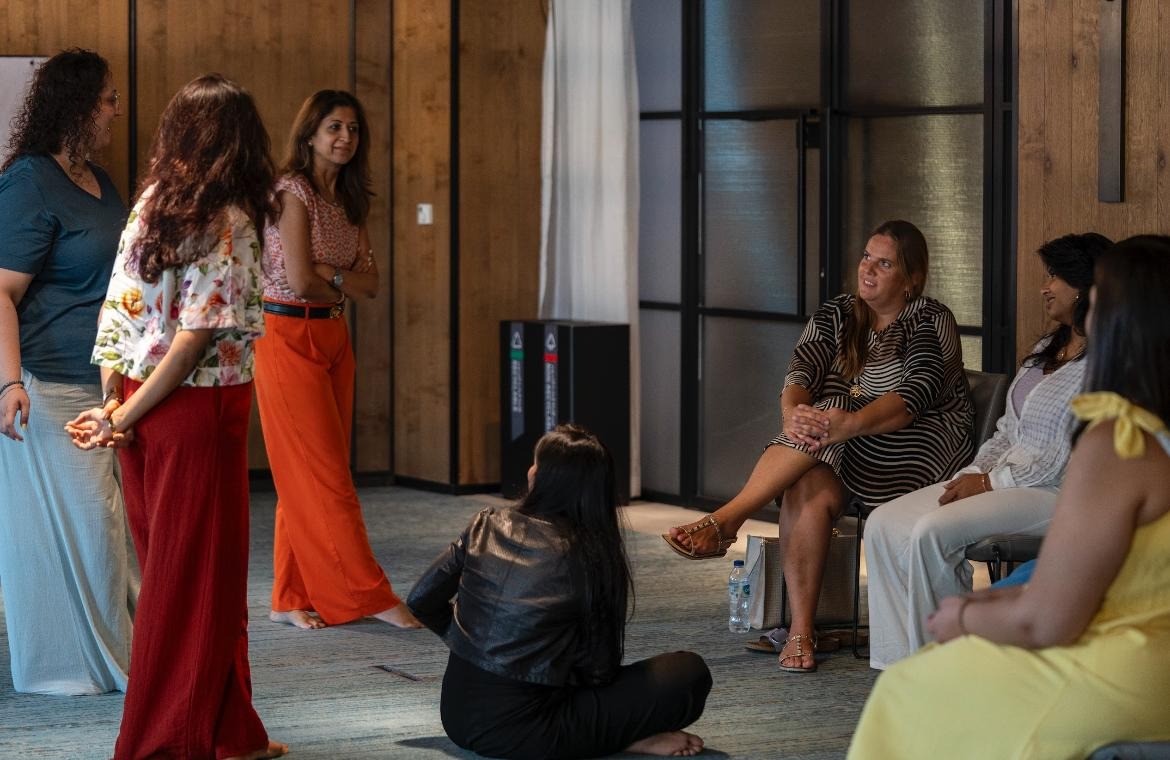
For readers who may not be familiar, how would you explain systemic constellations and their impact in simple terms?
Systemic constellations are a groundbreaking methodology developed in Germany in the 1970s by Bert Hellinger. So it has been around and proven since 55 years already.
At its core, it challenges one fundamental misconception we often make: when something is wrong, we look only at the individual. Constellations take a different approach. Instead of asking, “What is wrong with me?” we ask, “What is happening in the system I belong to that is expressing itself through me?” This is not stepping away from responsibility, to the contrary, it is looking at the big picture. What makes this method so powerful is that it goes straight to the root of an issue. Instead of analyzing a problem on the surface.
We carry not only our personal experiences, but also the imprint of generations before us: biologically, emotionally, and energetically. Research and systemic understanding suggest that up to seven generations can influence our present reality. Science proofs this now through EPI, Genetics, a field in Neuro Science, that proofs that Trauma is often inherited.
From the moment we are born, we belong to multiple systems – family, culture, organizations, relationships. And these systems operate according to certain underlying principles. When those principles are disrupted, symptoms appear, whether in the form of conflict, repeated patterns, or professional stagnation.
There are three core principles that guide this work:
First, hierarchy: acknowledging who came before us. In families, parents come first. In companies, leadership structures matter. Respecting order creates stability.
Second, balance: healthy relationships require a natural give-and-take. When imbalance persists, tension builds.Third, belonging: every person has the right to belong to their system. Exclusion, whether conscious or unconscious, creates disruption.
Constellations make these hidden dynamics visible in a very short time. By restoring order and balance within the system, individuals often experience profound shifts, sometimes instantly.
In simple terms: it is a method that moves us from blame to awareness, from isolation to connection, and from symptom to solution.
Through Constellations Dubai and S.O.L., you are building a different model of growth and education. If you could redesign leadership education from scratch, what would you remove first?
If I were to redesign leadership education from the ground up, the first thing I would remove is ego. More precisely, I would remove the belief that authority equals superiority, and that leadership is about control rather than self-mastery.
For too long, leadership has been associated with dominance, hierarchy in the unhealthy sense, and emotional suppression. We have trained leaders to be strategic and competitive, but not necessarily self-aware. I would remove the myth that emotions are weakness. Emotions are data. They are information about ourselves and our environment. A leader who cannot regulate their emotions or understand their triggers is not strong, they are reactive.
I would also remove the normalization of burnout as a badge of honor. Working endlessly, sacrificing balance, and living in constant stress has been glorified for decades. But burnout is not dedication. It is a signal that something is out of alignment.
And finally, I would remove the idea that personal development is optional.
Self-development should not be a luxury reserved for a few. It should be mandatory for anyone in a position of influence. Leadership education today focuses heavily on strategy, numbers, and competition. These are important. But they are incomplete. I would integrate training in self-awareness, nervous system regulation, communication, and systemic thinking. Leaders must understand the systems they operate in and the internal systems that operate within them.
True leadership does not begin with authority. It begins with inner alignment.

What is something people often misunderstand about conscious leadership?
One of the biggest misunderstandings about conscious leadership is that it is “soft.” People sometimes assume that if a leader is emotionally aware, compassionate, or values balance, they must be weak or less decisive. That could not be further from the truth.
Conscious leadership is not about being nice all the time. It is not about avoiding difficult conversations or lowering standards. In fact, it requires far more courage than traditional leadership. A conscious leader takes responsibility, not only for results, but for their own internal state. They do not blame their team when they are triggered. They do not dominate to feel powerful. They regulate themselves first, and then they lead. That is strength.
It is much easier to react impulsively than to respond consciously. It is easier to control than to communicate. It is easier to suppress emotions than to understand them. Conscious leadership demands clarity, boundaries, and self-mastery. It does not eliminate hierarchy or performance expectations. It elevates them by rooting them in awareness and alignment.
Another common misunderstanding is that conscious leadership slows down business. In reality, it increases efficiency. When teams feel psychologically safe, when communication is transparent, and when ego battles are minimized, energy is no longer wasted on internal friction and competition, but team work. Following a mutual goal, which is ultimately what companies have been created for.
You have also been deeply involved in animal welfare for years. How does compassion influence the way you lead and make decisions?
Compassion allows me to see the bigger picture, to see the human being behind the behavior. My work in animal welfare taught me something fundamental: every reaction has a story behind it. Animals do not misbehave randomly. Humans don’t either. There is always a reason, a wound, a fear, or a misunderstanding underneath the surface. But compassion does not mean lowering standards.
In business, performance still matters. Targets still matter. Values still matter. Accountability still matters. Compassion does not cancel responsibility, it deepens it. What changes is how you handle mistakes, conflict, and pressure. When compassion is present, you don’t immediately judge. You inquire. You communicate. You create space for correction rather than humiliation. You address issues directly, but without dehumanizing the person.
Compassion creates loyalty. It creates trust. And trust is one of the strongest currencies in leadership. My involvement in animal welfare also reinforced my belief in stewardship, whether toward animals, people, or organizations. Leadership is not ownership. It is responsibility. You are temporarily entrusted with lives, careers, and impact. That awareness changes how you make decisions. When you lead with compassion, you make long-term decisions instead of short-term ego choices. I am a very compassionate, and tough boss, I make clear what deliverables are and if you don’t perform you will have to face the consequence, but we are doing this together all the way. I do my best for my employees to succeed, so I expect them to do their best too.
You can be firm and kind at the same time. You can demand excellence and offer understanding. You can hold boundaries without losing humanity.
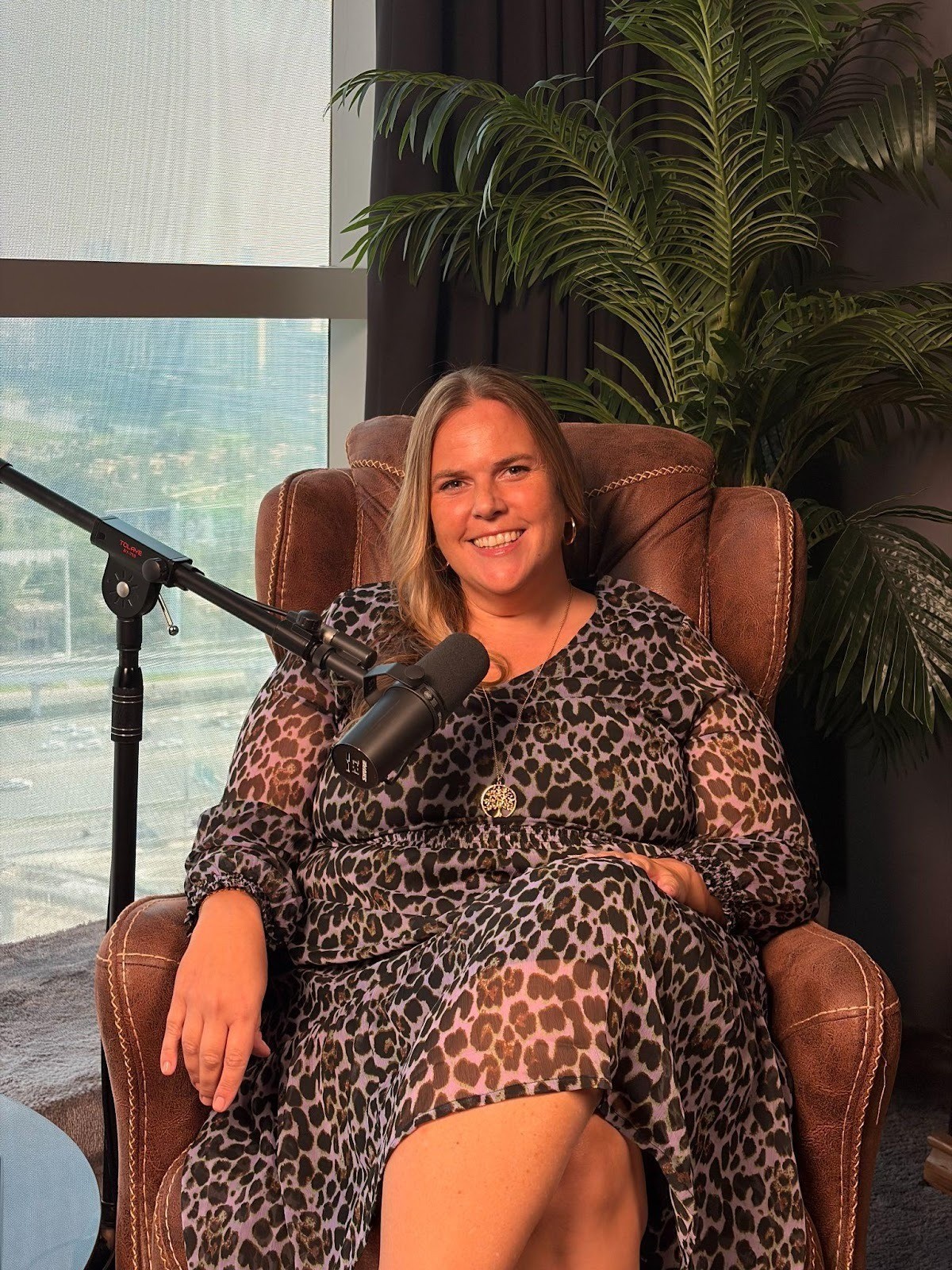
What advice would you give ambitious women who look successful on paper but feel unfulfilled inside?
I would advise ambitions women, to be clear about their Why! Why are you doing what you are doing?
Many of us grow up with a checklist of what success should look like, title, income, position, visibility. And we chase it with discipline and ambition. But if your external success is not aligned with your internal truth, fulfillment will always feel just out of reach. If you feel unfulfilled, it is often because you are not listening to your deeper calling. You are following expectations, not vocation.
You have to find your sweet spot. What makes you feel alive in the morning? What are you naturally passionate about? What are you good at? Where is there demand in the world for that gift? When those elements meet – what the Japanese call ikigai – work stops feeling like sacrifice and starts feeling like expression.
There is a widespread belief that work is not supposed to be enjoyable, that it is something we endure for financial security. I strongly disagree. Life is too short to spend the majority of your time disconnected from your passion.
Only when you love what you do can you truly excel at it. If you work against your nature, no amount of hours or discipline will create genuine fulfillment.
So my advice is this: follow your heart as courageously as you can. Keep learning. Keep self-inquiring. Keep evolving. We are not static beings. We grow, we change, we discover new layers of ourselves over time. Be in relationship with yourself. Be curious about who you are becoming. Success that feels empty is not failure, it is feedback. It is an invitation to realign.
And when you align your ambition with your inner truth, fulfillment and success follow naturally.