

Exile, limits, and cultural barriers couldn’t stop her. Through dance, she heals, creates, and tells stories that move the world. Read about her journey of struggle, growth, and fearless expression.
Can you tell us a little about yourself and your journey into the arts?
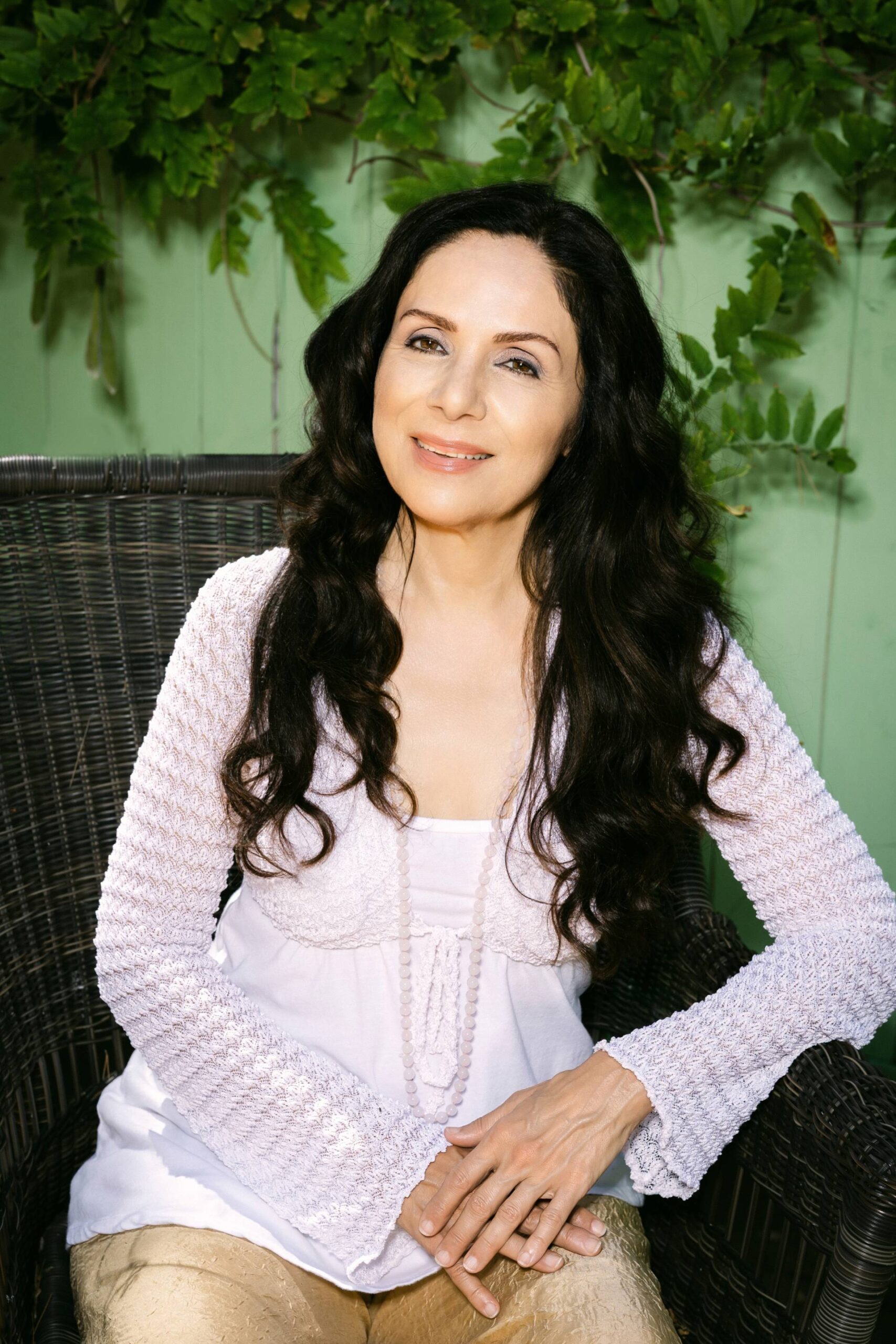
I was born in Iran and now live in California. My work spans multiple disciplines: I’m a spiritual embodiment teacher, dancer and choreographer, author and activist, acupuncturist and herbalist, and the founder of Dance of Oneness® a Divine Feminine lineage devoted to healing, embodied spirituality, and transformation. I have an MFA in Dance and a Master’s degree in Chinese Medicine.
My journey into the arts began long before I had language for it. As a little girl in Iran, I would turn and dance alone in my room, entering states of euphoria and bliss. I didn’t know it then, but I was entering the same ecstatic current that has moved the great Sufi mystics for centuries, my first taste of the body as a channel for the sacred.
Choosing dance as a profession was not easy. In a culture dominated by Islamic restrictions that condemn dance, I encountered resistance both externally and internally. That tension taught me how opposition lives not only in society, but in the psyche. Learning to meet that force without collapsing became part of my training, and it gave me deep compassion for anyone trying to claim their creative truth in the face of judgment or fear.
When I was forced to leave my homeland as a teenager, I carried both beauty and pain in my body: the beauty of an ancient culture rooted in spirit and poetry, and the pain of oppression, displacement, and loss. My path became one of weaving these threads together through movement.
Throughout this journey, the Divine Feminine has been my guiding force, the living current of unconditional love, compassion, and fierce grace. She has shaped not only how I move, but why I move: to dance for freedom, and to support others in freeing themselves from whatever constrains their bodies, voices, or souls.
What was it like growing up in the world of Iranian cinema with your father, Parviz Sayyad?
Growing up with my father, Parviz Sayyad, meant that art was never separate from life. I spent much of my childhood behind the scenes of his films and immersed in his theater productions, absorbing his pioneering creative spirit
up close. As a child, I deeply idolized him not only because of his talent, but because of the integrity with which he lived his work.
To grow up in that environment was to breathe creativity as a daily practice. Artists were everywhere, actors, musicians, writers, designers, poets, technicians, each inhabiting the world with a distinct rhythm and way of seeing. Watching them work taught me early on that creativity is embodied. It lives in gesture, timing, tone, breath, and the courage to be fully present. That world gave me an intuitive education in somatic intelligence that later became foundational to my own path.
What influenced me just as deeply was my father’s unwavering commitment to truth. Witnessing him continue to create and speak with integrity, despite exile and profound loss, taught me that art is not merely entertainment, it is
an ethical act and a way of preserving dignity and humanity. Through him, I learned that truth has a body, and that staying aligned with it requires courage and devotion.
The artistic world I grew up in offered me a sense of inner Freedom permission to let my mind wander, to ask questions, to improvise, to play. It showed me a way of inhabiting my body that wasn’t confined by Islamic restrictions and patriarchal expectations about how women should move or behave. In this world, aliveness was not something to hide, it was something to honor. That early education gave me an inner compass: a visceral understanding that the body could be a sacred vessel for truth and that art, at its best, is a way of living that truth out loud.
How did your father’s work and his characters, like Samad, influence your own perspective on storytelling?
My father’s work has shaped my understanding of storytelling as something far deeper than plot or performance. Through his characters especially Samad, I experience storytelling as both deeply accessible and profoundly layered.
What continually strikes me is the breadth of his audience. His work speaks to intellectuals and to people who are illiterate, to artists and to people from all walks of life. That range isn’t accidental, it comes from his compassionate way of seeing people. He has an extraordinary ability to recognize the humanity in even the most flawed characters and to invite audiences to look beyond surface appearances, social masks, and moral judgments.
Samad, in particular, is not a conventional hero. He is awkward, vulnerable, sometimes ridiculous and precisely because of that, deeply human. Through humor, my father opens doors that seriousness alone never could. He shows that laughter disarms defenses, allowing truth to enter gently but unmistakably. Watching audiences laugh, recognize themselves, and then quietly reflect has taught me that humor is often the most direct path to truth.
Equally influential is my father’s love of life in all its dimensions its beauty and joy, as well as its sorrow, injustice, and pain. His work does not deny suffering, yet it refuses cynicism. He continues to create with integrity and generosity of spirit, guided by a deep commitment to truth and to the dignity of the human experience. That living example shows me that storytelling is an ethical act: a way of honoring dignity and preserving humanity.
In my own work, I carry these lessons into the realm of movement. While my medium is the body, I approach storytelling in a similar way through compassion, honesty, humor, and a willingness to meet the full complexity of being human. Like my father, I am less interested in perfection than in presence, and in stories that help people see themselves and one another more truthfully.
How did your family’s experiences of exile shape your understanding of art and culture?
Exile taught me resilience in the most concrete ways: how to become self-sufficient in an unfamiliar world, how to rebuild identity and community, and how to keep going when your roots have been pulled from the soil. As painful as it was to leave my homeland, it also taught me to find my true home within myself to carry what I love across borders without losing it. That experience has fundamentally shaped how I understand culture: not as something fixed to a place, but as something living that resides in the body, memory, and imagination.
Exile also taught me how to hold polarities. I learned to live with the grief of separation from my country and loved ones, and the anger at the ongoing atrocities committed by those who seized power in Iran, alongside the simple, profound joy of being alive and the gratitude of having basic freedoms in a new country. That capacity to hold complexity deeply informs my approach to art. I’m drawn to cultural expressions that can contain contradiction beauty and grief, tenderness and rage without collapsing into ideology or sentimentality.
Experiencing exile has also given me a deep compassion for anyone who feels cut off, whether from their homeland, their lineage, or their own essence. In my work, I see art and embodied practice as bridges: ways of restoring continuity where rupture has occurred. That sense of inner “displacement” is something I recognize in many people, and it’s part of what fuels my devotion to creating art and practices that help people come home to themselves and to one another.
What inspired you to explore storytelling through movement rather than film?
I was actually very drawn to filmmaking early on. Growing up around cinema and theater, it felt like a natural path, and I was fascinated by how film shapes narrative and memory. But quite quickly, that interest gave way to dance, because movement offered something I couldn’t find anywhere else: immediacy.
Dance happens in the moment. It is alive, ephemeral, and unrepeatable. There is no screen, no mediation, no distance between the expression and the witness. The body becomes both the storyteller and the story itself. That directness is essential to me, it allows truth to move before the mind can edit it.
Movement also connects me directly to spirit. Dance is love made manifest; it is the movement of spirit in the body. And because dance is inherently abstract, it carries a rare freedom: as an artist, I am not obligated to define meaning or deliver a fixed narrative. Movement leaves space for mystery, interpretation, and personal resonance. Each body receives it differently, and that openness feels deeply respectful of the inner life of the viewer.
Dance bypasses language, culture, and education, reaching people at the level of sensation and presence. Where film often asks us to observe, dance invites us to participate to feel, to listen, and to remember what the body already knows.
So while film remains deeply meaningful to me, dance is my chosen language because of its immediacy, honesty, and spiritual intimacy. It unfolds in real time, in shared space, asking both the mover and the witness to be fully present. This exchange is where storytelling feels most true to me.
Can you explain the idea behind Dance of Oneness® and what it means to you personally?
Dance of Oneness® is a holistic path rooted in Divine Feminine wisdom, weaving together three interrelated streams: dance and movement practice, wisdom teachings, and healing.
Movement is the foundation. Through dance, we ground ourselves in the body and awaken presence, vitality, and freedom. The body is not something to transcend or discipline into submission; it is a sacred instrument of knowing. When we move with awareness, the body becomes a doorway revealing truth, releasing held stories, and restoring a sense of aliveness and agency.
The wisdom stream connects us to ancient spiritual lineages rooted in the Divine Feminine, and to mystics, especially Rumi, whose words are living transmissions of divine love. For me, these teachings are not abstract philosophy; they are embodied guidance that reminds us devotion is lived through the body, breath, and daily action.
The healing stream draws from Chinese Medicine, energy practices, and somatic awareness. It restores balance to body, heart, mind, and soul, honoring the body’s innate intelligence and its capacity to regulate, integrate, and renew.
On a personal level, Dance of Oneness® is how I have learned to reconcile polarities East and West, exile and belonging, discipline and surrender, grief and joy. It has revealed to me the immense liberating power of dance, especially for women. This is the aim of Dance of Oneness® and what I hope for people: the liberation of their body and soul through an integrated synthesis of movement, wisdom, and healing.
For over twenty years, I have performed and taught this work Internationally everywhere except my homeland, where women’s dancing has been banned in public since the 1979 Islamic Revolution. I know this will change very soon. Until then, my work continues as both an offering and a prayer: that what has been silenced can once again move freely in the world.
How do you balance honoring Persian artistic traditions while creating something new and modern?
While the term Persian is often used broadly, Persians are one of several Iranian peoples, and it is more accurate and important to me to speak of Iranian artistic traditions.
I hold this balance through devotion and discernment. My life has been shaped by deep roots in Iranian culture as well as the experience of exile, living in different countries and translating my inner world across cultures. In that sense, I’ve come to see my role as a kind of cultural ambassador: to honor the beauty and depth of Iranian artistic and mystical traditions while also revealing their universality and relevance for people living today. Iranian culture has offered extraordinary gifts to the world, especially through poetry, music, art and the mystical understanding of love and I feel called to help those gifts be seen, felt, and received in ways that are meaningful now.
At the same time, I’m very clear about what it means to “honor tradition.” For me, it isn’t about preserving a form as a museum piece; it’s about preserving its spiritual essence. I stay true to the lineage by keeping the roots visible: naming the origins, honoring the cultural context, and ensuring that what I share is transmitted with integrity.
We live in a time when much that was once hidden or reserved for a few is now being opened and shared and humanity genuinely needs the great mystical traditions to help guide our evolution. Dance of Oneness® offers an entry point that doesn’t require someone to share my culture; it simply asks for sincerity, presence, and willingness. It’s essential to me to remain faithful to the tradition while opening the doorway to anyone who is called, so these teachings are received not as an exotic “other,” but as a living path one that helps people awaken love, sovereignty, and inner freedom.
As the daughter of a cultural icon, how have you navigated expectations versus your own artistic identity?
It has been both inspiring and deeply challenging. My father was and still is a cultural icon, so for a long time I was “known” before anyone truly knew me. Before the Islamic takeover of Iran, and later in exile among Iranian communities, I experienced the privilege of being associated with someone so beloved. But after the Islamic takeover, when I was living in Iran with my mother and sister, that public affection flipped into something far more painful: I went from being admired as his daughter to being officially ostracized for the very same reason.
Alongside that, public pressure were very specific cultural expectations placed on me as a young woman. Because I was academically strong, it was assumed that I would pursue a “respectable” profession medicine, law, or something similarly sanctioned. Dance, particularly for women, was not regarded as a serious or honorable path. Choosing it meant not only stepping out of my father’s shadow, but also stepping directly against deeply ingrained cultural norms about intelligence, propriety, and worth.
Those early experiences made me determined to build an identity that could not be granted or taken away by politics, public opinion, or inherited status. Over time, that determination became the foundation of my artistic path. I inherited my father’s courage and originality, but translated them into a different medium embodied art. I stepped out of the expectations placed on me and into the rigor of practice: training, creating, touring, and ultimately developing a body of work that is unmistakably my own.
In many ways, Parviz Sayyad gave me a blueprint for artistic integrity. My task has been to transform that inheritance into my own voice—one grounded in the body, in lived experience, and in a devotion to truth rather than approval.
In what ways does your work build upon or expand your family’s creative legacy?
My work builds upon my family’s creative legacy by carrying forward its underlying values. What I inherited most deeply from my father is a devotion to truth, a profound respect for human dignity, and a belief that art carries ethical responsibility. Those principles are the foundation of everything I create.
Where my work expands that legacy is through the body. I work in a medium that predates words, one that can reach across culture, class, and education. In that sense, I see my work as continuing the same inquiry into how to reveal truth, awaken conscience, and honor humanity, but through a different channel.
Another way my work extends the legacy is by making lived experience central. While my father’s work holds up a mirror to society, my work invites people into direct encounter with their own bodies and emotional landscapes. It’s less about representation and more about transmission. Rather than telling a story for an audience to observe, I create spaces where people become participants in their own unfolding.
Finally, I carry the legacy forward by bridging tradition and contemporary life. I draw from Iranian mystical and artistic lineages, but I translate them for the realities people are living now, oppression, mass killing, and atrocities on a scale that feels unimaginable and unprecedented in human history, alongside exile, fragmentation, and a deep longing for meaning. In this context, the work is not ornamental; it is essential. It offers a way to remain human, awake, and connected in the face of forces that attempt to numb, erase, and dehumanize.
In that way, the legacy does not remain fixed in time; it stays alive. My work is an offering to the present moment, rooted in lineage, but oriented toward evolution.
What challenges have you faced in bringing Persian mysticism and storytelling to a global audience?
One of the main challenges in bringing this work to a global audience is a longstanding historical misunderstanding. Much of Iranian achievement in art, philosophy, mysticism, and storytelling has been incorrectly categorized under the umbrella of “Islamic culture,” when Iranian civilization long predates Islam and carries its own distinct spiritual, poetic, and ethical lineages. Clarifying that distinction while remaining respectful and inclusive is an ongoing responsibility.
Another challenge is the political and historical weight that surrounds Iranian culture today. For many people, Iran is known primarily through headlines of oppression, mass killing, and violence, which can obscure the profound spiritual, artistic, and humanistic traditions that have endured for centuries. Holding that tension between beauty and brutality, lineage and rupture is part of the work.
There is also the challenge of depth. Iranian mysticism and storytelling are layered, symbolic, and rigorous, shaped over centuries through poetry, music, philosophy, and embodied practice. In a global culture that often seeks quick definitions or easily digestible meaning, it can be difficult to honor that depth without flattening it into inspiration alone, rather than engaging its discipline and complexity.
Finally, as a woman and as an embodied artist, I’ve navigated the challenge of expressing Iranian mysticism through the body through movement rather
than text. While this can unsettle expectations, it is also where the work becomes most alive and inclusive.
Ultimately, the challenge is also the invitation: to transmit these teachings not as cultural artifacts or borrowed symbols, but as living wisdom. My aim is not to export a tradition, but to create a bridge so people can encounter the essence of Iranian mysticism as something deeply human, relevant, and transformative in their own lives.
Looking forward, what vision or impact do you hope your work will have on both art and culture?
Over the years, my work has had a significant impact on Iranian culture by helping to legitimize dance as a serious art form. I’ve also been deeply invested in teaching people how to relate to dance not as spectacle or entertainment alone, but as a meaningful language that carries emotion, history, and truth. Central to this has been helping people experience dance as a spiritual practice where the body is the temple of the soul. That shift from dismissal or misunderstanding to presence, reverence, and receptivity has felt profoundly important.
Building on that foundation, I hope to expand this impact. In many parts of the world, dance, the body, and the feminine remain undervalued and dismissed. My vision is to contribute to a cultural reorientation in which embodied expression is recognized as an essential way of knowing one that can hold complexity, nuance, and spiritual intelligence while empowering women to honor themselves, their bodies, and their inherent wisdom.
Artistically, I hope my work continues to broaden the definition of storytelling. By emphasizing movement and lived experience, I want to challenge the idea that meaning must always be verbalized. Culturally, I hope my work serves as a bridge helping people reconnect to their bodies, to one another, and to the deeper currents of love, dignity, humanity, and belonging that transcend language and identity.
Ultimately, the impact I hope for is both intimate and far-reaching: that people feel more at home in their bodies, more capable of presence and love, and more open to forms of expression that have been historically marginalized. If my work helps restore respect for the body, for dance, and for the feminine as vital forces and helps people learn how to truly receive them then it is doing what I believe art is meant to do.