

Lilian from Berlin grew up with paintbrushes in her hands, learning from her mother. Over the years, she found her own style, guided by synesthesia, turning feelings and memories into abstract art. Her journey was full of experiments, challenges, and discoveries. In this interview, she shares how she balances control and chance to create paintings that truly move people.
Can you tell us a little about yourself and how you started painting?
I’m Lilian from Berlin, Germany and work as a fine art teacher and artist. A few years ago I developed my own technique I now use mainly in my paintings. My mother is an artist, so I grew up surrounded by brushes, colors, and all kinds of materials.
She painted and crafted with me from a very early age, and I’m pretty sure I could hold a paintbrush properly long before I knew how to hold cutlery. It wasn’t until university, though, that I truly found my way into painting. That’s when I began to explore my own visual language.
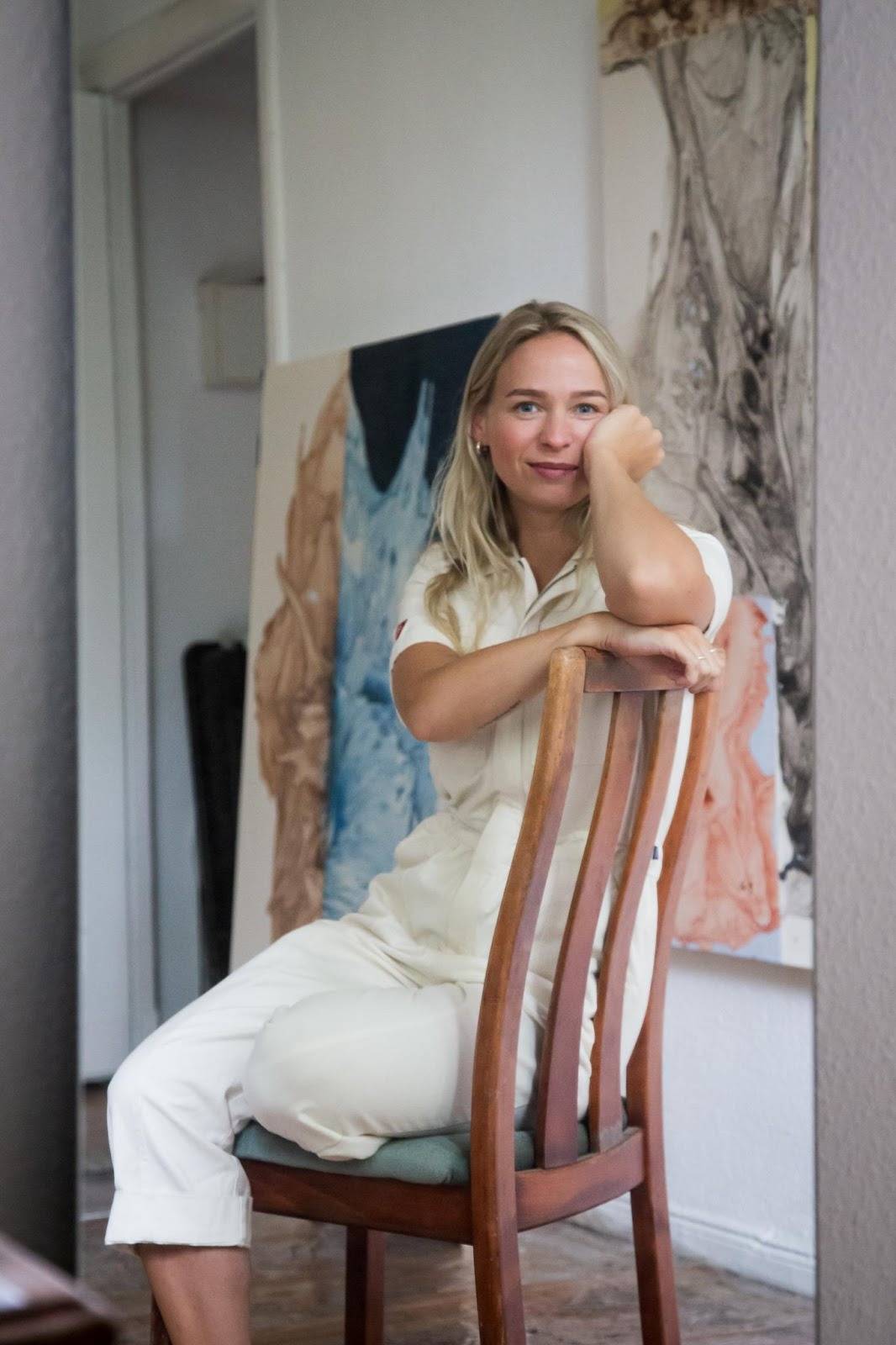 Photography by Arshia Maljaei and Natasha auf’m Kamp
How does your synesthesia influence the way you create your art?
Synesthesia is part of my everyday life. I see people, conversations, and moments as color perceptions in front of my minds eye. Because of that, it naturally becomes part of my painting process. It isn’t something I try to illustrate literally; I’m not copying what I ‘see in my mind.
Instead, synesthesia shapes the emotional atmosphere of my work. It guides how colors flow, collide, or dissolve into one another. It helps me translate the feeling of my minds eye (moving shapes and colors) into something visual. In that sense, my paintings are less about depicting synesthesia itself and more about sharing the inner logic, rhythm, and sensation it creates in me.
Your paintings mix control and letting things flow. How do you decide what to guide and what to let happen?
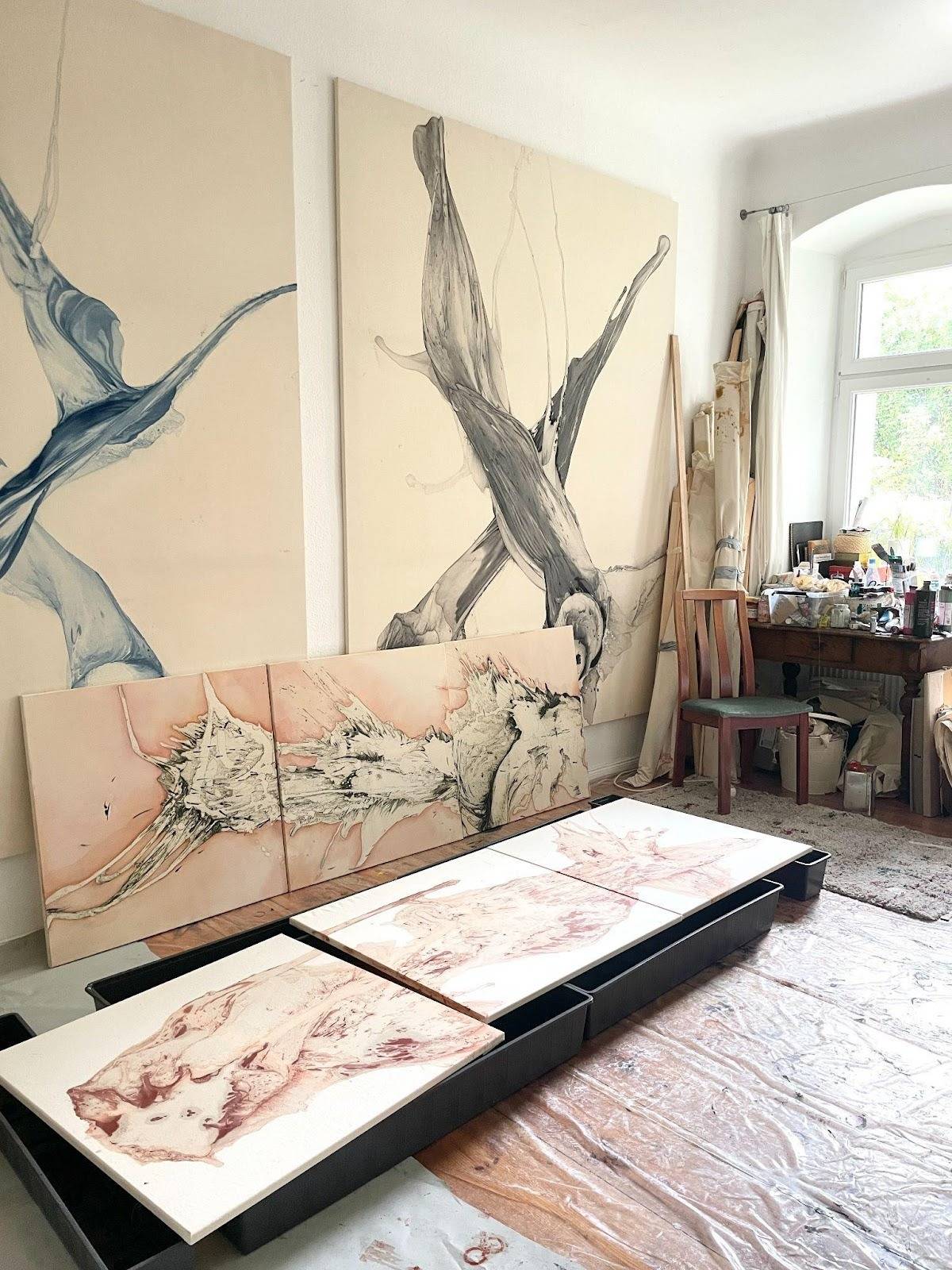
The technique I developed allows for only a limited amount of control at the beginning, because I work with a great deal of water. The paint moves in ways I can guide, but never fully command. I usually lead the process until the composition and figure feel right to me. My practice is very process-driven, so unexpected things happen constantly. I react to what appears on the surface rather than forcing it into a preconceived plan.
Even if I intend to paint, for example, a red background, the emerging figure might not resonate with that color, and then I have to rethink everything. In that way, each painting becomes a negotiation between intention and chance.
But when it comes to the color of the background or adding depth I’m completely in control. So the process starts with something I can only guide and not command to working on the piece very precisely adding contrast or outlines, depth or background with pencils or small brushes.
Why do you focus on abstract shapes instead of clear figures or objects?
I’m drawn to abstraction because it simply offers more possibilities to me. It also feels like a larger challenge than figurative painting. When you work figuratively, you always have the real world as a reference point (whether you want to paint naturalistic or not) – a vase either looks like a vase, or it doesn’t. There’s a built-in external ‚yes’ or ‚no’ and you can deal with it.
In abstraction, none of that exists. You have to find all the reference points yourself. Nothing comes from outside; there is no correct version waiting to be reached. You’re responsible for creating the logic, the rhythm, the ‚rightness’ of the piece. That process of searching for my own internal ,yes’ is what keeps abstraction endlessly compelling for me.
How do you choose colors and textures for a piece?
My technique only works on a specific type of fabric because the surface needs to be absorbent. The material itself becomes part of the process- it shapes the textures that appear. When it comes to color, I rely on a trained artistic instinct. Over time, I’ve developed a sense for when something feels harmonious or when a painting needs more contrast or tension.
What matters most to me is that the colors and textures carry a sense of fluidity and movement the same kind of inner motion that appears in my synesthetic impressions. So my choices are a combination of material necessity, intuition, and the desire to translate that inner, flowing sensation into something visual. I always aim for tension, movement and (spatial) depth.
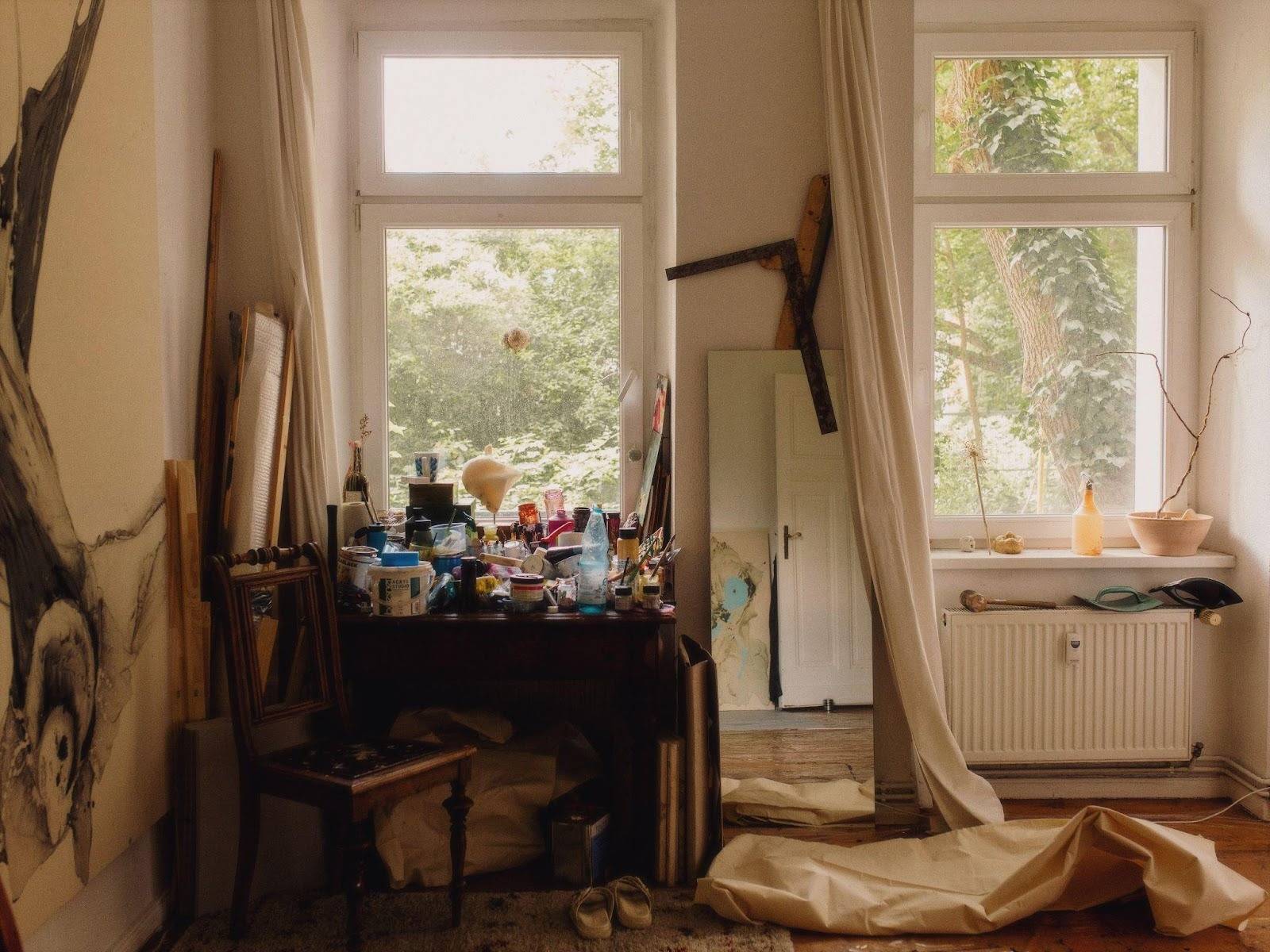 Photography by Natasha auf‘m Kamp
Are there personal memories or moments that inspire your work?
Many of my paintings are rooted in synesthetic impressions of memories. They don’t represent single, isolated moments – it’s more a merging of sensations, colors, and emotional traces that accumulate over time. So I can’t usually point to a painting and say, ‘for example: This is that one moment from last autumn! It’s more fluid than that, more layered.
What I have explored, though, is creating abstract portraits of people. Since I perceive individuals in colors, these works translate the essence or atmosphere of a person rather than their physical appearance. It’s a way of capturing how someone feels to me, rather than how they look. My creativity is always active in the background, so structured habits are more about grounding myself rather than stimulating inspiration.
Your paintings change with light and perspective. What do you hope people notice when they move around them?
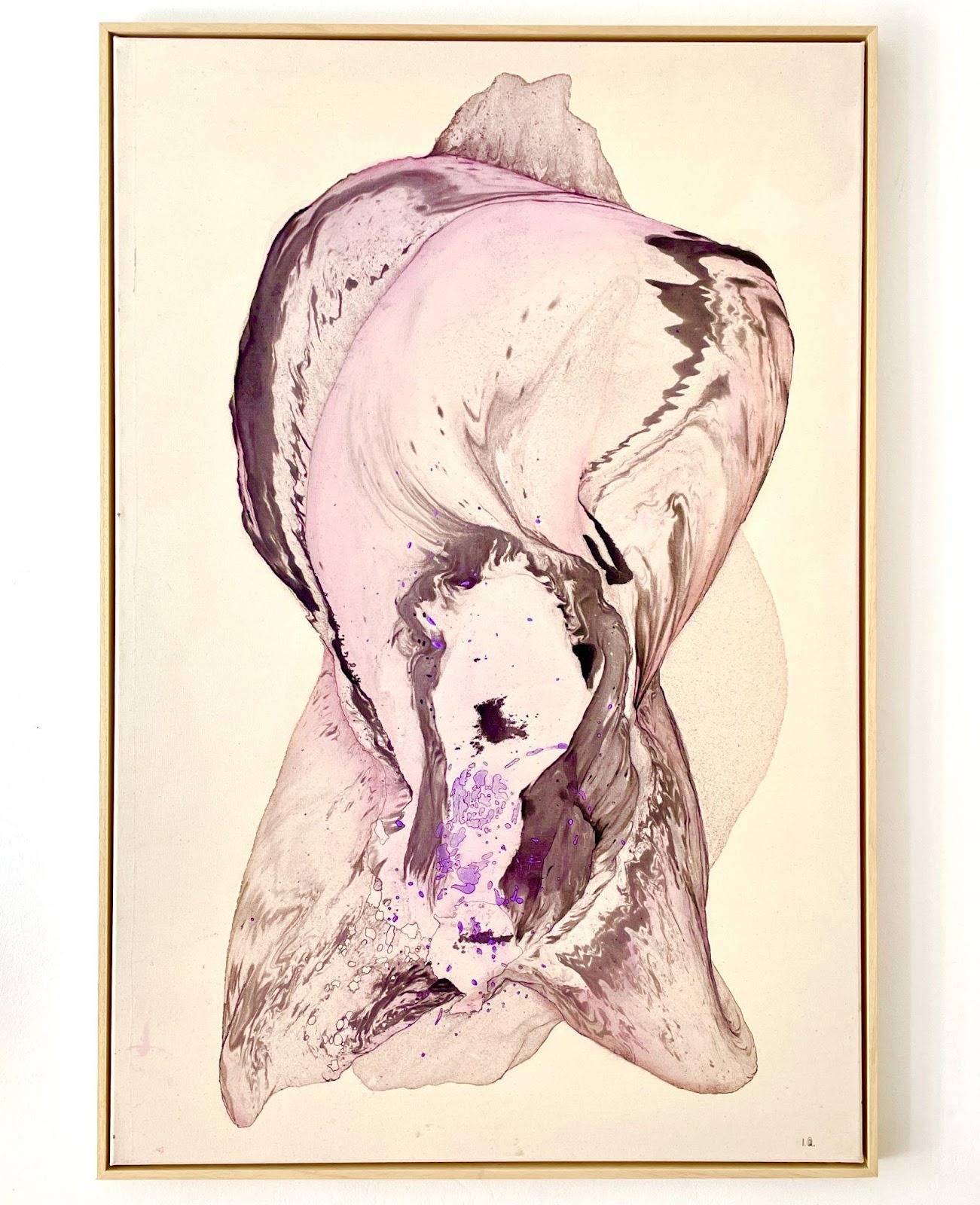
This was a series I created to make synesthesia even more visible as a theme. The white acrylic ‘net’ I painted is only visible when the light hits the surface from a certain angle. From one perspective it disappears completely; from another it reveals itself.
Both the net – which references the idea of neural connections, and its shifting visibility speak to synesthesia. It’s something that is very real to me, something I see and feel constantly, but it isn’t visible externally.
I wanted viewers to experience that duality: the sense that something is present, active, alive beneath the surface, even when it can’t be seen at first glance. My hope is that people notice this moment of discovery – that slight shift, that change in angle, and understand that perception itself is layered, unstable, and deeply personal.
Can you share a painting or project that was tricky and how you worked through it?
I usually work as long as it takes to be happy with a piece or series. What was challenging was to find my own visual language. Where do I see myself? How do I translate my inner voice? How can I visualize it? To develop this technique in which I feel confident, took years of obsessive experimentation.
How do you know when a painting is finished?
I know a painting is finished when it feels autonomous, when it no longer needs me.
There’s a moment when the colors, contrasts, and composition align with what I intended, and the emotional tone feels complete. If the piece gives me the sense that everything has been said, that nothing I could add would deepen it, then it’s ready to exist on its own. But it’s a thin line.
Have you ever been surprised by how someone reacted to your work?
I am, in the best way, often surprised by how people respond to my work. What makes me happiest is that the first layer I hope for usually happens: people feel the paintings before they try to understand what they are looking at.
That emotional, curious reaction means a lot to me. It’s always fascinating to hear what individuals see in the shapes and structures – anything from shells, bones, and fish to human figures or entire worlds. This exchange, and the fact that each viewer can approach the work in their own way, is something I really cherish. It keeps the dialogue between the painting and the viewer alive.

Do you have any daily habits or routines that keep your creativity flowing?
Honestly, no. I don’t have routines that help my creativity flow. If anything, I need routines to switch off, because my natural impulse is to constantly make things with my hands. My creativity is always active in the background, so structured habits are more about grounding myself rather than stimulating inspiration.
What new ideas or themes are you excited to explore next?
I’m interested in moving beyond the canvas and working into the space itself. I’d like to explore sculptures or ways for my technique to inhabit a room, letting the work extend into the environment rather than being confined to a flat surface. I’m curious about how my approach to color, fluidity, and movement can interact with the space around it and create an immersive experience.