

The systems we live inside are a reflection of the consciousness that created them.
Katie Hilborn has worked in disaster zones, uncovered child trafficking networks, and stood on stages in Dubai and Cannes. The story that explains all of it begins in the rubble of Nepal and in a question she couldn’t stop asking herself.
The earthquake had taken nearly 9,000 lives. Katie Hilborn was already on the ground.
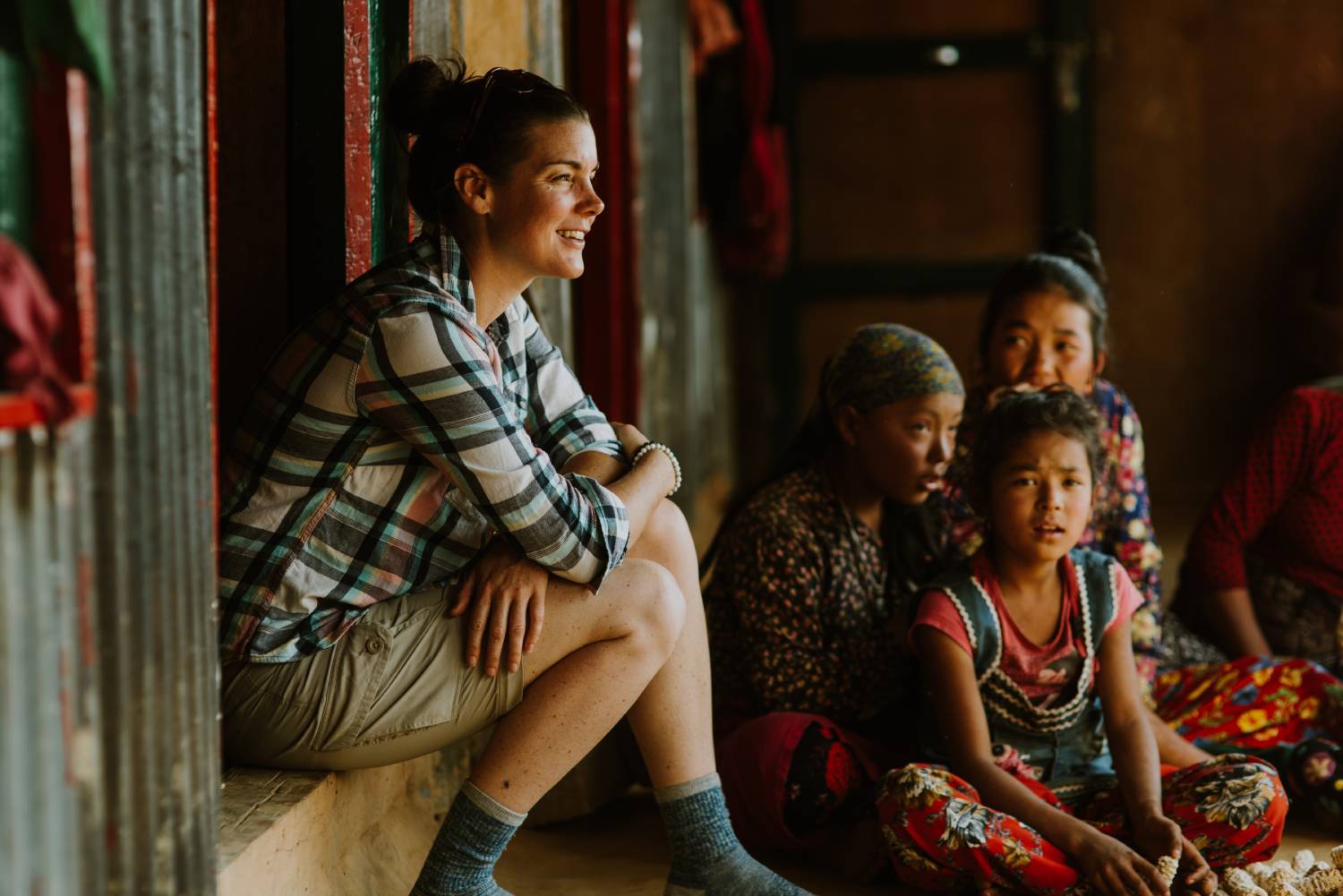
It was 2015, weeks after the disaster struck Nepal, and the machinery of international humanitarian response was fully engaged. Aid was moving. Support was arriving. The world was paying attention. But in the chaos of displacement and broken social structures, something else was moving too quietly, deliberately, targeting the most vulnerable people in the rubble.
A child trafficking network had emerged, hunting girls in the aftermath of disaster.
Katie’s fieldwork helped expose it.
It was not the first time she had seen systems fail the people they were meant to protect. It would not be the last. But Nepal crystallized something she had been circling for years a pattern so consistent across countries, contexts, and crises that it had started to feel less like a series of failures and more like a design problem.
The structures we build either create belonging or they don’t. And most of them don’t.
That insight field-tested, hard-won, impossible to unknow is the engine behind everything Katie Hilborn has built since. And it begins, like most things in her life, much earlier than Nepal.
The Architecture of a Chicago Childhood
Legacy has a way of showing up quietly. For Katie, it showed up in the DNA of the family that chose her.
She was adopted at six days old and raised in a Chicago household shaped by civic vision, design, and the belief unstated but ever-present that a meaningful life is built in service to something larger than the self. Her great-great-grandfather, Edward M. Probst, was a co-founder of Graham, Anderson, Probst & White, the architectural firm responsible for many of Chicago’s early landmarks. Katie’s lineage traces into early American family lines, with historical ties to Martha Dandridge Custis Washington, the first First Lady of the United States.
These were not stories told to impress. They were stories told to orient. If one lineage helped shape the beginnings of a nation, and another helped build the skyline of a city, the question implicitly passed down to Katie was: what will you build?
She didn’t know yet. But she knew it would have to last.
The Reckoning
There is a moment in Katie’s story that most profiles skip past. She doesn’t.
Her birth mother a woman she had met only a couple of times, essentially a stranger, died at 21 from multiple sclerosis. The relationship was not close. The loss was not grief in the conventional sense. But the death arrived with a question attached, one that Katie could not set aside.
What if that’s your timeline too? What do you do with it?
Faced with the unknown of whether the same illness might one day be part of her own path, she made a decision not from fear, but from clarity. To seek purpose. To build a life of meaningful impact. To stop waiting for the right conditions and start building them.
That decision opened a long search. Her path moved through both ancient and modern inquiry, learning from Indigenous wisdom keepers across cultures, including the Maasai, the Tamang, and Shamanic Peruvian traditions, while pursuing a deep personal study of quantum mechanics and the underlying structures of reality. Over time, one capacity sharpened above all others: pattern recognition under pressure.
She became attuned to what others often overlooked the forces beneath events, the structures beneath outcomes, the invisible architectures shaping both human lives and the systems around them.
“The systems we live inside,” she says, “are a reflection of the consciousness that created them.”
It sounds philosophical. In practice, it became the most operational insight of her career.
Into the Field
Purpose, when it finally arrived for Katie, arrived with coordinates.
Her humanitarian work took her across Uganda, Tanzania, Bolivia, Vietnam, Nepal, and the United States building initiatives in girls’ education, disaster relief, economic empowerment, and community-rooted development. She raised and stewarded millions of dollars in philanthropic and catalytic capital. She inspired more than 100,000 volunteer hours. She built, dismantled, rebuilt, and kept going.
And again and again, she watched the same pattern repeat itself.
Resources flowed into communities that needed them. Support arrived. Activity accelerated. And then over time, across countries, across contexts the same conditions reappeared. Communities remained dependent on external input. Value passed through, but rarely stayed. Even the most well-intentioned systems reinforced cycles of reliance rather than cycles of growth.
Why does this keep happening?
Nepal, and the Pattern She Couldn’t Unsee
The earthquake answer was Nepal where the trafficking network was only part of what she found.
Standing in communities that had received enormous amounts of aid, Katie watched value move through without staying. The pattern she had seen in Uganda, in Bolivia, in Vietnam played out again in the rubble of one of the worst natural disasters of the decade. Communities received. Communities remained dependent. Belonging was promised and then extracted along with everything else.
It was the moment the insight stopped being humanitarian and started being structural.
Systems that do not circulate their own value cannot sustain themselves. That principle, forged across two decades in the field, didn’t stop at disaster response. It applied to capital. To governance. To the emerging architecture of artificial intelligence. Change the conditions surrounding any system the energy, the economics, the governance, the built environment, and you change what that system produces.
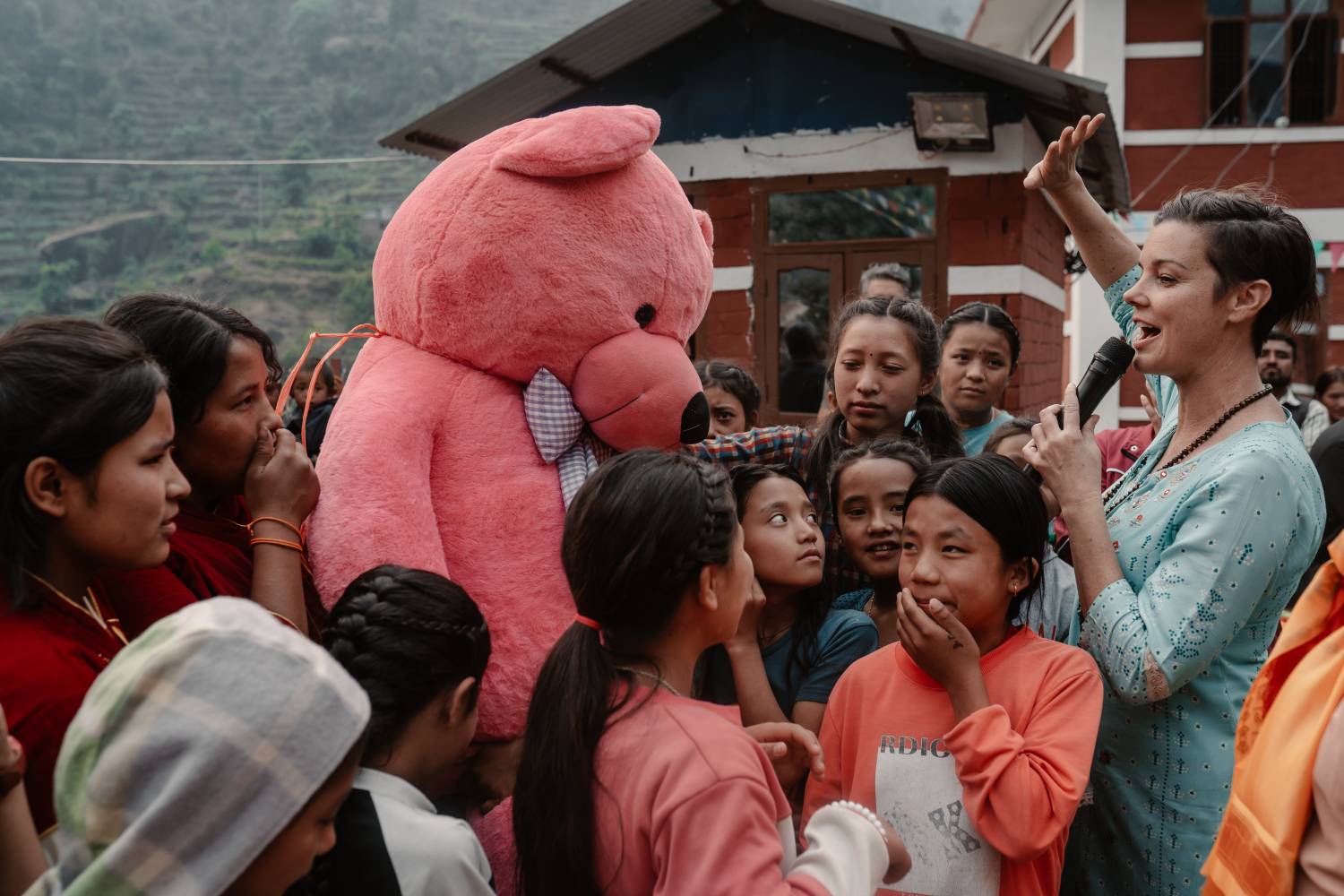
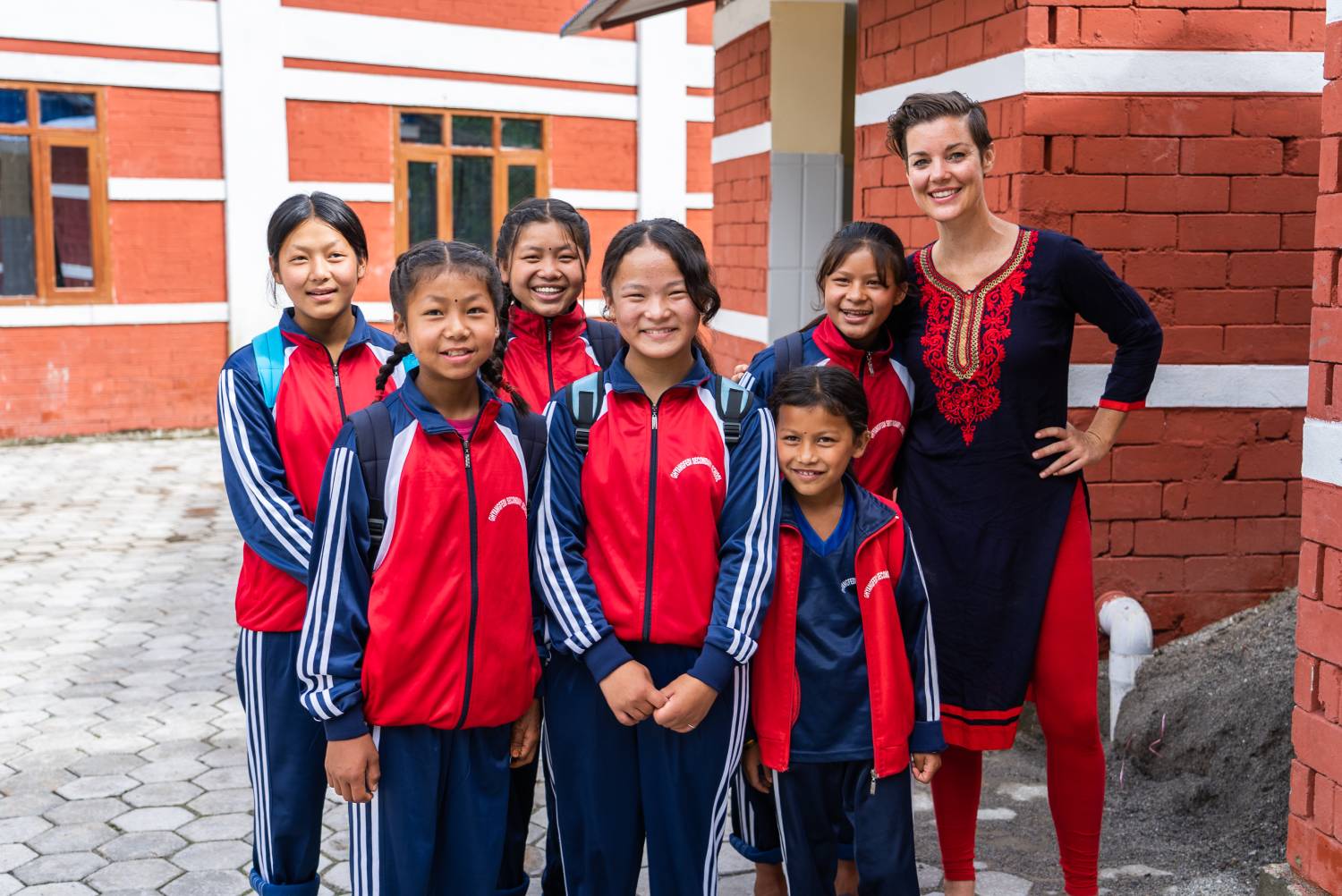
Through Compass Rose International, the 501(c)3 she founded in the wake of the earthquakes, Katie established the Girls INpowerment Home in Nepal an education and safety hub addressing child trafficking at its roots through safe housing, education, holistic care, and community stability. Today, the organization supports 60 girls. In 2024, they recorded zero trafficking cases.
Not a statistic. A structure. Built to hold.
She had spent two decades building belonging for others. Now she understood exactly why it had to be built and precisely how.
What She Is Building Now
Today, Katie Hilborn operates at the intersection of several frontiers simultaneously.
She is advancing Regenerative Infrastructure Holdings, building what she defines as a new category of AI data training centers one where the energy, governance, and economic systems surrounding technology are designed to regenerate rather than extract. She continues to steward Compass Rose International and the Girls INpowerment Home in Nepal. She is developing a keynote speaking practice under her personal brand, @impact.architect. She is writing a book.
And underneath all of it the ventures, the philanthropy, the frameworks, the stages runs the same question she has always been asking.
How do we build systems that create more value than they extract?
Or more precisely, more personally: How do we build what comes next with greater coherence, dignity, and responsibility?
The Throughline
A woman adopted at six days old, raised inside legacy and shaped by a reckoning with mortality she never asked for. A life spent moving toward crisis rather than away from it. A gift for seeing what others overlook and the patience to build what the pattern demands.
Katie Hilborn is not building ventures. She is building a body of work devoted to a single proposition: that lasting change requires redesigning the deeper architectures beneath visible problems. The future is shaped not only by what we build, but by the consciousness from which we build it.
She has been proving that proposition in Nepal, in Chicago, in boardrooms and disaster zones and remote villages and on international stages for nearly twenty years.
She is just getting started.
Katie Hilborn is an Impact Architect, keynote speaker, social entrepreneur, and 8x award-winning humanitarian. She is the founder of Compass Rose International and the Founder and Managing Director of Regenerative Infrastructure Holdings. Her work has been featured in Gulf Magazine, New York Magazine, and ABC Chicago. Follow her at @impact.architect.