“The scariest thing is not failing. It’s living a life where you never gave yourself the chance to try.”
From a young single mother searching for stability to a successful entrepreneur, Haute Couture Embroidery Technologist, author, and mentor, her story is a powerful reflection of resilience, creativity, and reinvention. In this conversation, she shares the challenges behind building multiple businesses, the lessons that shaped her path, and why creativity, craftsmanship, and human connection will always have a place in the future.
Could you tell us a little about yourself and what you’re most passionate about today?
I can’t really sum myself up in a single word. Sometimes even my husband, when he’s telling friends about me, just tells them to look at my Instagram or my website, because he can’t quite describe what I do in one sentence.
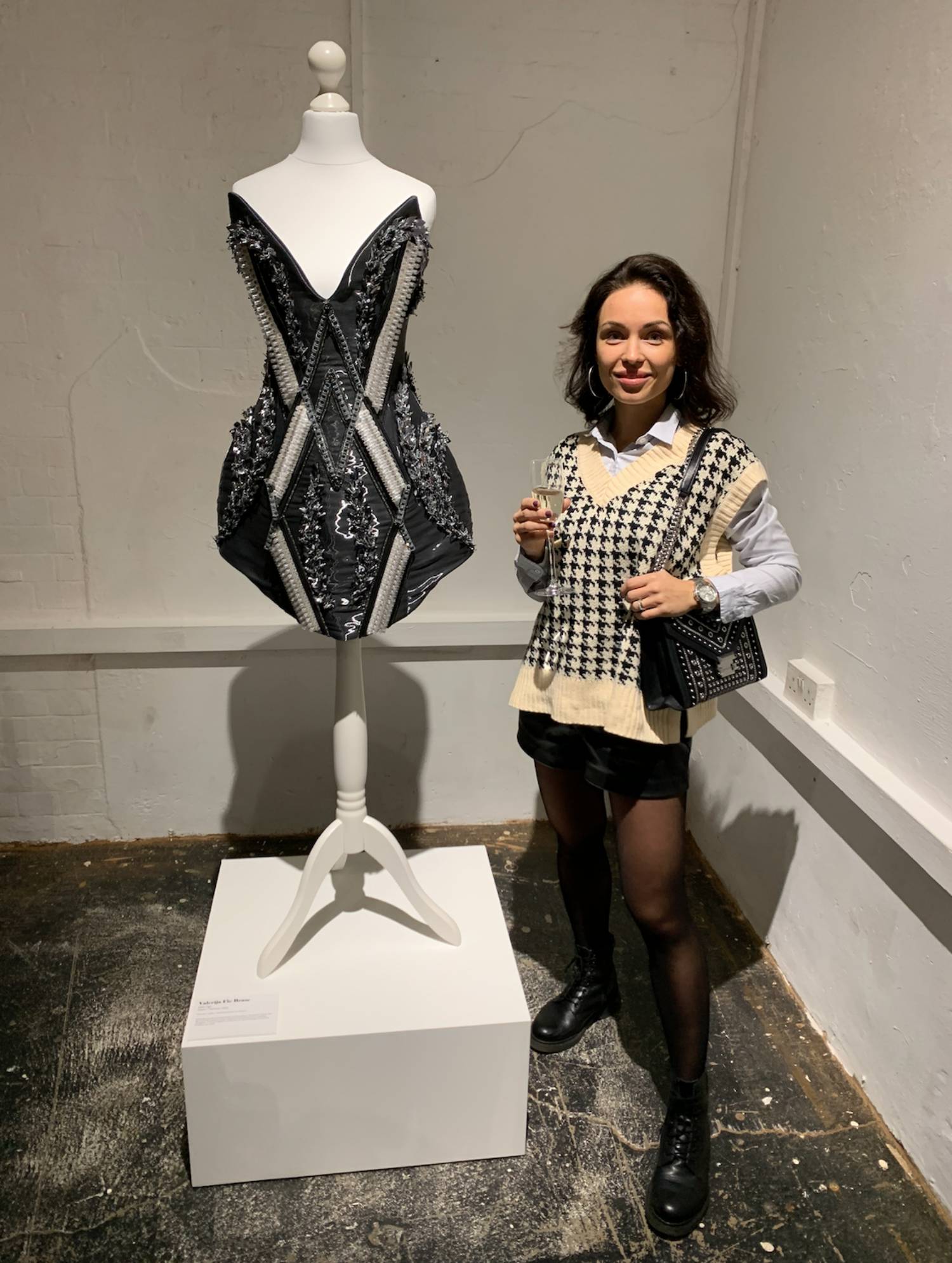
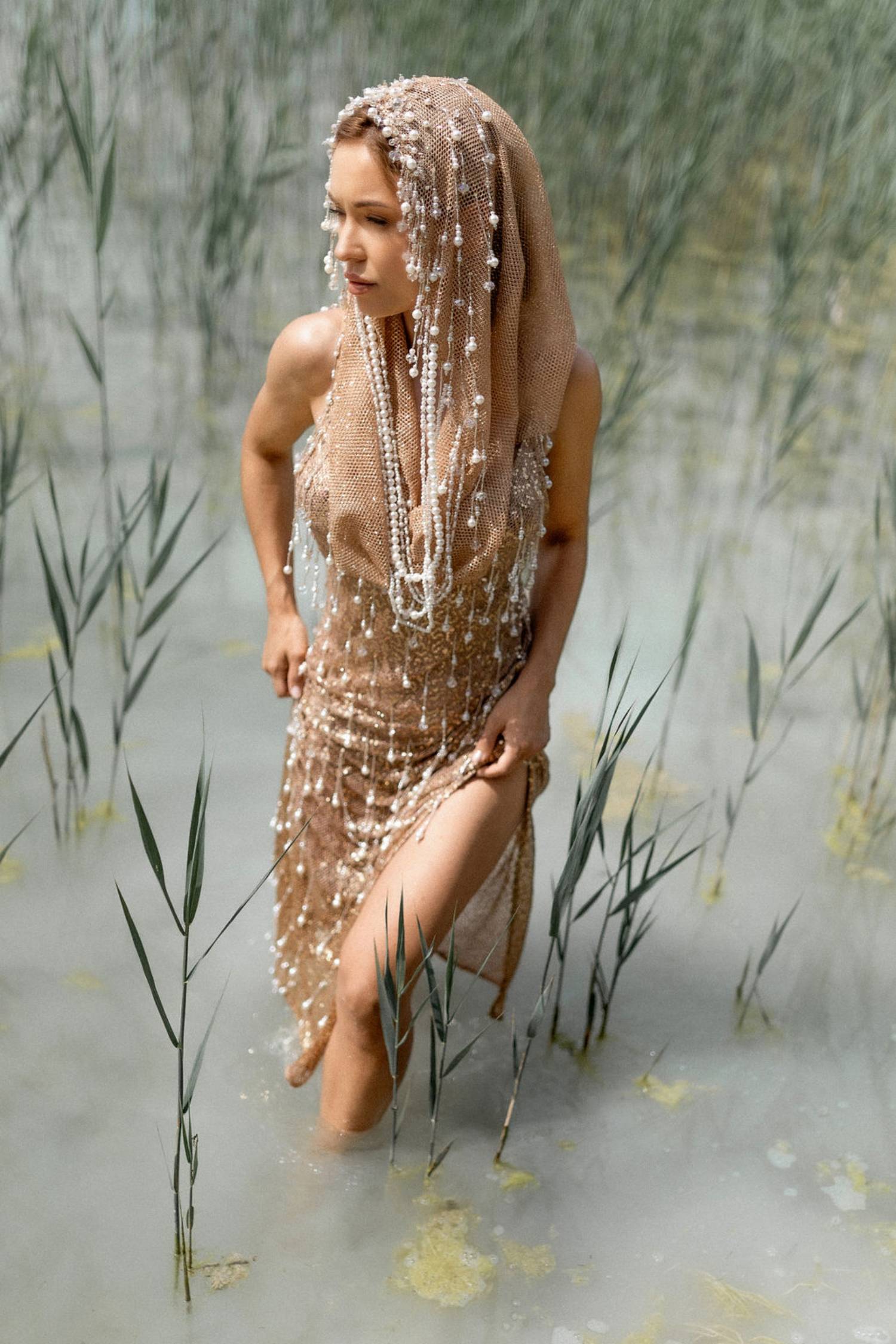
For 13 years now I’ve been combining entrepreneurship and creativity, and I represent one of the rarest professions there is: a Haute Couture Embroidery Technologist. It isn’t only about creating something beautiful. It’s about precise technical decisions, bringing complex projects to life, the laws of physics, mathematical calculation, and anticipating everything that can go wrong when the wrong technical solution is chosen.
Over my career I’ve gathered very different kinds of business experience, from real estate and e-commerce to running my own fashion house. Last year I published a book, The Business of Creative Arts, into which I poured everything I’ve learned in business and in life, my mistakes, and the answers to the questions that keep creators awake at night when they dream of starting something of their own.
Business isn’t rocket science. Anything can be learned. It all comes down to how much effort you’re willing to put in. I love helping others, and nothing motivates me more than seeing what people go on to create, whatever it may be – a first stitch, an embroidered wedding gown, or the first steps of a new business.

Looking back, what first inspired you to start your entrepreneurial journey at such a young age?
My daughter, and a relationship that was quietly falling apart. I can’t speak for other women, but I believe children make us stronger fighters. I was young, and becoming a mother made me even more vulnerable, because I didn’t feel safe leaving the relationship with no ground under my feet. And how do you build that ground? I was still studying, in the Faculty of Business and Marketing Management, with no solid work experience behind me, nothing that would make an employer want to hire a young woman with a small child who might often be sick, a child who would create a lot of inconvenience for them. We have to be honest: being young, and especially a single mother, is not easy when you have no support around you.
I left that relationship when my daughter was born, and to survive I had to turn to social services for low-income families. It was a humiliating experience. To receive a meager 125 euros a month, I had to travel to the office to check in and listen to warnings that inspectors would come to my home to look for a man living there. In the end, I gave up the support by my own choice. I’m grateful to my parents that I could move back in with them for a while, until I found a way to build a stable life for the two of us.
I needed to fight for us, to fight for our survival. This was never a business born of convenience or a wish to call myself an entrepreneur. It was the simple necessity of raising a child alone, and being able to stay home without panic if she got sick once she started daycare. I wasn’t looking for an easy path, I was looking for the freedom to be flexible, to be with my child 24/7, because back then I couldn’t even think about a nanny. And later, after moving to the capital, getting a place in daycare was nearly impossible.
You’ve explored many different businesses over the years. How did those experiences shape the person and professional you are today?
My business journey actually began back in school, and that’s where I learned the most, because that’s when I gained my core entrepreneurial skills, the foundation that later gave me courage to try completely different directions. At 16, I was fascinated by the financial markets, a little by politics, and I volunteered in event organizing and show business.
One day I was sitting with a friend in a café when a man at the next table overheard us.
He introduced himself as the director of a real estate agency and invited me to a job interview. The funny part is he offered me the job on the spot, and I had to admit I was still a minor. He laughed, told me not to tell anyone, we weren’t employees, everyone worked for themselves. Right after the global financial crisis, I was signing the most contracts in the office, on a 6% commission.
Seventeen years on, no one would sell their property for such absurd rates, I wouldn’t either, but I had a good mentor and big ambitions. Every morning, instead of class, I went to his market reviews and leadership workshops. Those were the best years, they gave me so much when I later started out on my own.
When my daughter was born, my first attempt was a children’s clothing outlet store, back in 2012, my first e-commerce platform. I bought the first batch of stock with my newborn benefit, realized fairly quickly it wasn’t profitable.
My second attempt led me to where I am now, completely by accident. I couldn’t afford much, not even pretty hair accessories for my child, so I decided to make them myself. It was my riskiest move. I had my last 200 euros on my card and spent every cent on materials. When I saw the bill, I was so overcome with shame that I couldn’t bring myself to ask them to take even part of the order back.
But I made so many bows that within months I’d turned 200 euros into 600, at a time when our minimum wage was barely 230. Very quickly I got the feel of the market, started creating accessories and clothing for women, and by 2013 I’d founded my own brand.
That was a completely different experience, far more creative, made to order, until it grew into a wedding gown fashion house. My curiosity kept growing, so came four more e-commerce projects, a physical store, a school, and an international online school. Every one taught me a different perspective, different business models, and above all when to close something down and when to take the risk.
That’s one of the most important denominators in business: killing or rising. Business schools don’t teach it, you learn it through mistakes and personal experience. I’m glad I grew up as a person and an entrepreneur before the age of AI, because it taught me to make decisions with my own head, and it built my armor.
Every successful journey has difficult moments. What challenge tested you the most, and what helped you keep moving forward?
I don’t think my life would look anything like it does today if I hadn’t been a single mother. There’s a particular kind of pressure in lying awake at night knowing it’s on you to put food on the table and keep a roof over your child’s head. For the first four years I worked 16-hour days with no holidays, no weekends, no pause.
I couldn’t afford to rest, I needed a home of my own and something to fall back on. By the end of those four years I could finally buy an apartment and a car, and it felt like a real reward for everything I’d put in. But that was also when the first panic attacks hit, because my body was completely drained, not just physically but emotionally. The irony is that I’m only learning to find real balance now, after my body forced the issue and said: enough.
Two years ago I was misdiagnosed with a tumor in my neck, one of the hardest stretches I’ve ever lived through emotionally.
Thankfully it turned out to be something else, though still an illness that kept me down for a long time and unable to work. That was the moment I realized I had to stop running and change something, because before that I’d burned out more times than I can count.
Through all of it, my daughter was the reason I kept going, whatever happened. You always need something bigger to move toward, and once you have it, the strength and the motivation follow. Simply wanting a million was never enough.
Starting over is never easy. After losing so much in the cyberattack, what gave you the strength to rebuild your life and career?
Rebuilding collapsing bridges is my strong suit, something life itself has taught me. I honestly don’t know how I would have survived that whole ordeal alone, though I probably would have managed brilliantly, as I always do. After losing almost everything in the cyberattack, my husband was an enormous support. In our family we both work and both take care of the home, I’m not dependent on him, but in that moment I needed help like never before, just until I found a way to put everything back together.
I never click suspicious links, yet I caught a Trojan on the State Tax Inspectorate website, which happened to be under attack at the time. The attack went on for a year and a half before it calmed down, and even now I live with a lot of restrictions on social media, certain Google security flags tied to my name, since I can’t exactly change my ID details. I’ve simply learned to live with it and to look for other doors.
The whole experience showed me how important it is to have a community and a direct connection with your clients. Even though recovering even 30% of the lost data and client relationships was hard, the loyal ones found their way back to me, in all sorts of ways.
It took half a year to stabilize the business and start climbing out of the losses. I only began running my own Instagram after the attack, because it was the only channel I had left. I learned a huge amount about cybersecurity, and I also got the chance to do a full rebrand, which led me to launch another e-commerce project, close the physical store, streamline my processes, and focus on growing the business online.
On the surface it was a disaster, one that genuinely broke me, I lost every source of income for several months. The physical store had been covering the main running costs, but there was nowhere left to advertise, because everything was blocked, and by then most of my sales were happening online.

You work at the crossroads of creativity and business. How do you balance artistic expression with running a successful business?
Balancing the two is never easy. When you want to create, you have to crunch numbers, and when the muse finally shows up, you have to sit down with your strategy instead. It’s a constant search for compromise between “I want to” and “I have to.” But like in any other field, delegating is simply a must, there are things others will do far better and faster than you.
It helps enormously if you can adapt and stay hands-on at the very beginning, because in the early days everything runs on limited working capital, you have to count every cent, save, find clever solutions, and often do it all yourself. As the business grows, though, delegating becomes essential, so you can focus on what you truly do best.
For years I did almost everything myself, because I wrongly believed no one else would do it as well, and the result was one burnout after another. I’d only hand off the tasks I knew nothing about. Now it’s different. Even though I could give far more time to the creative side, while I’m still young and full of energy I want to grow the business, and that means doing the things you don’t enjoy too.
That’s when the question of what to do “right now,” what I want versus what’s needed, simply dissolves. You start looking at the work through a long-term lens: at what finishing that urgent, unglamorous task will let me reach later, even if I have no desire to do it in the moment.
Through your embroidery school, book, and podcast, you’ve supported many creative people. What do you hope they gain from your guidance beyond technical skills?
My main goal has always been to teach my students, mentees, and readers to believe in themselves. Experience only ever comes from doing. I know it’s frightening, I know it’s uncomfortable, and reading my story, you might come away thinking that building your own business is simply impossible.
I don’t want to lie or sell you rainbows. Any real result demands a real investment. If you just got lucky, that’s a lottery where you happened to draw the winning ticket. In real life you have to work hard, keep learning, read a lot, stay curious about the world around you, connect with people, and actually do the work.
It’s one thing to learn a principle from a book, and quite another to put it into practice, make mistakes, and figure out how to do it better next time. Always ask yourself: what’s the worst that can happen if I try? You can always go back to a regular job. The scariest thing of all is to live a dull life and be left regretting that you never let yourself try.
Your work has reached international audiences and prestigious platforms. Which achievement feels the most meaningful to you, and why?
Honestly, I couldn’t name just one. Every achievement is meaningful in its own way, and each one gave me something valuable: a new perspective, a new experience. They simply can’t be measured against each other, and I’m proud of every single one.
Even closing a business is an achievement, because it means you were clear-eyed enough to see it wasn’t working and brave enough to walk away before the losses grew. If I had to single out one thing, though, it would be this: none of it has changed me. I’ve stayed just as simple and grounded as I’ve always been.
I never began looking down on anyone, and I never saw myself as a star or as somehow better than others. What I genuinely can’t stand is pretence, self-importance, and disrespect toward other people, even if you happen to be Brad Pitt.
The creative industry can sometimes feel competitive. What changes would you like to see to make it more supportive, especially for women?
Competition pushes markets to grow and economies to get stronger, and it’s a completely normal part of the economic cycle. What really needs to change is people’s attitude toward it. Women, let’s be honest, love to compete over everything, but the reality is there are enough clients for everyone, enough partners, enough clothes, enough loungers on the beach.
If your product or service is truly unique, and the woman behind the business is a genuinely interesting person, then why should she ever fear competition?
I look at competition as a game, a chance to grow. And the moment we start seeing our competitors as partners instead of threats, just imagine how much you could double your results.
It really is only a question of mindset.
On a personal level, is there a daily habit, mindset, or routine that helps you stay focused and motivated through both good times and difficult ones?
Almost every day I make a point of learning something new. Our brains need training just like the muscles in our body, they only grow and stay toned when you work them. You don’t have to cram a ton of knowledge daily, but even one small thing, a new term, a new concept, a new way of seeing something, is a priceless investment in yourself. And every one of those small steps brings you a little closer to your main goal in life, whatever it may be.
What advice would you give to women who are trying to build a career or business while facing personal or financial challenges?
Start small. A house is always built from the foundation up, never from the roof down, block by block, with the finishing touches left for the very end, and a business is no different. Try to see it as a construction process. It’s always easier when you have starting capital, but if you don’t, start with yourself, because your mind, your experience, and your know-how are your capital.
Begin with what you do best, with your natural strength, and everything else will fall into place in time. It isn’t only a house that takes time to build. A planted seed needs time too, along with water and sunlight, before it can one day grow into a tree. Business is a process, and creativity, at its best, a fascinating game.

Finally, what exciting projects or dreams are you working towards next, and what would you like your legacy to be?
I love to work, and I love to work hard, but I no longer want to run a marathon. My daughter will finish school soon, just four years left before she starts a life of her own, and time is passing so quickly that I can barely stop to enjoy it.
In everything I build, I look for meaning, not just money. As I said earlier, you have to find a purpose bigger than the goal you’re chasing. Mine, for the years ahead, is to help creators live with dignity from their craft: to help them lay their foundations, understand how business works, and to raise a new generation of skilled artisans who will keep our traditions alive in a world of technology and AI, where everything is being digitized.
Craft will always endure, and it will only grow more valuable. Art and handwork have been treasured in every era, and that is exactly why fine art and haute couture cost what they do, because they are not for everyone. People of means will never want what everyone else already has. They will always invest in lasting value. I want to preserve our heritage, and that is one of the few things AI will never be able to take from us.