
Turning 40 made Rajni Singh ask a simple question: “If nothing changes, where will I be in another five years?”Her answer became the beginning of a stronger, more self-assured chapter.
Could you tell us a little about yourself beyond your work and professional titles?
Beyond all the titles, I’m simply a woman who is curious about life and still discovering herself.
I’m a mother, a wife, a daughter and a friend. At heart, I’ve always been quite free-spirited. I was the person who got excited about little things, loved learning and always wanted something to look forward to. Somewhere through marriage, motherhood, work and responsibility, I became disconnected from that side of myself.
Today, I value very simple things: meaningful conversations, laughing with my family, feeling strong, learning something new and having a sense of purpose.
I also don’t see myself as a finished version of anything. At 45, I’m still evolving, and I actually find that exciting. There is a freedom in reaching a point where you become less interested in who you are supposed to be and more curious about who you still have the potential to become.
When you look back at the woman you were five years ago, what feels most different about you today?
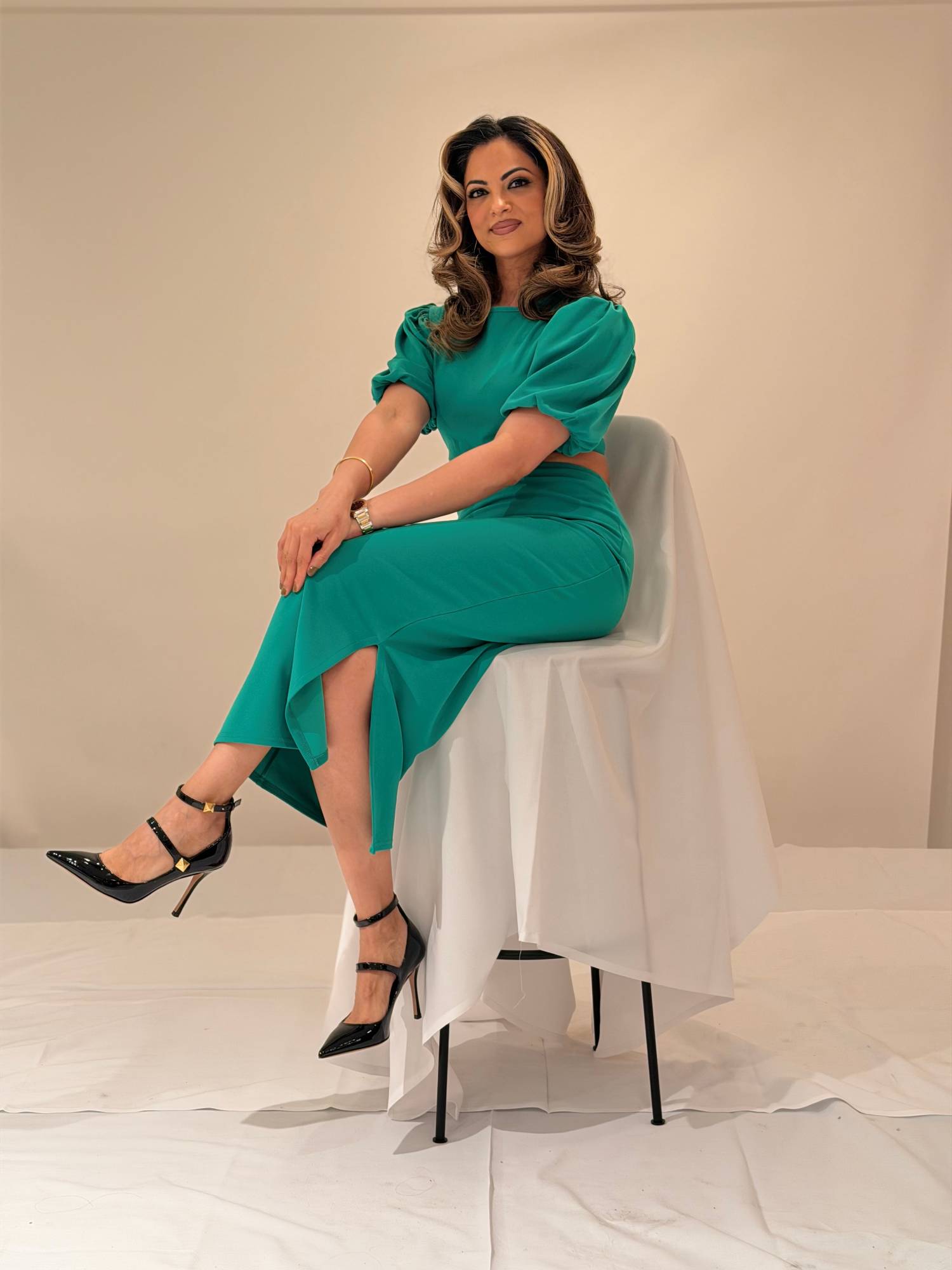
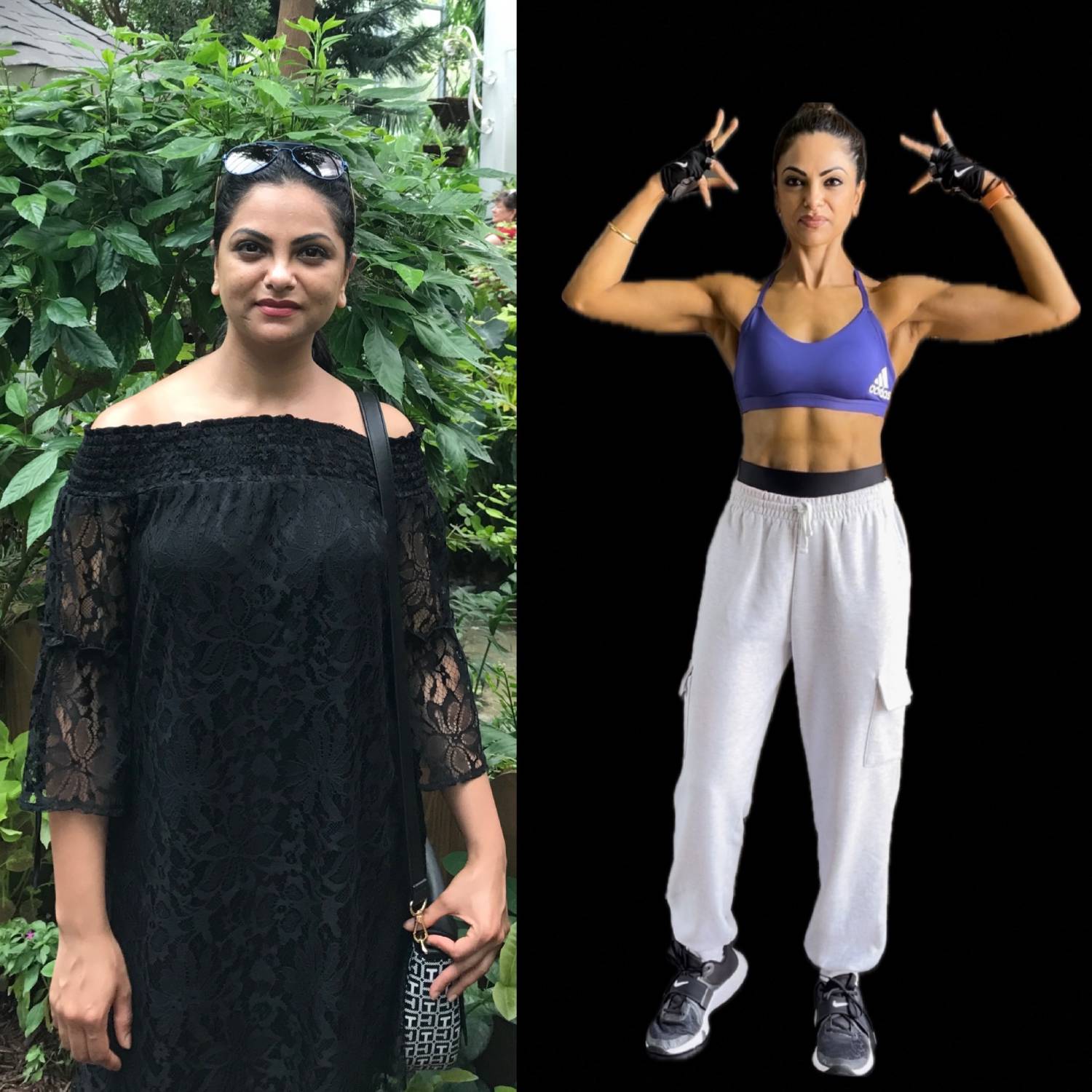
The biggest difference isn’t my body. It’s how I feel within myself.
Five years ago, I lived with a lot of anxiety, self-doubt and internal noise. Alongside my physical health challenges, I was constantly questioning myself and had become very disconnected from the person I used to be.
Today, I’m much more self-assured. That doesn’t mean anxiety never appears or that every day is a good day. I’m human. I still have difficult days, and now, with perimenopause, there are days when my energy and emotions can fluctuate too.
The difference is that I don’t allow one difficult day to become a judgement on my whole life. I know myself better now. I know what supports me, what drains me, when I need to push and when I need to pull back. Most importantly, I trust that when life changes, I can adapt.
Five years ago, I was frightened about what my future might look like. Today, I’m genuinely excited to find out.
Was there a particular moment when you realised you could no longer keep putting yourself last?
There was a period when both my physical and mental health reached a crisis point, and that forced me to confront just how far I had drifted from myself.
But I don’t think one single moment created the change. It was more of an awakening.
Just before I turned 40, I remember asking myself a very simple question: If nothing changes, where will I be in another five years?
The answer frightened me.
I couldn’t see myself becoming stronger or healthier. I imagined more pain, more limitations and becoming even further removed from the woman I remembered being. That question created a sense of urgency in me. I realised I couldn’t keep waiting for circumstances to become perfect before I started looking after myself.
For years, I had been available to everybody else. I needed to start being available to myself too. Turning 40 didn’t make me feel old. If anything, it woke me up. I wanted the next chapter of my life to feel different, and I finally understood that I had to participate in creating it.
What did starting again at 40 teach you about patience, consistency, and believing in yourself?
Starting again at 40 taught me that sometimes you can’t even dream about what you’re capable of because you haven’t met that version of yourself yet.
When I started, calisthenics wasn’t a goal. Handstands, pull-ups and muscle-ups weren’t even in my mind because I simply couldn’t imagine my body doing those things. I was living with pain, had very little physical strength, and years of reduced movement had left me feeling weak and disconnected from my body.
My starting point was much simpler: I needed to become stronger.
Strength training became my foundation. I started with the basics, followed a structured programme and gave myself time to repeat movements rather than constantly searching for something new. Building muscle changed everything. As I became stronger, my body felt more supported and movement became more confident.
It also taught me that progress isn’t always exciting. A lot of progress is simply showing up and doing the fundamental things again and again, even when you can’t yet see where they’re taking you.
There were days when pain meant adapting my training. I had to learn that adapting isn’t failing and slowing down isn’t giving up. Sometimes patience is part of progress.
As my strength grew, so did my curiosity, and eventually that curiosity led me to calisthenics.
At 40, I couldn’t have imagined what my body would be doing at 45. That’s why I don’t think you need complete self-belief before you begin. Sometimes you just need enough belief to take the next step and give yourself the opportunity to discover how far you can go.
You have described your journey as rebuilding your relationship with yourself. What did that process look like in everyday life?
It was actually much less glamorous than the phrase “transformation” makes it sound!
It was structure and repetition.
A huge part of it was strength training. I had a programme and I showed up for it consistently. I stopped thinking I needed endless exercises or something new every week. If I wanted to become stronger and build muscle, my body needed progressive training, repetition and time.
Nutrition had to support that. I began understanding food not simply in terms of weight or calories, but in terms of nourishment, energy and recovery. I learned about protein, carbohydrates and healthy fats and how to put together balanced meals using normal foods my family already ate.
Then there was recovery. Sleep, rest and eventually mobility became important, particularly because I was still managing pain. I had to learn when my body could be challenged and when it needed me to adapt.
None of these things were revolutionary on their own. That was probably my biggest discovery. I trained. I nourished my body. I recovered. I repeated the basics. Slowly, my body responded.
But every time I followed through on something I had decided to do for myself, something was changing emotionally too. The gym wasn’t only building my muscles; it was showing me that I could rely on myself.
That understanding eventually moved beyond health. I became more protective of my time, clearer about my boundaries and more intentional about where I spent my energy.
Rebuilding my relationship with myself wasn’t about waking up one morning and suddenly loving everything about myself. It was learning to treat myself like someone I was responsible for looking after.
How has strength training changed your understanding of what your body is capable of?
Strength training completely changed the way I saw my body.
For a long time, pain made me view my body as fragile. I had experienced chronic neck and lower-back pain, sciatica, a herniated disc and vertigo, and there was a period when movement itself became difficult.
When I started strength training, I wasn’t trying to become extraordinary. I wanted to become physically stronger and feel supported by my own body again.
Building muscle was a huge turning point for me. As I gradually strengthened my muscles and core, I felt more stable and capable. Instead of constantly thinking about what my body couldn’t do, I started becoming curious about what it might be able to learn.
Later, mobility became another important piece because I realised I didn’t only want to be strong; I wanted to move well. I began working on mobility alongside strength, which eventually gave me the foundation to explore calisthenics.
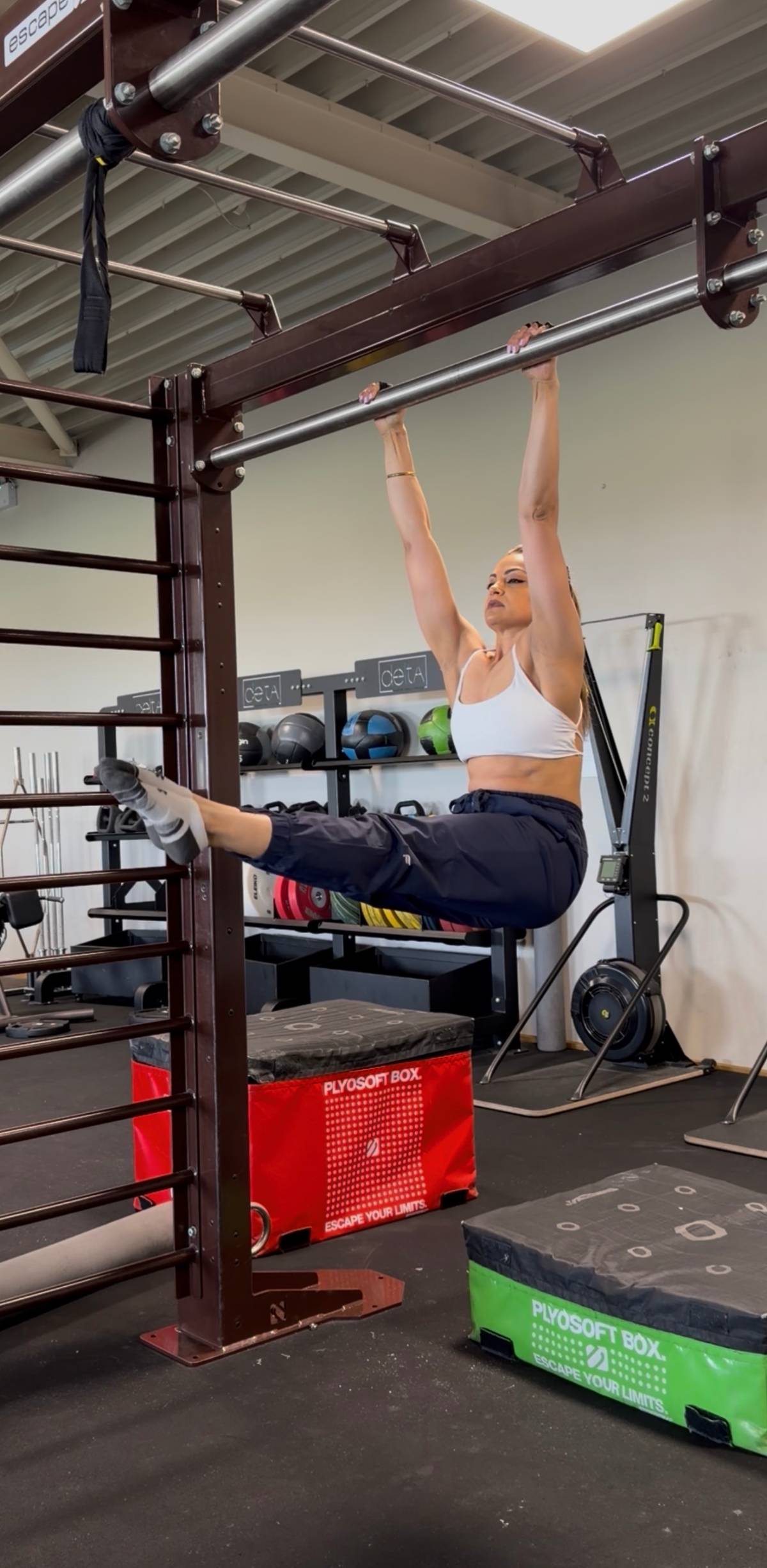
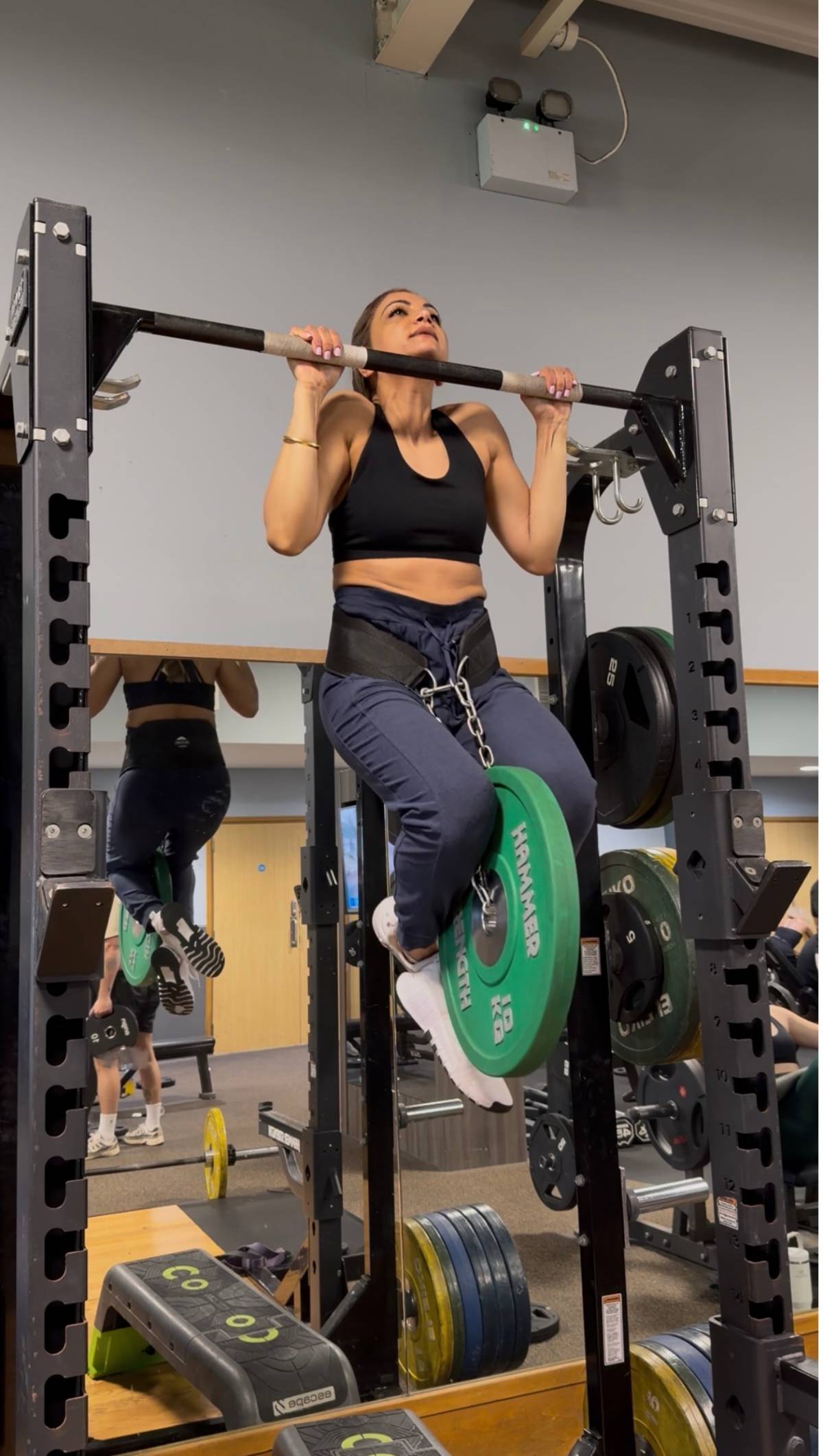
Today I do pull-ups, handstands and train band-assisted muscle-ups things that genuinely weren’t even in my imagination when I started at 40.
But the greatest thing strength training gave me wasn’t a handstand or a pull-up.
It changed the conversation I was having with my body from “I’m afraid of what you can’t do” to “Let’s see what you can learn.”
As a South Asian woman, how have family, culture, and expectations shaped the way you viewed yourself and your own needs?
I think culture added another layer to something many women experience.
Growing up, there was a strong idea of being the “good girl”: being considerate, respectful, adaptable, dependable and not putting yourself too loudly at the centre of things.
Then you become a wife, a mother, a daughter-in-law, build a career and take on more responsibilities, and those expectations can become even stronger.
For me, the more I tried to fit into what I believed a good woman should be, the further I moved away from the naturally free-spirited person underneath.
I don’t say that with blame. There are beautiful parts of South Asian culture that I’m incredibly proud of – family, community, connection and looking after one another. I wouldn’t want to lose those values.
What I had to unlearn was the belief that caring for myself somehow meant caring less for everybody else.
It doesn’t.
Choosing yourself isn’t selfish. Boundaries aren’t rejection. And looking after your own physical and emotional wellbeing doesn’t make you less devoted to the people you love.
If anything, becoming healthier and more present within myself has allowed me to show up for the people I love from a much better place.
You now support a large community of women. What do you hear most often from women who are struggling to believe in themselves?
What I hear most often isn’t necessarily, “I don’t know what to do.” Deep down, many women know some of the things that would help them.
What I hear underneath their words is: “I don’t believe I can do it anymore.”
They tell me they’re too busy, too tired, too old, their body has changed, they’ve tried before and failed, or they simply don’t recognise themselves anymore. Some have consumed so much health and fitness information that instead of feeling empowered, they feel paralysed.
I understand that because I’ve lived it.
I don’t expect a woman who has spent years doubting herself to wake up one morning full of confidence simply because somebody tells her to “believe in herself.”
Self-belief can start much more practically.
Choose one thing you can realistically do. Maybe it’s two strength sessions a week. Maybe it’s walking every day, preparing some meals in advance, prioritising sleep or creating an hour that belongs to you.
Then follow through.
Every time you do, you give yourself a little piece of evidence: I said I would do this, and I did.
And I also remind women that their forties, fifties and beyond don’t have to be about becoming less. Your body may change, your priorities may change and your energy may change, but your potential hasn’t disappeared.
Sometimes the woman who tells me she has “lost herself” hasn’t lost herself at all. She has simply spent so long looking after everybody else that she hasn’t had the space to discover who she is now.
I think that’s a much more hopeful place to begin.
With so much health and fitness advice online, how do you help women separate useful guidance from unnecessary pressure and noise?
I think we’ve reached a point where health can feel unnecessarily complicated.
There is some incredible information available, and expertise absolutely matters, but most women don’t need another hundred things to think about. They need clarity.
My approach is to strip things back to the fundamentals: build strength, move your body, eat balanced meals with adequate protein, carbohydrates and healthy fats, prioritise sleep and recovery, and create routines you can sustain.
You don’t need the perfect diet or the perfect training programme. If something only works when your life is perfect, it probably isn’t going to work for very long.
I always encourage women to ask: Can I realistically see myself doing this six months from now?
If the answer is no, simplify it.
I often compare health information to learning to drive. You don’t need to understand every component of an engine before you can safely drive a car. You need the right foundational knowledge, and then your understanding develops with experience.
I think we need less constant optimisation and more consistent application.
For me, the magic really is in mastering the basics.
You balance your NHS career, business, coaching, content creation, and family life. What has helped you protect your time and energy?
For me, managing my time isn’t about learning how to fit more into my day. It has actually been about taking things out.
We’re constantly encouraged to add more – a better routine, another habit, another commitment, another thing we should be doing. At this stage of my life, before I add something, I often ask myself: What can I remove?
I’ve learned to declutter my life in the same way I would declutter a physical space. I look at what is taking my time, attention and mental energy and ask whether it still deserves a place there. Sometimes it’s a commitment. Sometimes it’s an expectation I’ve placed on myself. Sometimes it’s simply the pressure to do something perfectly when “good enough” is absolutely fine.
That has become even more important as I navigate perimenopause because my energy isn’t an unlimited resource. Some days my tank is full and some days it isn’t. Looking fit doesn’t make me immune to that.
So rather than constantly asking how much more I can get done, I’m much more mindful about where I spend the energy I have.
Structure still matters enormously. I plan ahead, my training has structure, I prepare food and I know my priorities. But I’m also much more comfortable saying no. Not every invitation needs a yes. Not every message requires an immediate response. My house doesn’t have to be immaculate every day, and I don’t have to be available to everybody all of the time.
For me, it’s become less about time management and much more about energy management. I protect my peace because it’s a peace I had to fight for.
Outside of your work and fitness journey, what are the small things in life that bring you happiness or help you feel like yourself?
The word that comes to mind is excitement.
I used to miss the younger version of myself who got excited about life – the person who looked forward to things, laughed easily and was curious about what was coming next.
For a while, I thought I had lost her. Now I realise she never completely disappeared.
The things that make me happy today are actually very simple: laughing with my family, a really good conversation, dancing, a quiet coffee, sunshine, going somewhere new, learning something, or simply having something in the diary that I’m genuinely looking forward to.
I’ve also learned that happiness isn’t something another person can be responsible for giving you. You have to participate in creating it.
So, when I notice that I’m feeling flat or disconnected from that excitement, I pay attention. I ask myself what I’ve stopped doing, what I need more of, or sometimes what I need less of.
That playful, curious part of me is something I protect much more carefully now because, to me, that’s when I feel most like myself.
If a woman reading this feels she has lost herself somewhere along the way, what would you want her to know before she takes her first step towards change?
I would tell her not to begin by trying to change her whole life.
Start with your health.
That was the foundation for me. When everything else felt overwhelming, taking care of my body gave me somewhere tangible to begin. I started strength training, learned how to nourish myself properly and began prioritising movement, sleep and recovery.
I believe building physical strength is incredibly important for women, particularly as we get older. Building muscle isn’t only about appearance. It’s about supporting your body for the life you want to continue living, feeling capable and investing in your future self.
Nutrition matters for the same reason. Food isn’t something we should constantly be fighting with or using to punish ourselves. It’s nourishment. It gives us energy and supports our muscles, recovery and everything we ask our bodies to do.
But something unexpected happened as I became physically stronger: I started feeling stronger within myself too.
Going to the gym when I said I would, preparing food that supported me, resting when my body needed it and making decisions that prioritised my wellbeing were all sending me the same message: I matter enough to be looked after.
That’s why I believe health can be such a powerful place to begin. You may start because you want to feel better physically, but the discipline, awareness and confidence you develop can begin spilling into every other area of your life.
And please don’t compare your starting point with somebody else’s middle. Strip away the noise. You don’t need the perfect body, the perfect diet or the perfect routine.
Learn the basics. Build some strength. Nourish yourself. Move your body. Rest. Keep it simple enough that you can repeat it.
You may begin by wanting to change your health or your body. But somewhere along the way, you may realise you’re changing the relationship you have with yourself.
For me, that’s where coming home to myself began.