
Why are women still expected to put up with discomfort rather than talk openly about their bodies? It is a question at the heart of Heli Kurjanen’s work. Through Augusta Nordic, the Finnish entrepreneur and her sister, Mira, are opening up conversations around intimate skin health, perimenopause and menopause, challenging the silence surrounding experiences that too many women have been expected to accept without question.
Having previously founded Lunette, Heli brings years of experience in women’s health to this new chapter. But what continues to drive her work, and what does she hope to change for women? Let’s hear more from Heli.
Can you tell us a little about yourself, your journey so far, and what first drew you to entrepreneurship and eventually led you to create Lunette?
I’m a Finnish entrepreneur, and for most of my career I’ve worked in areas of women’s health that we haven’t traditionally been very good at talking about.
I founded Lunette in 2005, when menstrual cups were still a very niche product. At the time, I wasn’t setting out with some grand plan to build an international company. I had discovered menstrual cups myself and thought the idea was brilliant, but I also felt the products available could be better. So, perhaps rather typically for an entrepreneur, I thought: why not make a better one?
That decision ended up defining the next 20 years of my life.
We built Lunette from a small Finnish company into an international menstrual health brand, selling around the world and participating in a much bigger cultural change around periods, sustainability and women’s health.
I sold Lunette in 2020 and stayed with the company for approximately four years afterwards. Today I’m the co-founder and CEO of Augusta Nordic, which I started together with my sister, Mira. I also work as a board professional, advisor and mentor, particularly with female entrepreneurs.
Looking back, entrepreneurship has never really been about wanting to “be an entrepreneur” for me. I see a problem, start wondering why nobody has solved it properly, and then find it very difficult to leave it alone.
When you started Lunette, menstrual cups were still unfamiliar to many women. What made you believe in the idea, and what did you learn from the experience of introducing it to the world?
The product simply made sense to me.
It was reusable, practical, economical and gave women more freedom during their periods. Once I had understood the concept, I couldn’t understand why everyone wasn’t using one.
Of course, the world looked very different in 2005. Menstruation wasn’t discussed openly, social media barely existed, and even saying the word “period” in marketing could be controversial. We had to educate people before we could sell to them.
That taught me one of the most important lessons of my career: sometimes people don’t know they need your product because they don’t yet have the language to talk about the problem it solves.
You cannot just sell the solution. Sometimes you have to change the conversation first.
It also taught me persistence. When you introduce something unfamiliar, you hear “no” a lot. If I had interpreted every no as evidence that the idea was bad, Lunette would never have existed.
As Lunette grew into an international brand, was there a moment or experience that made you realise you were changing more than a business you were changing a conversation around women’s health?
There wasn’t one single moment. It happened gradually.
In the beginning, simply getting people to talk openly about menstruation felt radical. Later, we were working internationally, collaborating with organisations, participating in menstrual education and donating tens of thousands of menstrual cups to people who otherwise might not have had access to sustainable period products.
I started seeing that the product was almost a vehicle for something bigger.
When somebody gets access to a menstrual product that allows them to go to school, work, exercise or simply live without worrying about their period, the impact goes far beyond the product itself.
I also watched menstruation move from something hidden and embarrassing into mainstream conversation. Today we talk about periods, period poverty and menstrual health in ways that would have been almost unimaginable when I started Lunette.
Lunette was only one small part of that global movement, of course, but I’m incredibly proud that we were part of it.
After Lunette became part of Peptonic Medical in 2020, what made you want to start something new, and how did that experience shape what you wanted to build next?
Selling a company you have built from nothing is a strange experience. Lunette wasn’t simply my job; it had been a huge part of my identity and my life.
I stayed with the company for around four years after the sale, and those years were not always easy. But in retrospect, they were extremely important. They forced me to think about who I was without Lunette and what I actually wanted from the next part of my career.
I knew I still wanted to build something meaningful. I also knew that women’s health was where my experience, networks and passion were.
But this time I wanted to take everything I had learned over two decades about product development, international business, branding, sustainability, women’s health and, frankly, the mistakes I had made and build differently.
Starting again in my mid forties has also been very different from starting in my twenties. I know much more, but perhaps even more importantly, I know much better what I don’t know.
That next chapter became Augusta Nordic, which you founded with your sister, Mira. How did the idea come about, and what made you feel this was the right conversation for you to take forward?
Although Augusta is the first company Mira and I have founded together, our working relationship goes back much further. Mira was part of the Lunette team too, so we have actually been working together for around 20 years.
We are sisters, colleagues and friends, and we are very used to doing things together. We know each other’s strengths, we can be very direct with each other, and we don’t have to spend much time guessing what the other person is thinking. Of course, being sisters also means we don’t always agree, but after 20 years, we are quite good at disagreeing and then getting on with things.
When the idea for Augusta began to take shape, it felt very natural that we would build it together.
We kept coming back to the same observation: there was an enormous conversation beginning around perimenopause and menopause, but intimate health was still often missing from it.
Women were starting to talk about hot flushes, sleep, brain fog and mood changes, but symptoms such as vulvar dryness, irritation, burning, changes in sensation and painful intimacy were still largely whispered about, if they were discussed at all.
And yet these symptoms are incredibly common.
It felt strangely familiar to me. Twenty years earlier, menstruation had been something women were simply expected to manage quietly. Now we were seeing another stage of women’s lives where discomfort was being normalised and silence was expected.
That became Augusta.
We wanted to create excellent products, of course, but also make intimate skincare feel like a completely normal part of caring for yourself. Your vulva is skin. Hormonal changes affect that skin. Why should caring for it be embarrassing?
Building Augusta together also feels like a new chapter in a very long shared story. We have grown professionally alongside each other for two decades, first at Lunette and now as equal partners in our own company. We bring different strengths and perspectives to the business, but we share the same values and a very similar instinct for what kind of company we want to build.
And after all these years, doing things together is simply very natural for us.
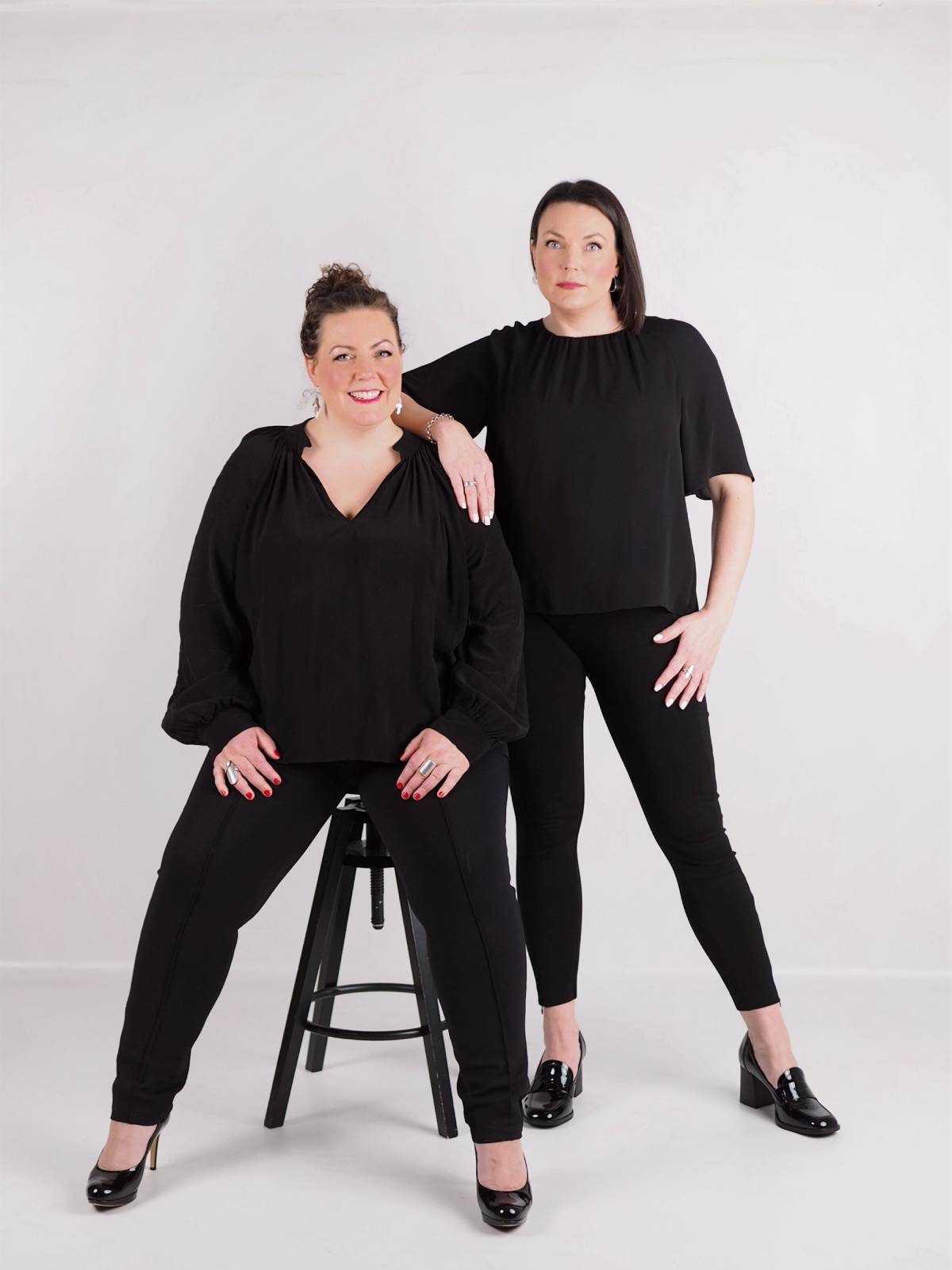
Instagram @augustanordic
Augusta focuses on intimate skin and wellbeing during perimenopause and menopause. What first made you recognise this as an area where women needed more support and open conversation?
The more we researched, the more astonishing the gap became.
We talk a great deal about menopause now, which is fantastic, but intimate symptoms are still under-discussed. Many women don’t even realise that dryness, burning, itching, urinary symptoms or painful sex can be connected to declining oestrogen.
There is also this deeply ingrained idea that discomfort is simply part of being a woman. Period pain, painful sex, childbirth, menopause… Women are remarkably often told, explicitly or implicitly, to tolerate things.
I find that frustrating.
Not every symptom can be solved with skincare, and we are very clear about that. Sometimes medical treatment is needed and women should absolutely seek professional help. But good daily intimate care can make an enormous difference to comfort and skin wellbeing.
Women deserve both better information and better options.
As you have spoken with women and healthcare professionals while developing Augusta, what have you heard or learnt that has stayed with you?
What stays with me most is how long women can live with symptoms before asking for help.
Someone can experience dryness, irritation or painful sex for years and think it is just something they have to accept. Or they repeatedly assume itching must be a yeast infection and treat it accordingly, when the underlying reason may be something completely different.
There is also shame. Intimate symptoms are difficult to describe. Women worry that they are dirty, that something is wrong with them, that their body smells different, or that changes in their sexuality somehow reflect on their relationship or attractiveness.
And then there are women who have finally asked for help and felt dismissed.
Those conversations remind me why language matters so much. Sometimes the first thing someone needs is simply to hear: this is common, there may be a reason for it, and there are things you can do.
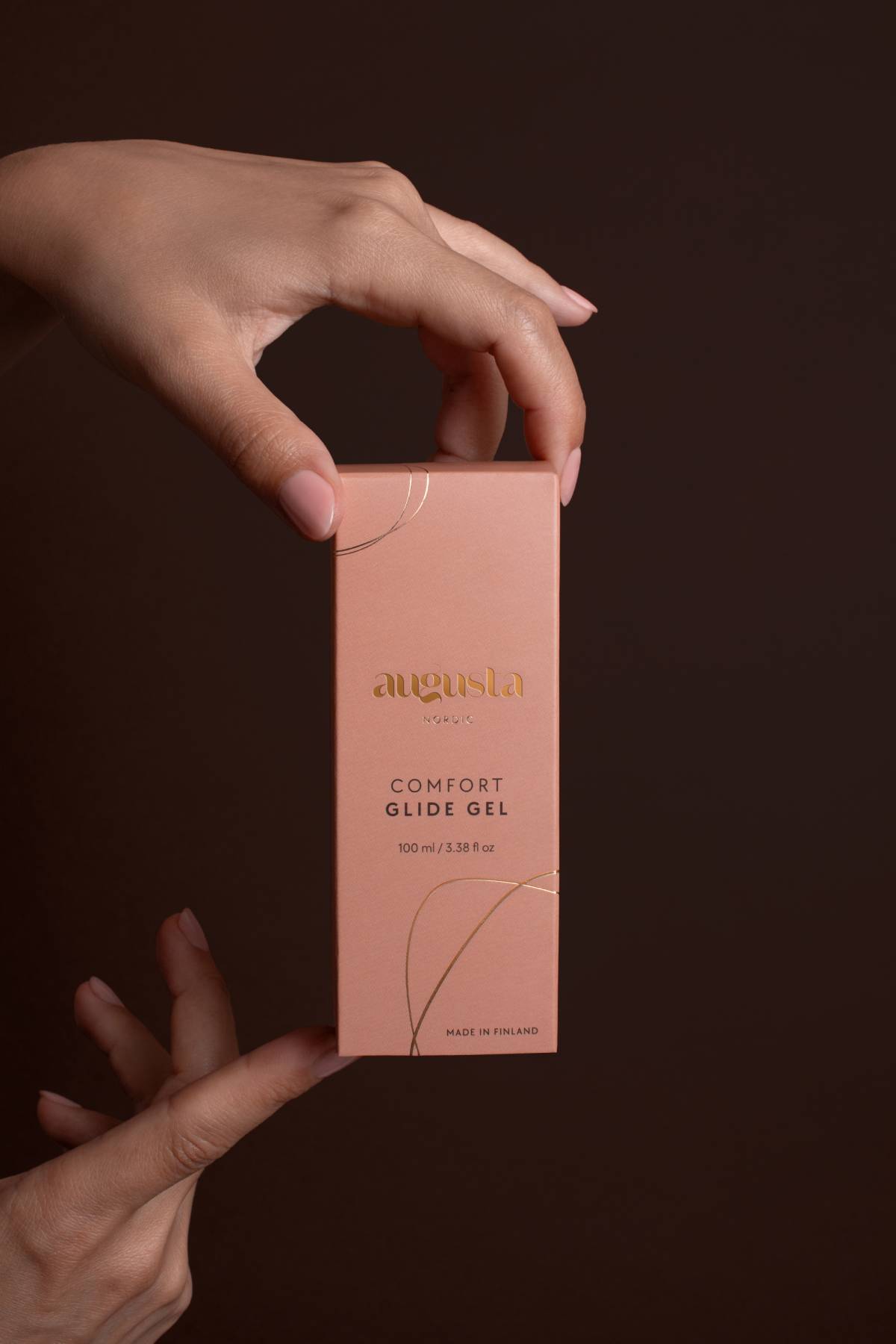
Women’s health is still surrounded by many topics that people find difficult to discuss. Why do you think these conversations remain so uncomfortable, and what can businesses do to help change that?
Women’s bodies have been surrounded by shame for centuries. Menstruation is dirty. Vulvas should look and smell a certain way. Ageing should be hidden. Menopause means becoming old. Women should be sexual, but not too sexual. And then at some undefined age, we are apparently supposed to stop being sexual altogether.
Those messages don’t disappear overnight.
Businesses have enormous power because we help shape the language and imagery people see every day. But with that comes responsibility.
I don’t think women need more companies inventing insecurities in order to sell them solutions. Especially in intimate health, we need to be very careful not to turn normal bodies into problems.
For Augusta, the message isn’t “there is something wrong with you”. It is: your body changes throughout your life, you deserve to understand those changes, and you deserve to feel comfortable in your body.
Normalising the conversation is part of the work.
You have built brands where purpose and business go hand in hand. What have you learnt about creating something commercially successful without losing sight of the reason you started it?
Purpose without a viable business model doesn’t create very much long-term impact.
I think entrepreneurs sometimes feel uncomfortable saying that they want to build a successful and profitable company, particularly when they work in a purpose-driven field. I don’t see a contradiction.
If your company is profitable, you can employ people, develop better products, enter new markets, support causes you believe in and reach more people. Commercial success can amplify your impact.
The important question is what you refuse to compromise along the way.
For me, values have to show up in decisions, not just in a paragraph on the website. That can mean how products are manufactured, who you work with, how you communicate, what claims you make and sometimes which opportunities you choose not to pursue.
With Augusta, for example, equality is built into the company: we donate 1% of our revenue to advancing equality. It isn’t something we plan to start doing once we’re successful.
You build the company you want to become from the beginning.
You now also mentor and advise other entrepreneurs, particularly women founders. What patterns do you see in women who have strong ideas but hesitate to take the next step?
I see incredibly capable women waiting to feel qualified.
They want another course, another qualification, a more complete business plan, more research or more proof before they are willing to say, “I can do this.” Meanwhile, someone with half the experience has already started.
But I also understand that feeling very well, because I still experience it myself.
I have been an entrepreneur for more than 20 years. I have built an international brand, sold a company, started again, worked on boards and advised other entrepreneurs, and I can still walk into a room and wonder whether I really belong there. I still have moments of imposter syndrome and insecurity. I still question whether I know enough or whether somebody else would be more qualified.
Experience doesn’t necessarily make those feelings disappear. What it gives you is more evidence that you don’t have to believe everything your insecurity tells you.
I think this is something we should talk about more, especially among successful women. From the outside, confidence can look like a permanent state. In reality, many of the people we think are completely sure of themselves are making decisions while carrying plenty of doubt.
I also see women underestimating the value of their own experience. They describe expertise as if it is something that just happened to them rather than something they have spent years building.
And funding remains a very real issue. Women founders still receive a disproportionately small share of venture funding. We cannot solve that simply by telling women to be more confident. The structures around entrepreneurship and investment need to change too.
My advice is usually: don’t wait until you feel completely ready. Most of us never do.
After more than 20 years of building businesses and working in women’s health, how has your own definition of success changed?
When I was younger, success was much easier to measure. Revenue, growth, countries, retailers, awards, things you could put into a presentation.
Those things still matter. I’m an entrepreneur; I want Augusta to become a successful international company.
But my definition has become much broader.
Success is also having the freedom to choose who I work with. It is being able to say no. It is building something without sacrificing everything else in your life to do it. It is helping another entrepreneur avoid a mistake you once made. It is seeing an uncomfortable subject become easier to talk about because you helped give people the language for it.
And perhaps ageing gives you a healthier relationship with achievement. I no longer feel that every opportunity has to be taken or every room has to be entered.
I’m much more interested in building the right things with the right people.
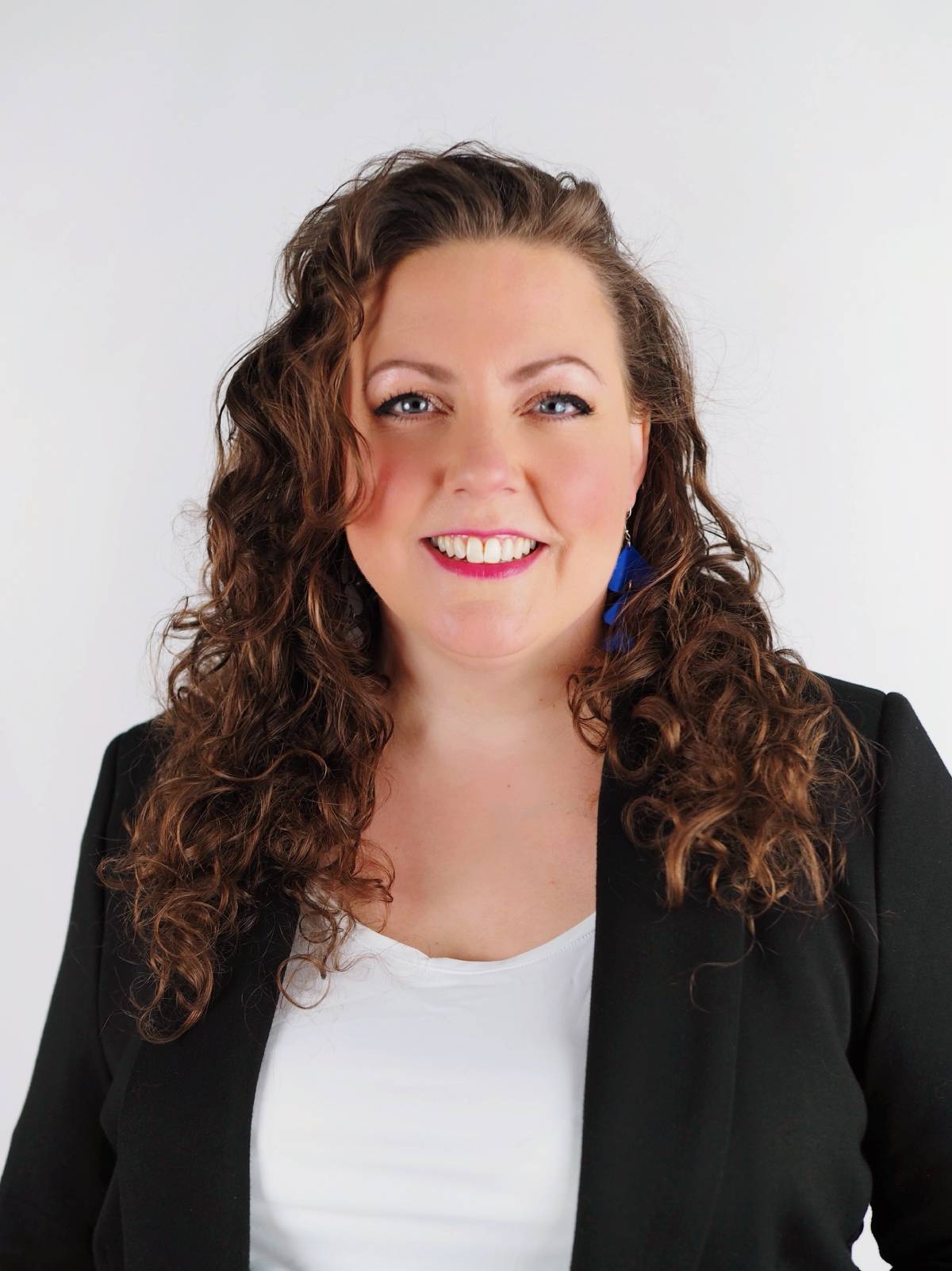
Looking ahead, what would you love to change through your work, and what message would you like to leave with the women reading FEMEST?
I would love for the next generation of women to know much more about their bodies than my generation did.
We shouldn’t reach our forties and suddenly discover perimenopause. We shouldn’t have to Google symptoms in secret because nobody ever taught us what is normal.
With Lunette, I had the privilege of watching a taboo become a conversation. That makes me optimistic, because it proves these things can change.
Now I want to help do the same for menopause, ageing, intimate health and female pleasure.
And if there is one thing I would say to women reading this, especially those thinking about starting something new, it is this:
You don’t need to have everything figured out before you begin.
I started my first company with an idea and very little understanding of what building an international business would actually require. Twenty years later, I’m starting again — this time with much more experience, but still plenty of uncertainty.
You are allowed to change direction. You are allowed to start again. You are allowed to become more ambitious as you get older, not less.
Some of the most interesting chapters can begin much later than we were taught to expect.