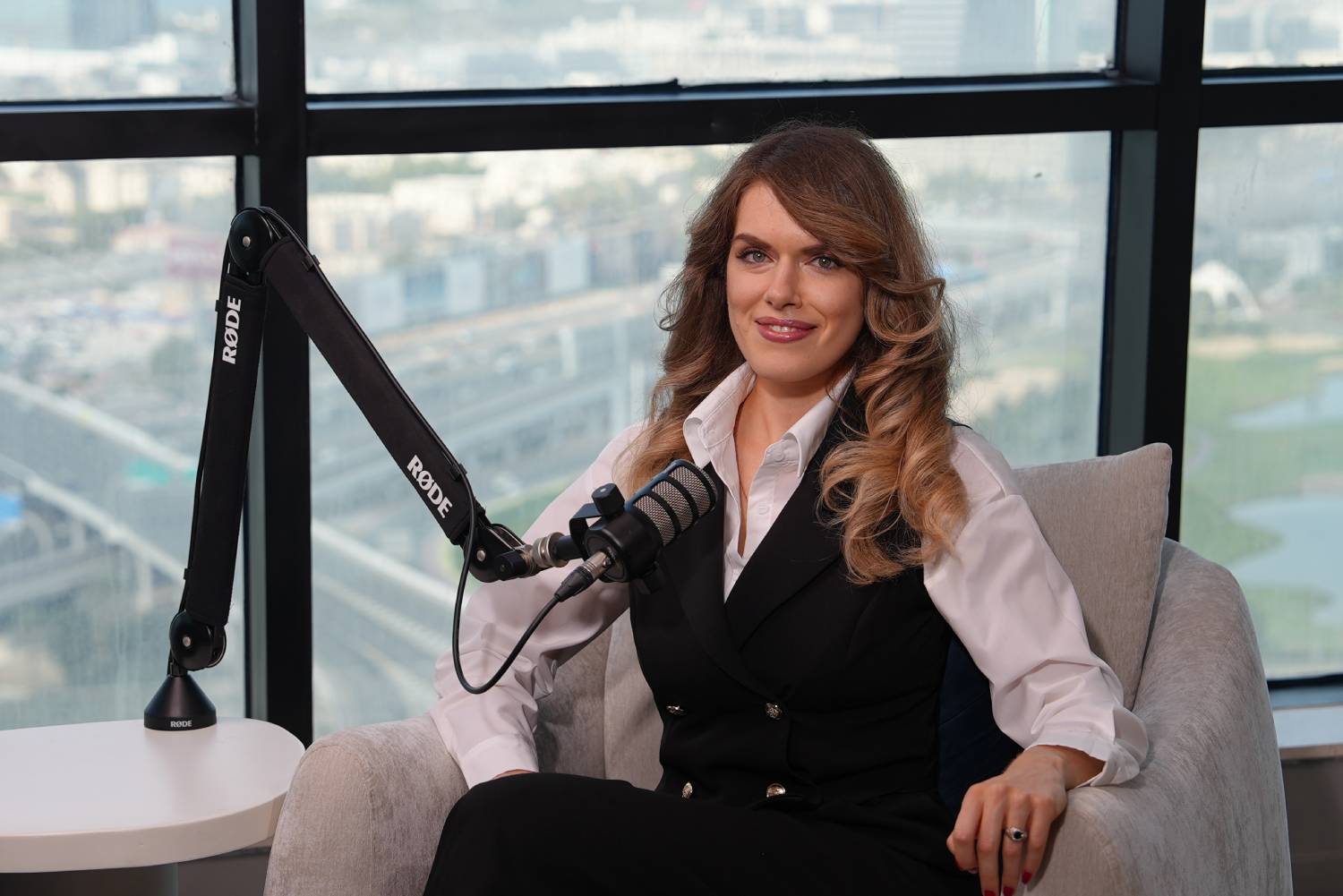
Interviewer, journalist, media producer, and practical psychologist Anastasiia Kara-Kush believes the most powerful stories are the ones we choose to tell honestly.
In this conversation, she reflects on authenticity, confidence, visibility, and why every woman is already enough to begin.
Could you tell us a little about yourself and what you’re most passionate about today?
My name is Anastasiia Kara-Kush. I am an interviewer, journalist, media producer, and practical psychologist. For more than 15 years, I have worked with people, stories, communication, visibility, and personal transformation.
Today, I am most passionate about helping people become visible through their real stories, not through a perfect image, not through pretending to be someone else, but through honest, deep, authentic storytelling.
I believe every person has a story. Sometimes people simply do not see the value of their own experience because they are too close to it. My work is to help them see it, structure it, and share it with confidence.
For me, this is important because today it is no longer enough to simply be a good specialist. The world needs to see you, hear you, and understand what you carry inside. We come into this world not only to live our experience, but also to share it. Our stories, knowledge, and lessons can support, inspire, and open doors for other people. In this way, storytelling connects us – our experiences, our paths, and the worlds we create around each other.
Looking back, what experiences have shaped the person you are and the work you do now?
A lot of my work was shaped by my own journey.
I was born in Russia, lived in London for around six years, and later moved to Dubai. Every country, every move, and every new chapter taught me something important about identity, courage, adaptation, and reinvention.
My background in journalism taught me how to ask questions and see a story. Psychology taught me how to listen more deeply. Business and media taught me how visibility can change not only a person’s reputation, but also their opportunities.
I think all these experiences came together naturally. Today, I do not simply interview people. I help them understand the meaning of their journey and communicate it in a way that feels powerful and true.
Was there a defining moment that inspired you to help others share their stories with confidence?
I think very often everything starts with our own personal story.
There was a time when I was shy about my own voice. I was afraid to make phone calls, but at the same time, I always wanted to be visible. I loved the idea of public speaking, the stage, media, and self-expression – but I had to go through my own journey from insecurity to confidence.
Moving countries also shaped me deeply. When you move, it can feel as if you are starting from zero again. As if everything you have built, learned, and achieved stayed somewhere in another country.
But later, especially when I moved from London to the United Arab Emirates, I realised something very important: we never truly start from zero.
Everything you have learned, everything you have lived through, every experience, every skill, every challenge becomes your foundation. These are your assets.
This understanding changed the way I see storytelling. When you know your story, when you respect it, when you are proud of what you have lived through, you do not feel empty or “new” in the world. You feel rooted.
And I think this is one of the reasons I help others share their stories with confidence. Because I know how powerful it is when a person realises: my experience matters, my voice matters, and I am not starting from zero. I am starting from everything I have already lived.
This is why visibility matters so much to me. When we share our experience, we do not only speak about ourselves. We create a connection with other people. Someone may see their own strength through our story. Someone may feel less alone. Someone may find the courage to begin. I believe our stories are part of a bigger human exchange: we learn from each other, inspire each other, and remind each other that our experience has meaning.
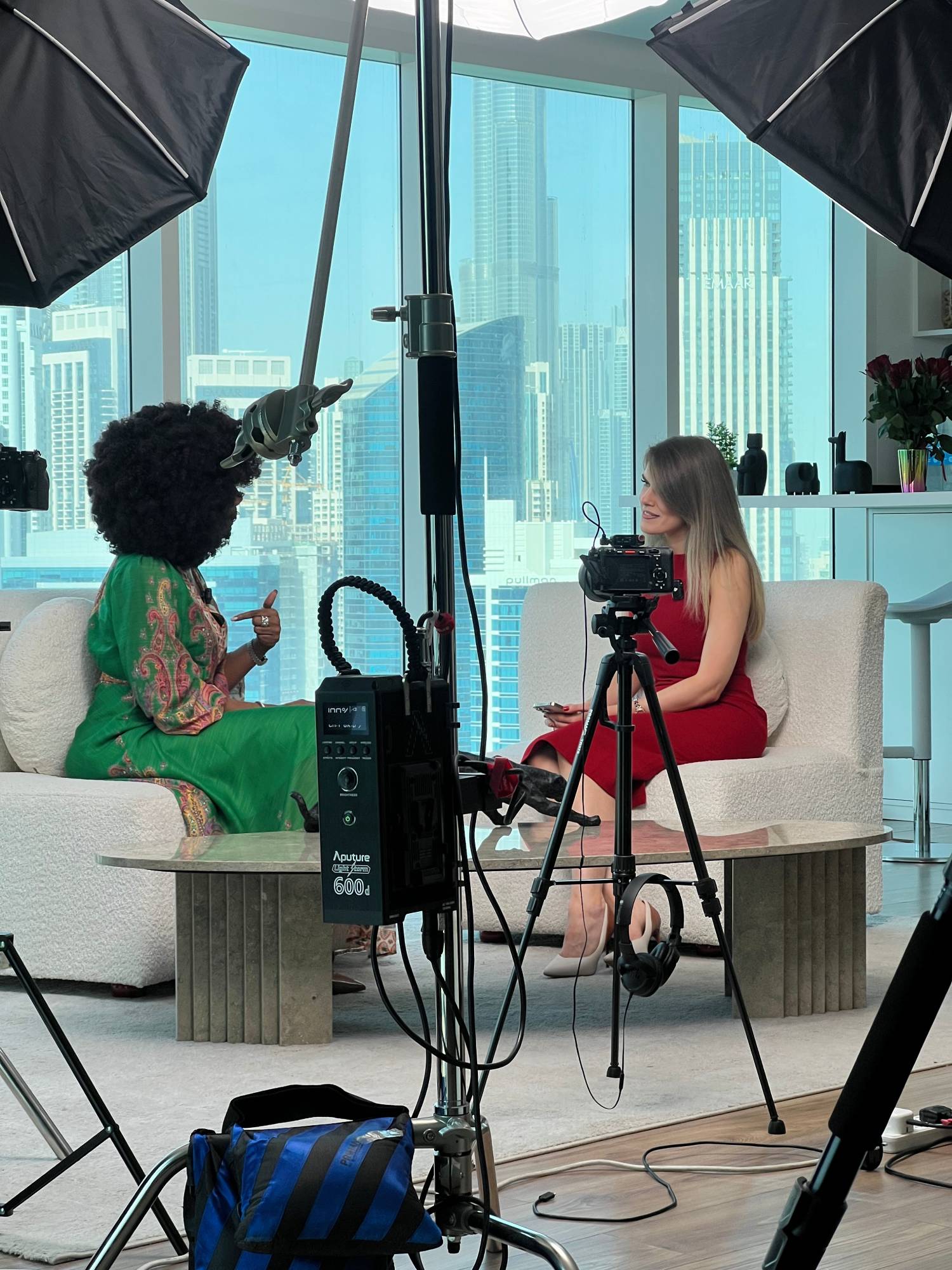
Your work focuses on purpose, credibility, and authentic storytelling. Why do you think these matter more than ever today?
Today, thanks to technology, we live in a highly competitive world where so much happens every single day. In many ways, it feels like we are already competing not only with other people, but even with artificial intelligence.
It is no longer a big problem to find information, learn something, or create content. But there is one thing that cannot be replaced – human energy.
It may sound simple, but people buy from people. People trust people. People connect with people.
When we show who we really are, when we share not only our expertise but also our personality, our interests, our imperfections, and our real experience, other people can recognise something familiar in us. Our imperfections often become points of connection. They allow others to feel: I understand this person, I trust this person, I see something real here.
But when we try too hard to look perfect, when we create an image that may look beautiful but does not truly feel like us, we either attract the wrong people – or we do not create a real connection at all.
Energy is always felt.
That is why I believe so deeply in being, not just appearing. When you are authentic, your people can find you. And when the right people find you, your work, your communication, and your life become much more honest, meaningful, and joyful.
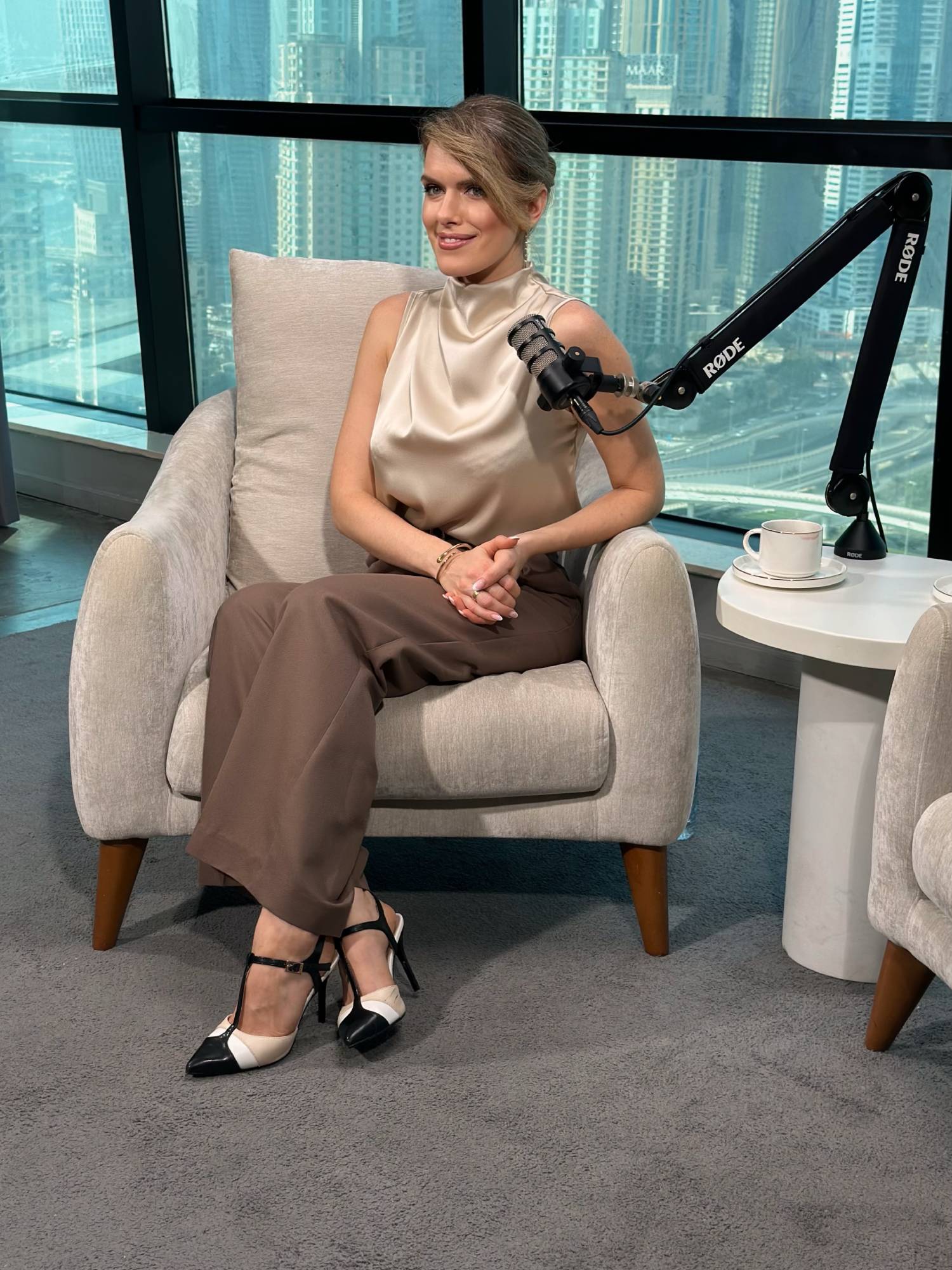
Many people struggle to recognise the value of their own journey. What advice would you give someone who feels their story isn’t important enough to share?
I believe gratitude is one of the answers.
When you begin to feel grateful for the life you are living today, you also begin to feel more respect for your personal story. You stop seeing it as “ordinary” and begin to understand that your path has value.
There is one very simple exercise I like. Imagine, just for a moment, that you are living someone else’s life. Not only the most beautiful or romantic part of it, but the whole life – with all its ups and downs, challenges, losses, fears, and unknowns.
Imagine that you do not have what you deeply love in your own life today. Your loved ones, your family, your achievements, your experience, your appearance, your familiar world, the things that make you feel like yourself.
Imagine that you are a completely different person. Maybe even someone you saw today in an elevator or passed on the street. You do not know their story. You do not know what they carry, what they miss, what they dream about, or what they have lost.
And in that moment, you may realise that there is so much in your own life to be grateful for. So much you would not want to lose. So much that makes your story yours.
Your story may look ordinary to you because you live it. But for someone else, it can be exactly the story they need to hear.
We often underestimate our own journey because we compare it with someone else’s success. But the most powerful stories are not always about big achievements. Sometimes they are about courage, mistakes, new beginnings, quiet decisions, or the moment when you chose yourself.
You do not need to be famous to have a story. You do not need to be perfect to be inspiring. You only need to be honest enough to look at your path and ask: what have I learned, and who could this help?
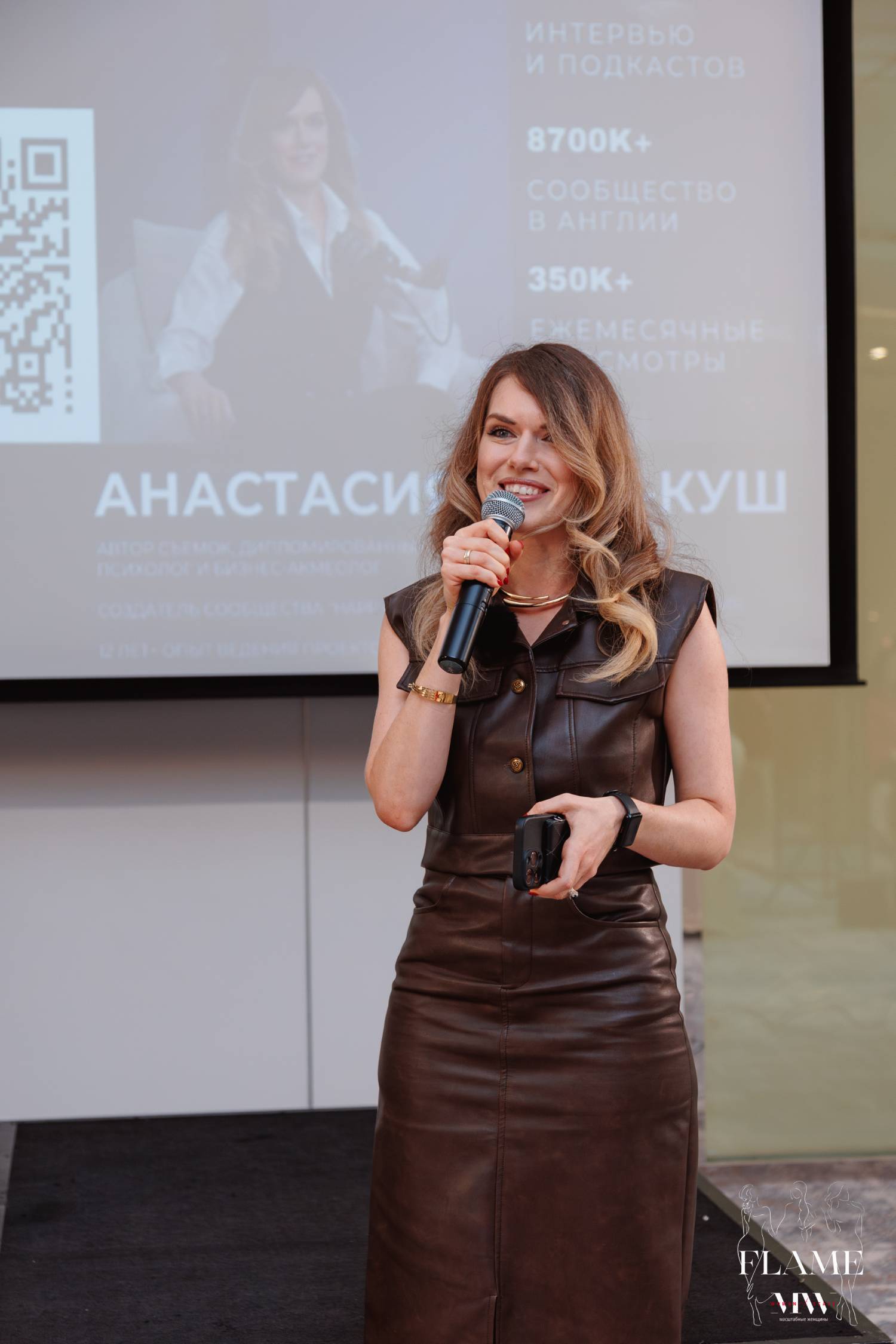
Confidence can look different for everyone. What has helped you build your own confidence over the years?
One of my favourite phrases is: confidence comes through experience.
I do not believe confidence appears before action. Very often, confidence comes after you try, after you make mistakes, after you survive uncomfortable moments, and after you realise that you can handle more than you thought.
It is impossible to be born fully confident. It is impossible to know everything from the beginning. And I think this is absolutely normal.
For me, confidence is made of several things.
The first is knowing yourself and your boundaries. It is an inner support, a connection with yourself, when you no longer constantly search for approval from the outside.
The second is allowing yourself to separate your confidence from your achievements. Very often, we connect our confidence only with success, results, recognition, and external proof. And when we do that, we move away from our essence – from who we truly are. We begin to doubt ourselves because we are afraid: will I do it well enough? Will I be good enough? Will people approve?
One exercise I really like is to remove the pressure of being extraordinary. To stop telling yourself that you must always be super successful, super confident, super impressive, or super perfect.
Sometimes it is very healing to simply say to yourself: I am an ordinary person. I am a normal specialist. I am a normal woman. I am a human being.
When you allow yourself this ordinary humanity, something changes. Everything you do beyond that no longer has to prove your worth. It simply adds to you, strengthens you, and expands you.
And then confidence stops coming from the fear that something in you is not enough. It begins to come from a calmer place – from experience, self-knowledge, and the permission to be yourself.
What’s the most rewarding part of helping people communicate their ideas and build their reputation?
The most rewarding part is seeing the moment when a person suddenly recognises their own value.
Sometimes before an interview, a person is nervous or unsure. They think they have nothing special to say. And then, during the conversation, they begin to hear themselves differently. They see their experience, their strength, their expertise.
For me, this moment is very powerful.
Because reputation is not only about being seen by others. It also starts with how you see yourself. When a person begins to respect their own story, everything changes – their voice, their posture, their energy, their decisions.
Have you ever faced self-doubt or had to start over? If so, what helped you keep moving forward?
Of course. There have been many situations like that in my life. But I would say that I am quite open to starting something new.
I believe that sometimes a project, a professional chapter, or even an interest has its own life cycle. And it is absolutely normal when at some point you feel that there is no longer the same energy, no longer the same curiosity, no longer the same inner connection. Sometimes you feel that you want to begin again.
But what I have understood with age is this: you do not need to erase or devalue everything you have done before.
It is much more important and much more productive to ask yourself: how can I use my previous experience to strengthen something new?
This is what has helped me move forward many times. I listen to myself very carefully. I ask myself: what do I feel now? What is happening inside me? Where is my energy? And how can I use everything I have already learned to support my next chapter?
When I face difficulties, what also helps me is the understanding that I truly love what I do. I give myself fully to my work. I love my projects, my interviews, my conversations with people.
And I know that my work helps others.
This feeling – that I am useful, that I am doing meaningful work, that I am fulfilling my purpose – is one of the strongest things that keeps me moving forward.
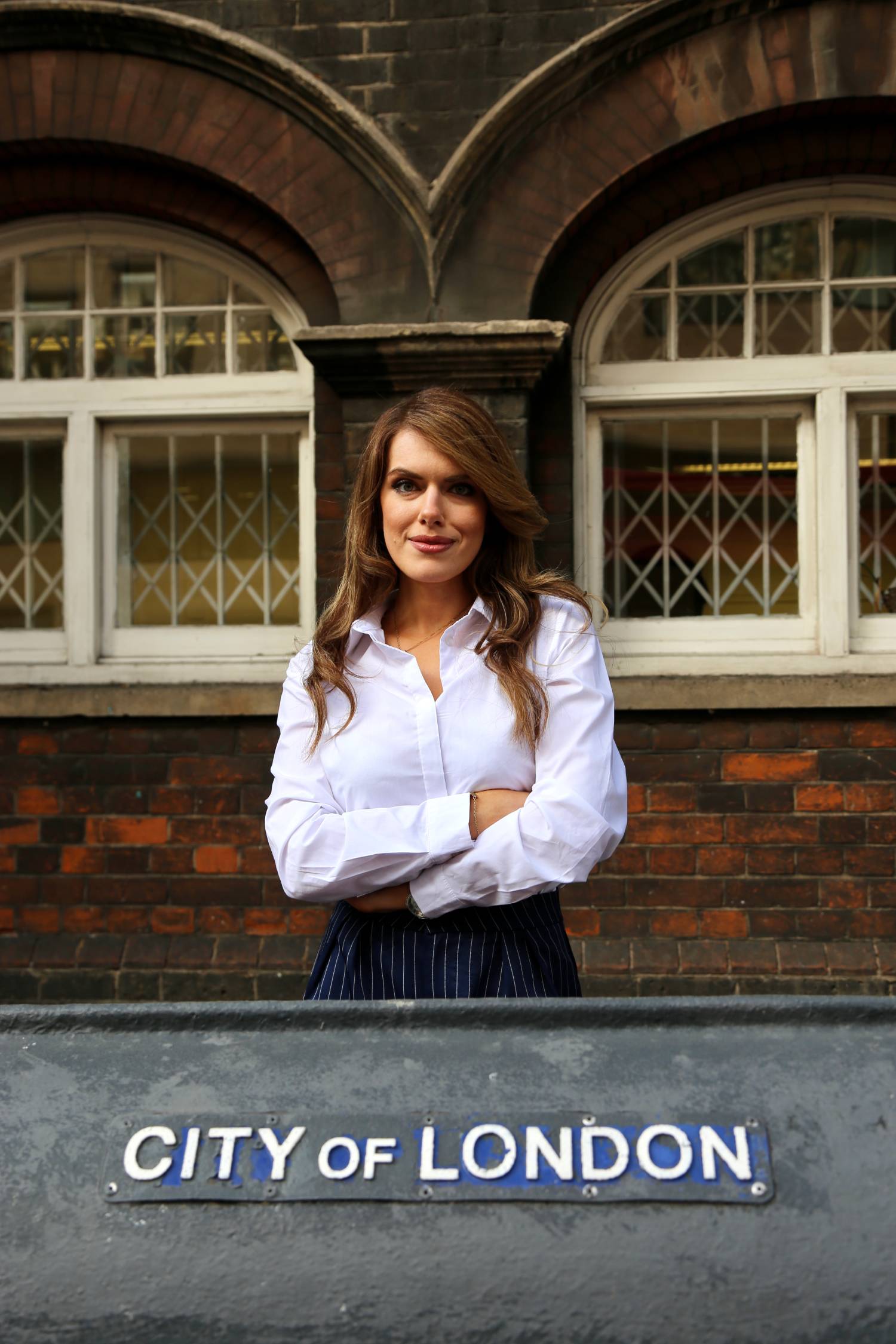
Is there a story or success from someone you’ve worked with that has stayed with you?
There is one thing I have noticed many times in my work: very often, people who have already achieved a lot still face impostor syndrome when they enter a new field.
For example, a person may have built a successful business, created a strong career, moved countries, raised a family, gone through deep personal transformation – but when it comes to being on camera or sharing their story publicly, they suddenly feel unsure.
And I think this is completely normal.
If you have spent years building your business, it does not automatically mean you have also spent years giving interviews or speaking on camera. These are different skills. But it does not mean you cannot learn them.
Most people come to my interviews for the first time because they feel trust. They feel that I will support them, that I will not judge them, and that their story really matters to me.
For me, this is one of the most meaningful parts of my work: to help a person enter a new space with more confidence and realise that visibility is also a skill. You can learn it. You can grow into it. You can begin exactly where you are.
Outside of your work, what helps you stay inspired, balanced, or creatively recharged?
I am deeply inspired by beauty, travel, the sea, meaningful conversations, cinema, books, and beautiful places.
I often say that I collect moments of happiness. For me, inspiration is not only in big achievements. It is in a good coffee, a beautiful hotel lobby, an evening by the sea, a deep conversation, a sunset, a new city, or a simple moment when you feel: life is happening now.
I also need time alone. Creativity requires space. Sometimes the best ideas come not when I am forcing myself to create, but when I allow myself to live, observe, and feel.
What are you currently working on, and what excites you most about this next chapter?
Right now, I am developing KARA-KUSH TALKS as a show and growing Karakush Production as an international media production project.
We create interviews, podcasts, and media formats for people who want to become more visible, share their expertise, and tell their stories in a beautiful, meaningful way.
What excites me most is that the project is becoming more global. We are not limited to one city or one format. We film in Dubai, London, and other locations around the world. One of our most unusual and beautiful filming experiences was an interview in the Maldives.
For me, this next chapter is about scale, beauty, and meaning. I want to continue creating media projects where people feel seen, supported, and proud of their own journey.
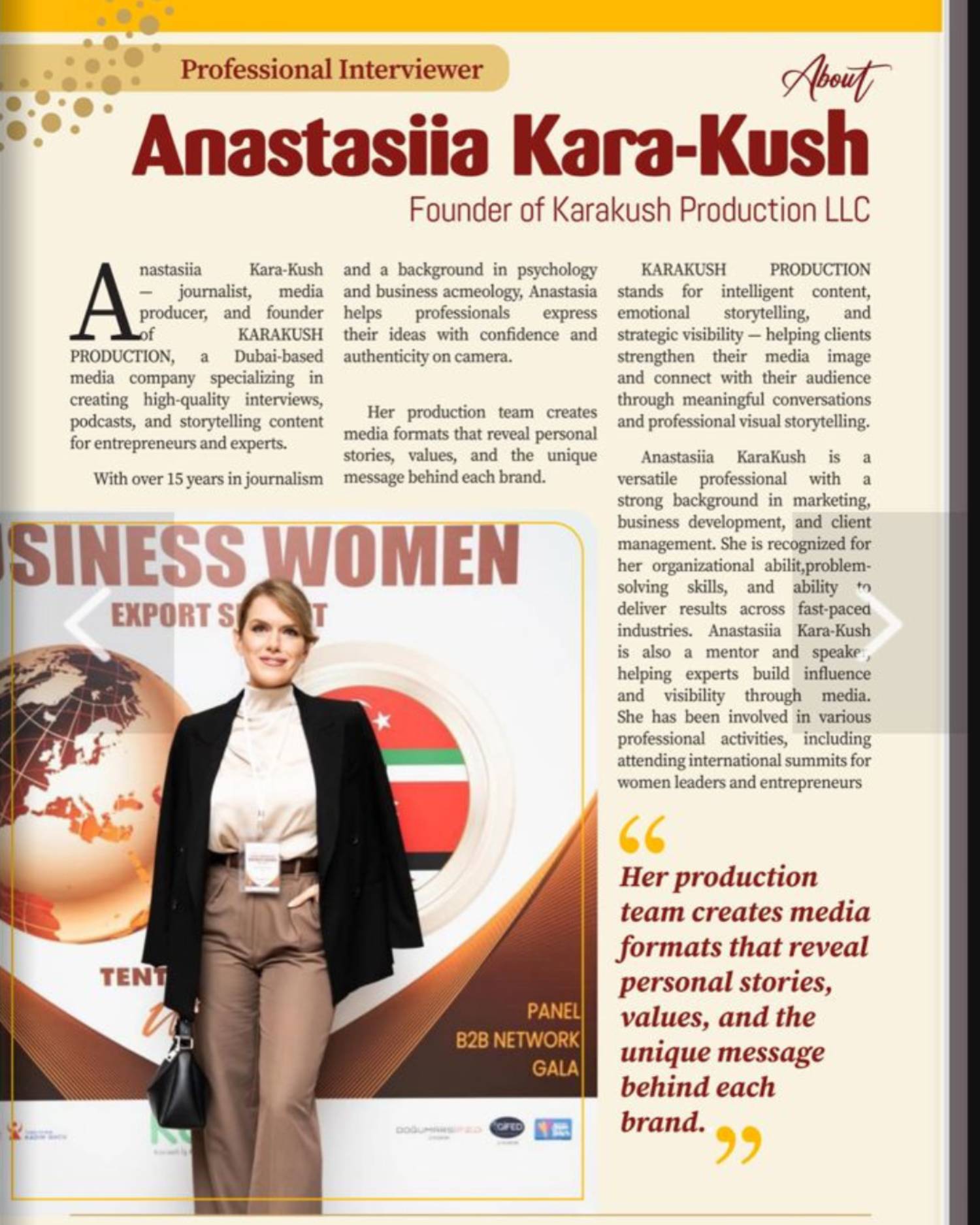
Finally, if there’s one message you hope every woman reading FEMEST takes away from your journey, what would it be?
You are already allowed.
You are already enough.
Very often we think that first we need to become better, and only then we can allow ourselves to begin. We think: when I study more, when I look different, when I speak better, when I become more confident, when everything is perfect – then I will finally allow myself to be visible, to start, to create, to speak, to take my place.
But I believe in a different way.
You do not need to wait until you become someone else. You already have the right to begin. You already have the right to speak. You already have the right to be seen.
Of course, we can grow, learn, develop, and become more professional. But growth should not come from the feeling that you are not enough. It can come from the feeling that you are already valuable, and now you are ready to expand.
My message is simple: do not wait for permission. You are already enough to begin.