Niamh’s journey began long before tech. From a fearless girl scoring goals and winning races, to a young entrepreneur running businesses before most finish college, she built herself through sport, hospitality, motherhood, and failure. Today, she leads in AI with the same courage, clarity, and heart she carried from day one.

Niamh, could you share how your journey took you from coaching sports and working in hospitality to leading in the world of AI and technology?
Sport and adventure shaped my life from a very young age, if I was not climbing trees I was scoring goals or winning races. I liked winning and I was good at it. I would come home from school and tell my mother that I was brilliant at everything and list off all the things I was brilliant at, and she used to tell me to shorten it to ‘I’m Brill’!!
I was always challenging myself, so I didn’t think it was a big deal to start a nutrition and coaching business at twenty one, or open my own restaurant business in Kinsale, in Ireland at twenty three. I left Ireland when I turned seventeen to go to college in Loughborough, in the UK. It was my second time off the Island, and it was such an exciting time in the Health and Fitness industry.
We were the first team to complete the instructor training in Body Pump (Les Mills) and Spinning. Then I was the first health club in Ireland to introduce Technogym to team coaching. I think being part of a brand early and seeing them grow and survive industry trends really set me up for success in business.
It was through my relationship with the owners of a Thai Restaurant that gave me the opportunity to open a Thai restaurant, and I was up for the challenge. Kinsale did not have a Thai Restaurant at the time, and I knew Kinsale was the foodie capital of Ireland. Everything I have learned in business has come from building a successful food business,. There is nowhere to hide in the hospitality industry, you have to get everything right.
After eight years of getting almost everything right, the global financial crash hit, and Thai Cottage was a casualty. I had just become a mother to Griffin, and I was thinking about what I could do next. Law was the natural choice since I had experienced so much during those eight years in business, and I remember thinking that ‘I do love a good argument and winning’.
Over the next five years, I juggled two more pregnancies and an LLB and LLM specialising in Information Technology law and the movement of data. I tried hard to ignore the call to start GrifAlgo, an HR Tech solution to match law graduates to associate roles in legal firms. I often describe entrepreneurship as the itch that cannot be scratched, and sure enough, there you are birthing an idea into an entity and trying to bring everybody on the journey with you. GrifAlgo was the first tech company I co-founded with my husband and my first AI related business, where we started building knowledge graphs to map attributes in graduates, to senior partners in Law firms. Looking back now, I realise how far ahead we were, almost thirteen years ahead.
I remember pitching GrifAlgo to an Enterprise Panel for investment, and one of the Government representatives who happened to be a man, saying to me “I don’t mean to rain on your parade, but I don’t get it”. I think that’s how all great businesses are born, out of a need or an itch to solve a huge problem, but ultimately somebody has to pay you to solve that problem for them.

What first inspired you to start your own business, and what keeps you motivated after building so many?
I am not a patient person, so for me it was very natural to start coaching, working with nutrition clients, and taking on personal training clients. Before I knew it, I was asking my local bank for a loan to buy bathrobes for my ‘Healthy You’ program and selling the program into hotel leisure centres.
The motivation is always that I can bring something unique to the industry I am entering. It would and should keep me awake at night, and I am measuring it on my appetite to do it, and largely my intuition.
As a mother of four, how do you manage family life alongside running high tech companies?
I can’t count how many times a month I hear the words “Your hands must be full” and I honestly respond with “My heart is full” because it is. I don’t compartmentalise family versus work life, for me it’s my whole life. I want to be a contribution to this world that I have the privilege to belong to.
Leading is how I do it, I lead my family and my team every day by leading myself. It’s my choice to operate a high tech company because technology is in every facet of society, and independent voices are needed more than ever. Courage is everything in life. I have three daughters and one son, a Schnoodle called Whiskey and a Section C Welsh Cob pony called Flossy.
I believe I have a duty to improve how technology is created and governed. I have always traveled with my family for work, and home schooled when I have needed to. The kids have lived and experienced different cultures and learned at their own pace from time to time.
I believe you make it work, but you have to prioritise and juggle needs at different times. Nurturing talents and protecting dreams while softly guiding them on how the world works, and communicating that it’s not a fair or equal world, is far more challenging than building a technology solution that people may or may not be willing to pay for.

How has putting relationships first changed the way your team works or achieves results?
The relationship starts with yourself. How do you speak to yourself? How kind are you to yourself? Would you speak to anybody else how you speak to yourself? The next step is with your partner or loved ones, and finally colleagues. If you treat yourself and your loved ones horribly, there is a pretty good chance you will be a horrible boss. This takes work and practice.
The relationship should outlive the task or contract. We are humans and unfortunately, humans are messy in nature. As a leader, you have to consider who is coming to work with that person, so there is no point in just thinking about the task not being done or a breach of contract.
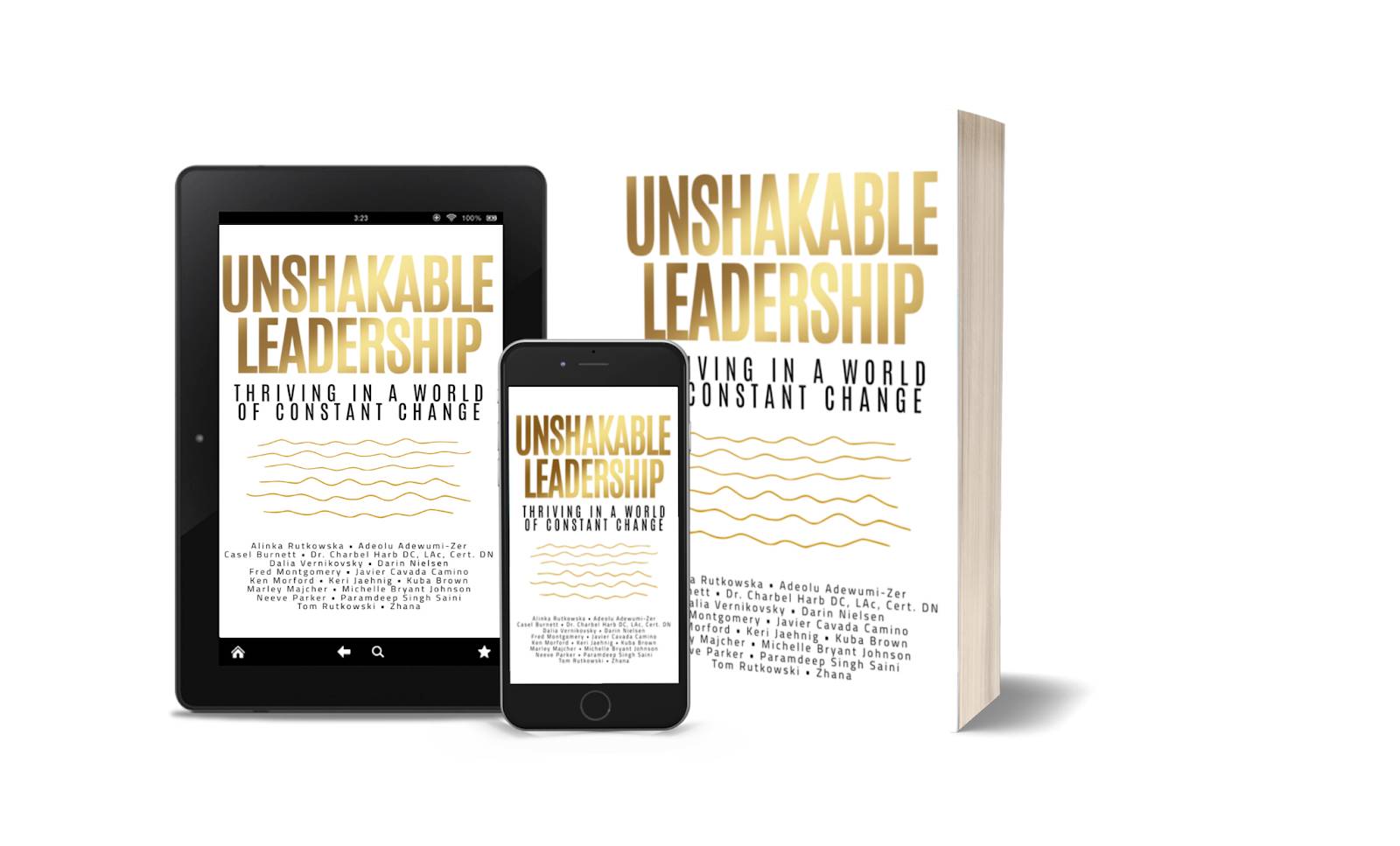
To get it back on track, you need to be able to co-create and ‘relate’ with a fellow human to get the task done and move it to a positive outcome. I have a chapter called ‘Self-Trust in Leadership’ in an anthology called Unshakeable Leadership, which was released in November
It deals with trusting yourself in relationships. Boundaries are healthy in every relationship. In the startup world, it’s about building quickly and finding the right product market fit. The team you start with generally is not the team you scale with because of the change of pace and accountability once you commercialize. Everybody plays their part in the beginning, and then you must execute on the strategy that you have been working towards.
You’ve spoken about leading with joy, trust, and resilience. How have your past failures and early experiences shaped the way you build strong, positive teams today?
Going back to the early days of Thai Cottage, I remember the feeling of happy customers. I was the youngest member of my team, and I recall a customer asking if I would get the ‘tip’ if they tipped me. The ‘joy’ of clearing away empty plates and curry pots.
I have the exact same feeling when I watch my children eating food that I have prepared for them. It’s all about ‘appetite’, if you think about it logically. The appetite to engage and get through the contract negotiation phase. If there is a bump at that juncture and you don’t trust yourself to pause and retract, it sets the relationship up for failure.
Resilience is not giving up, failing is a completely different thing. Failure is certain if you give up. I have learned the most through my failures, and I actually don’t count them as failures because of the lessons I have learned. When failure is no longer a fear you can be braver and bolder. I still celebrate every month we make payroll, because I don’t take that for granted.
When you have lived through high-profile insolvency proceedings and a corporate raid, you are prepared for anything. Intellectual Property (IP) protection is always my top priority now. IP insurance and an IP strategy is the only way to lead with confidence.

At EmergeGen, you focus on transforming unstructured data into actionable insights. What excites you most about this work and its future impact?
When we started EmergeGen in 2023 the world was obsessing about GenerativeAI and LLM’s (Large language Models). Nobody was talking about unified data or standardization. We have always been ahead and suddenly, knowledge graphs are the new shiny toy, and ontologies are cool in 2025 if you use an LLM to create one.
We never follow trends, we are the trendsetters. It’s always about ‘Data’ for our team, now we have coined ‘Data Neckability’ the way data is ‘necked’ or consumed and organised for the future. Our focus is fully on building Quantum ready systems and testing QNLP (Quantum Natural Language Processing).
I am excited about the possibility of reducing the time humans have to manually process data and freeing up their time for more ‘human’ tasks. I hear the market fearing job losses in capital markets, and I am thinking, surely this is a positive outcome for humanity?
AI is often misunderstood. How do you think it can reflect human behavior responsibly, and what should leaders keep in mind as they adopt it?
AI can only mirror human behaviour and reflect ourselves back to us. It mimics but learns and corrects itself, unlike us humans, who often keep repeating the same mistakes over and over again.
A hangover is a good example. I imagine my AI in the future nudging me that if I have one more Guinness, I will definitely have a hangover in the morning and miss the gym. If I were an AI, I probably wouldn’t have ‘one for the road’ because, last time, I was disappointed I missed my gym session. My human self would override that and have the drink anyway.
If AI is used responsibly, ethically, and created with more informed and inclusive voices, it will transform many industries where access to data is essential. It has the potential to break barriers, borders and improve health and wealth outcomes globally. Leaders need to think about AI Literacy and upskilling their teams and deploying them in ways to assist knowledge transfer to power AI systems.
We are witnessing M&A at scale for financial and legal consultancy firms to train AI for Big Tech. If humans are going to be Knowledge Directors of AI systems and disposed of afterwards, it’s going to lead to one massive hangover for GenAI.
I believe it has to be human centric by design, large copyright and other property rights lawsuits are still ongoing. Music and Art will change forever if ethics and trustworthiness are not addressed.

How do you support your team and help them stay confident when decisions are complex and outcomes are uncertain?
I focus on self-leadership and everyday move the needle towards success for the company. I want them to trust me to trust myself in making the best decisions for them. Unfortunately, we get it wrong, unlike AI, we might repeat mistakes but ultimately protecting their work and getting the best possible outcome for them if things don’t go to plan is my goal.
We can only control our solution, our strategy and our work ethic. Sometimes you are too early, too late or there is a blanket block by the market. Timing matters more than you think and your early investors can set you up for success or failure. Patient capital is everything in Deep-Tech start-ups, and sometimes your investors are too high profile, which brings its own challenges. Taking risks carefully is important.
Technology partnerships are risky but you get building straight away and get access to customer stories. Then if your team are collaborators, you end up educating your partners. Everything brings risk, but it must move you forward everyday and build trust with your customers and deliver for them.
There is no silver bullet with AI, it takes time to train and integrate, and the problem must be worth automating in the first place. Our team creates new IP hourly, but is that always the best use of their time in a certain customer workflow solution? I would like to see more data, more testing and knowledge directors informing AI systems, which would bring more confidence and logic all around.
Beyond titles and achievements, how do you personally define success today?
Success for me is defined By spending time with the people I love, in good health, and knowing that everyday I did my best in as many situations as possible. When you start on a journey of consciousness, there is no escaping accountability internally.
It’s tricky because you know who you are bringing to the conversation. Self-acceptance is something that I strive for daily, and accepting others, even teenagers (lol). Taking action for you drives success, action always trumps inaction.
Trusting yourself takes practice, putting yourself first takes even more practice. Happiness is a choice, courage is hard to master. It’s easy to criticize from the sidelines. I try really hard not to personalize anything.
I am in a fortunate position where I get to mentor other founders through my family office investments. If I am contributing and making a difference to the world around me, it feels good, and of course, if people buy our solution or somebody joins your company to build their career, that’s also very cool.

For women aspiring to lead in tech and entrepreneurship, what mindset or habit do you consider essential for long-term growth?
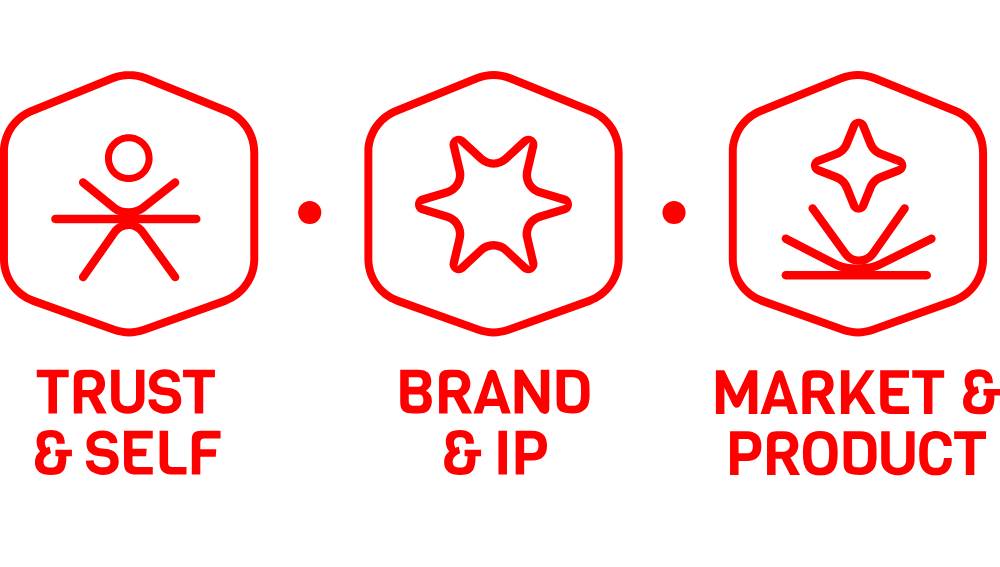
Stay in your lane and master self-belief. If your self-belief is bulletproof and you stay in your lane, you can build serious momentum in a short time that will set you up for Long-term growth and success. I always take Brand & IP first, then Market and Product. If you don’t believe in yourself, you will give up too easily. The brand values, mission and vision, tone of voice is first.
We are brilliant naturally, but we kept in our lane. We have been moving and protecting data for a long time. Go deep in an industry and really understand the value you can bring. The IP strategy is extremely important when you are building in a rapidly changing industry like emerging tech, and trade secrets versus patents need serious consideration.
Then you need to protect it and have the correct policies in place for flagging and tagging new inventions. Thinking about what type of company you want to be and finding your place in the Enterprise solution space is a great place to start. It’s okay to fall between helping a business user and the data analysts because everybody is working with data now.
You don’t need to have all of the answers in the beginning, but you have to be solving a problem that people are willing to pay for, or you are not really ‘in business’ you are just spending investors’ money.

When intuition, ethics, and strategy pull you in different directions, how do you decide which path to follow?
I would always choose strategy over culture in a start-up, because culture will only take you so far. I would go as far as saying that ‘strategy eats culture for breakfast.’ If you rely on culture and you don’t get hiring right, your culture will come under pressure. Ethics is non-negotiable and has to be built into the ‘why’ of your company at the DNA level.
I have been working with data privacy and protection through the inception of the General Data Protection Regulation (GDPR), right up to the present day introduction of the AI Act. Everything we do starts at the data strategy layer, and getting that right means we have a solid foundation to work from.
Intuition guides everything but gets lost if you lack self-belief or are slow to make decisions. I favor ‘gut feeling’ over ‘brain thinking’. I never ignore my gut feeling or intuition. The path can easily be decided for you if you trust your gut, but if you act from the head, you will end up going where you are not invited, and it will cloud your judgment on the issue.
Staying in your lane really protects you from getting pulled into issues that you don’t really need to be involved in. In task driven environments, it’s not difficult to uncover who is not delivering in an organization. Then, if that individual makes it about the ‘relationship’ and not the ‘task’, that’s usually where the disconnect happens. Accountability and ownership are not traits that everybody bring to the table, as leaders, we need to accept that.
It is our responsibility to be very clear on the deliverables and most importantly, deliver on our tasks. When you are building technology, it’s very easy to get distracted by scope creep and feature engineering. Customers will keep asking to move buttons and change logos if you let them. Once the strategy is locked in you have to follow it through.
I led on the Data Central build, so I am personally wounded if the customers select API’s instead of the workflow tool, because it’s more intuitive to use the technology how it was intended. The strategy must be executed and given every opportunity to succeed before any pivot is decided upon. Trust yourself and believe in yourself, and soon you will notice that others are trusting and believing in you too. I dare you!
From the Editor:
This story reflects her rise, her challenges, and the strength that keeps her moving forward. We hope it inspires you the way it inspired us. Her chapter in the entrepreneurial anthology was released this November(you can read it here) and her own book is expected this Christmas. These milestones show her growth, passion, and dedication. We are proud to share her journey with our readers and excited for what comes next.