

Before Oliva became a familiar name in Amman’s dining scene, it was simply three tables, a handmade oven and one self-made entrepreneur determined to make it work.
There is something particularly appealing about a restaurant that grows slowly, through people who discover it, return to it and eventually bring their families with them. Long before Oliva became an established name in Amman, it began as a much smaller idea in Jabal Al Lweibdeh: three tables, a handmade oven and a founder willing to learn almost everything from scratch.
Oliva was founded in 2011 by Ayman Taqatqa, who entered the restaurant business without a formal background in restaurant development. At a time when specialist knowledge, professional guidance and access to experienced suppliers were less readily available in Amman, he relied on research, experimentation and persistence.
Rather than waiting until he had all the answers, Ayman taught himself.
He learnt how to make pizza by watching YouTube videos and then put that knowledge into practice with his own hands. The restaurant itself was very much a hands-on project. Ayman painted the walls, worked on the carpentry, built the tables, installed the kitchen and personally sourced the materials and equipment needed to bring the space together.
When Oliva finally opened, his role did not stop at the door.
He cooked, served guests and managed the daily operation himself. In those early days, there was little difference between being the founder, builder and operator. If something needed doing, Ayman was involved.
That willingness to learn continued after the restaurant opened.
Learning By Doing
One of the biggest challenges was the pizza oven. Without previous experience in constructing one, Ayman had to rebuild it several times after it collapsed.
Each failure meant starting again.
It also meant learning something new each time while continuing to run a young restaurant. There was no neat division between the difficult learning period and the finished business. The two happened at the same time.
That persistence became part of Oliva’s foundation.
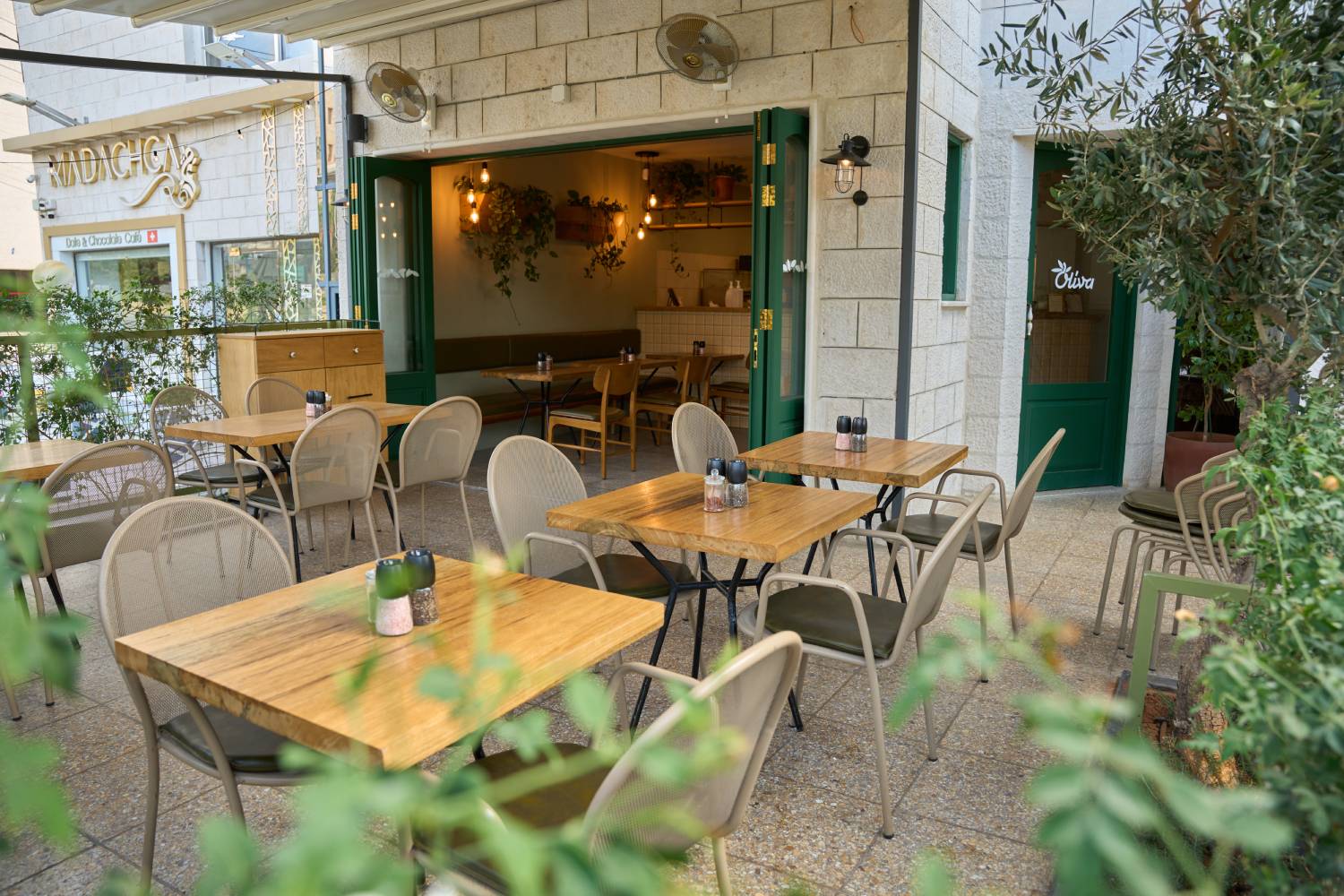
For its first location, Ayman chose Jabal Al Lweibdeh, one of Amman’s oldest neighbourhoods, known for its historic character, creative community and intimate atmosphere. At the time, the local dining scene was still limited. There were no Italian restaurants or pizzerias in the area, and the idea of a casual neighbourhood restaurant somewhere people could return to regularly and feel at home was still relatively uncommon.
Oliva slowly began to find its audience.
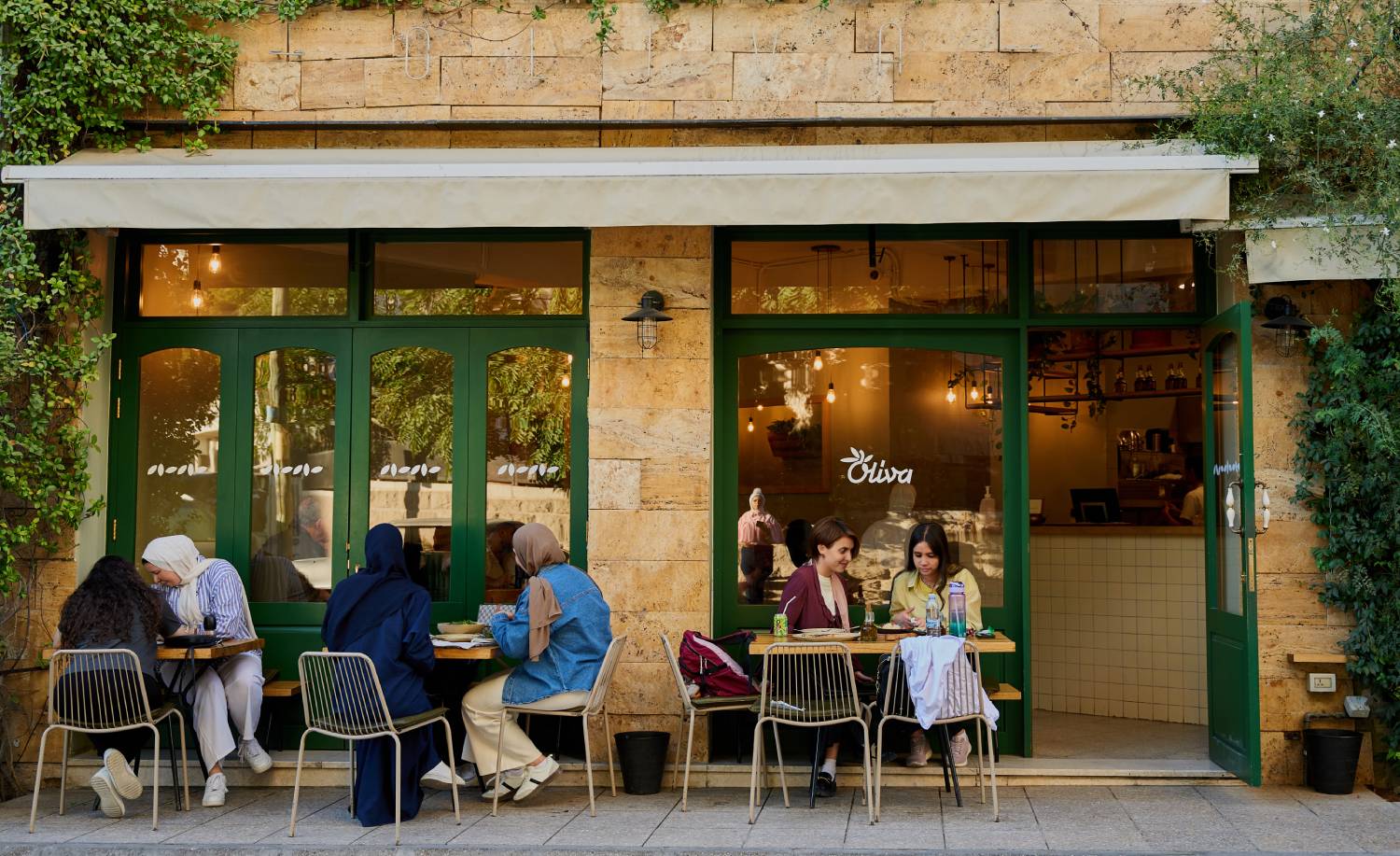
People came for the pizza, then returned with friends. Guests began staying around the tables long after their meals had finished, continuing conversations and enjoying the atmosphere.
For Ayman, this was perhaps the clearest indication that something meaningful had been created.
Oliva was no longer simply a restaurant serving food. It was becoming a place where people wanted to gather.
When a Restaurant Becomes a Gathering Place
That sense of community would eventually inspire another part of Ayman’s hospitality journey.
Seeing guests continue their conversations around Oliva’s tables made him want to create another nearby space where that feeling of gathering could continue. That idea eventually became Rumi Café, now one of Amman’s best-known homegrown cafés.
But the story always comes back to Oliva.
What began with three tables became the foundation of a wider hospitality journey. Yet despite that growth, the restaurant remains closely connected to the qualities that shaped its earliest days: curiosity, resilience, hands-on work and an understanding of what makes people want to return.
Today, Oliva has two locations, with its second branch opening in Shmeisani in 2022. The restaurant is now preparing for its third branch, scheduled to open in April 2027, marking another step in Oliva’s gradual growth across Amman.
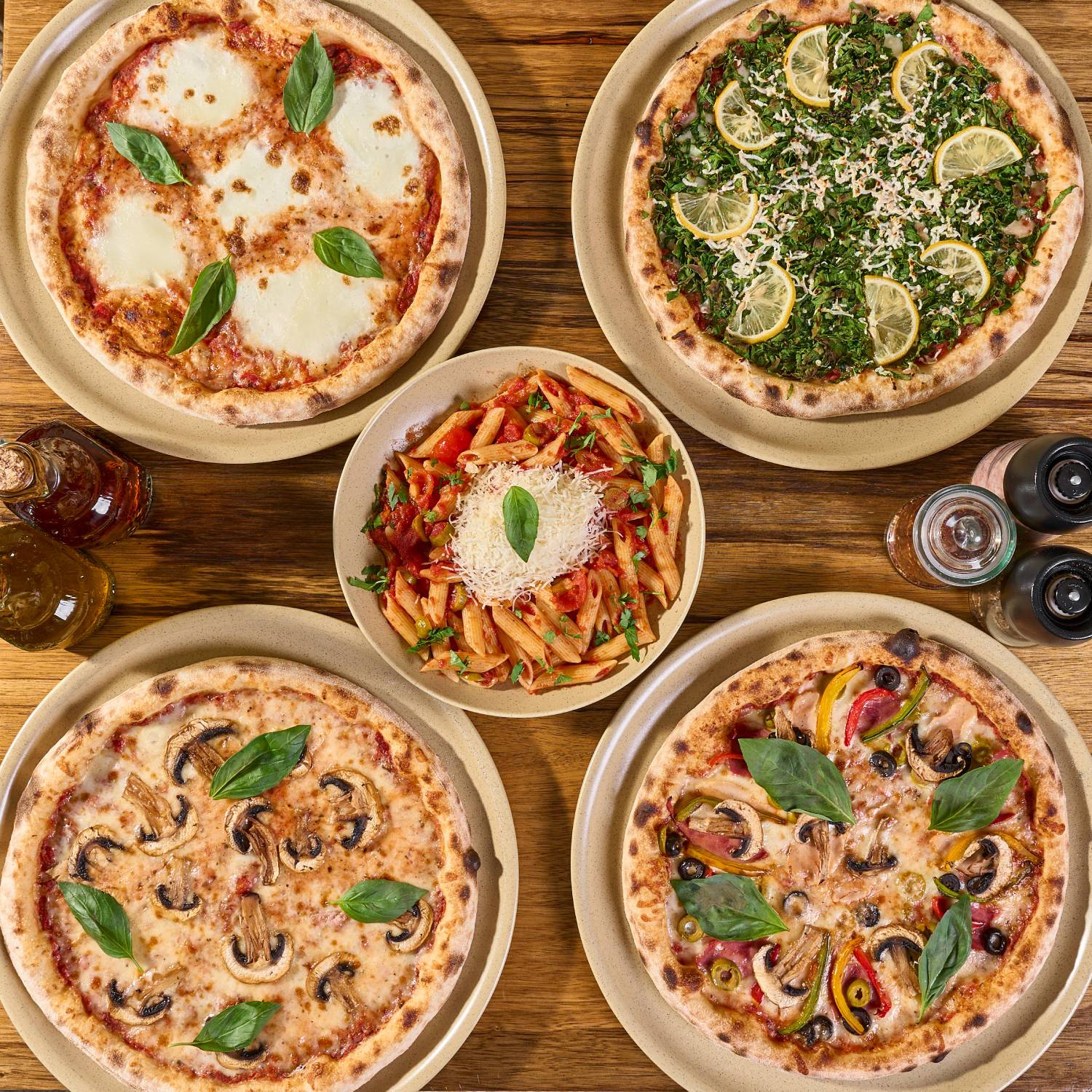
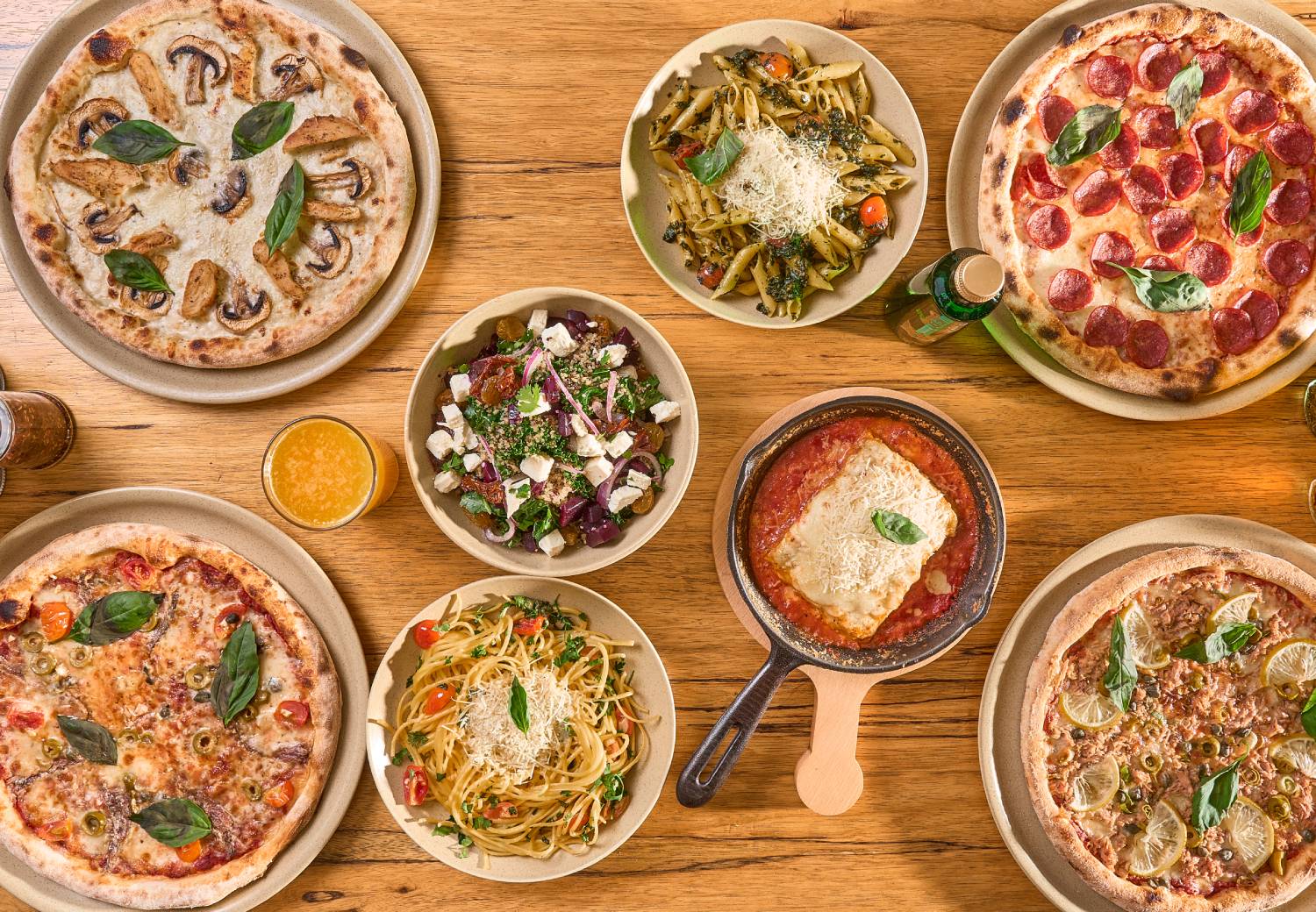
Its menu remains centred on approachable Italian-style favourites, with a focus on New York-style pizza, pasta, fresh salads and Italian desserts. The restaurant is particularly known for its thin-crust pizzas and pasta dishes, with fresh, seasonal ingredients used whenever possible.
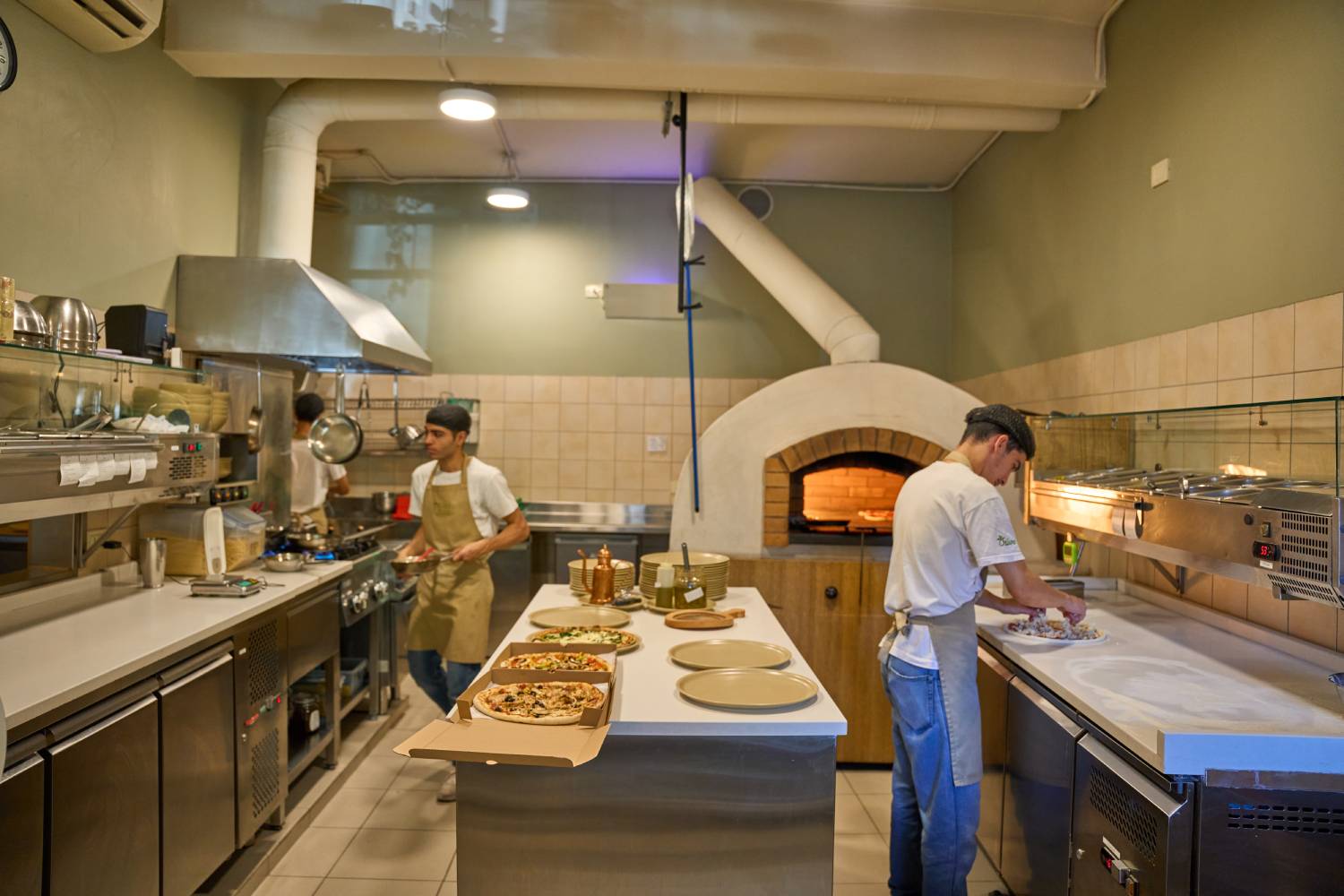
The pizza dough is made in-house, left to rise slowly and baked in a clay oven.
Among the signature dishes are Oliva Pizza, pesto penne, original garlic bread, seasonal salads and tiramisu.
There is no attempt to turn the experience into formal dining. Instead, Oliva offers fresh, uncomplicated food in a relaxed neighbourhood setting.
A Menu Made for Coming Back
That informal approach is reflected in the spaces themselves.
Both branches have open kitchens, allowing guests to see the pizzas and pasta being prepared. Wood, warm colours and natural light create an atmosphere designed for everyday occasions rather than special occasions alone.
It is a place for a casual lunch, a family meal or an evening with friends.
And that may be one of the most important parts of Oliva’s identity.
The restaurant did not grow simply because people tried it once. According to its story, much of its growth came through returning guests and word of mouth.
Some customers have been coming for years. Some first visited as students and now return with their own families.
That kind of connection cannot easily be created through a menu alone. It develops over time, through familiarity and consistency.
For Oliva, consistency is one of the things that has remained important as the restaurant has grown. The expansion into a second branch did not mean leaving behind the food, atmosphere or personal service that people had come to know during its early years.
Instead, the aim has been to preserve those elements while allowing the restaurant to grow.
Rooted in Amman
Although Italian food is at the heart of the menu, Oliva’s story is very much a local one.
Its beginnings in Jabal Al Lweibdeh, its relationship with returning customers and its gradual growth through word of mouth all connect the restaurant to the city around it.
There is something refreshing about that kind of growth. Oliva did not begin as a large hospitality project. It began with limited resources and a founder learning as he went.
The story is not one of instant success. It is about persistence building, rebuilding, learning, cooking, serving and continuing to show up.
Even the restaurant’s earliest difficulties became part of that education.
The collapsed pizza oven, for example, could have been simply a setback. Instead, each rebuild became another lesson. That same attitude runs through the wider story of Oliva: learn, adapt and keep moving.
Today, the restaurant is larger than it was in 2011, but its identity remains grounded in the same basic idea good food, a welcoming atmosphere and a place where people can spend time together.
More Than a Meal
Perhaps the most telling part of Oliva’s story is the image of guests staying long after their food has arrived and been eaten.
They are talking. They are catching up. They are enjoying the space.
That is what inspired Ayman’s next hospitality venture, but it also captures what Oliva itself has become.
A restaurant can be measured in many ways: its menu, its locations, its longevity or its popularity. But there is another measure that feels particularly relevant here whether people choose to come back.
Oliva’s story is filled with those returns.
Students who became regular customers and later returned with their families. Friends who discovered the restaurant together. Guests who came for the pizza and found themselves staying for the atmosphere.
From three tables in Jabal Al Lweibdeh to two locations across Amman, Oliva’s journey has been one of gradual growth rather than overnight transformation.
Its story remains rooted in the same qualities that shaped its beginning: curiosity, resilience, personal effort and the simple understanding that people want somewhere they can feel comfortable.
And perhaps that is why Oliva’s story feels less like the story of a restaurant that simply expanded, and more like the story of a place that grew alongside the people who kept coming back.
Discover more about Oliva through the official website and follow Oliva Amman on Instagram.