
Not every successful founder has a seven-figure exit or a headline-making growth story.
For Siobhan, success has looked different building a profitable business while still making space for the life and family that matter to her.
In her own words, she reflects on the choices, setbacks and turning points that shaped her journey as a founder, mother and daughter, and what success means to her today.
Two weeks after my daughter’s heart surgery, I got on a plane to attend a founder retreat.
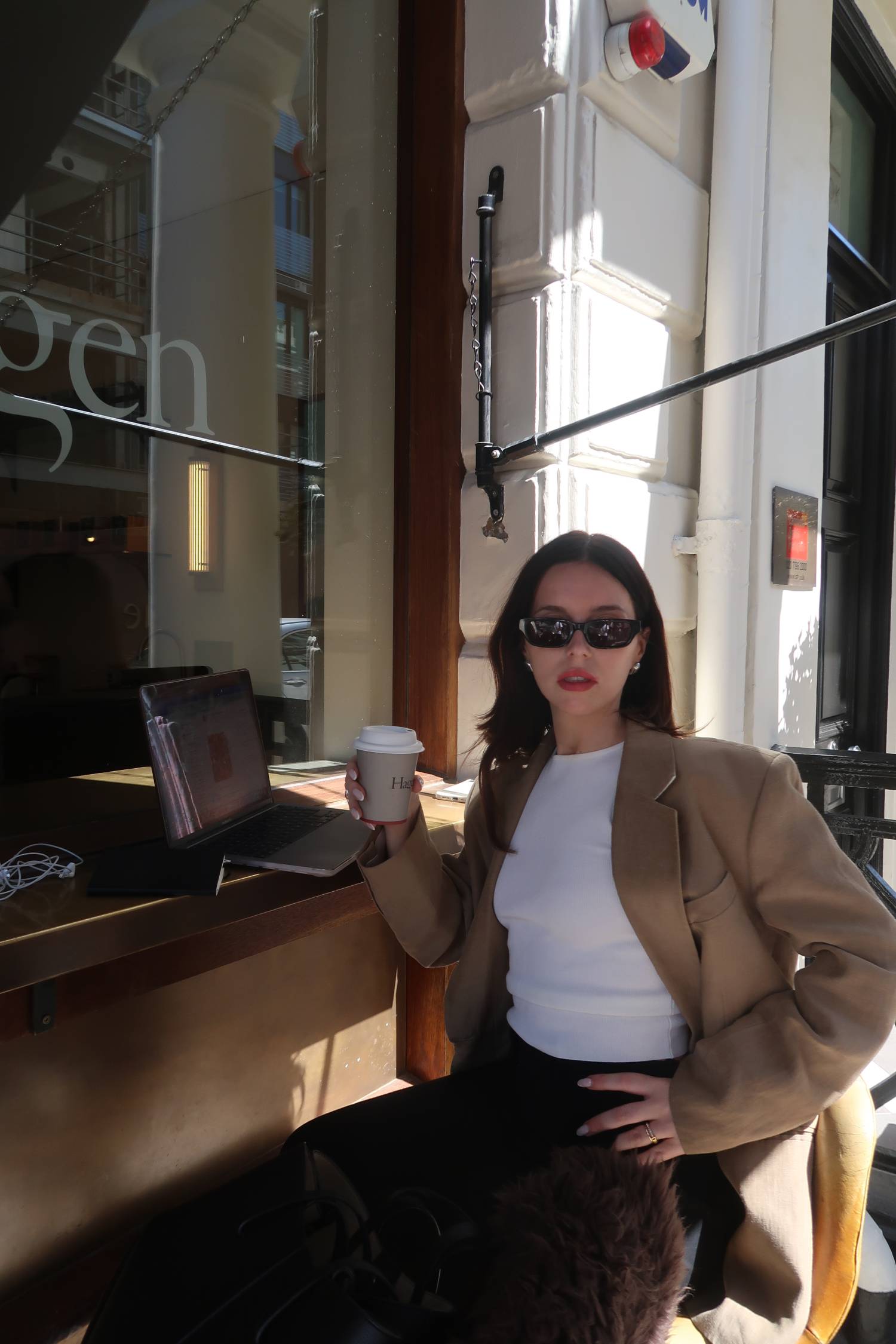
I’d found out she had a hole in her heart during a routine check. I had spent a year waiting for the operation. In the end, the waiting frightened me more than the surgery itself. We remained in hospital for a week. She played beside me while I worked from my laptop.
That is motherhood and entrepreneurship condensed into one image: something life-changing taking place while ordinary life continues around it. This wasn’t the first time I’d worked from a hospital for an extended period of time.
Emails still arrive. Decisions still need to be made. People still rely on you. There is rarely a cinematic pause in which everything becomes clear.
I started Method Management three months after my daughter was born. At the same time, I was caring for my father as he was dying from throat cancer. I worked beside him during his final days, trying to build something both he and I would be proud of.
I did not have the conventional background of a founder. I was working classed. My mother could not read or write until she was 40 and worked three jobs at once, a factory worker in a sandwich factory and cleaning, hardly glamorous. My father survived a serious accident on a building site and was told he might never walk again. He did. But osteoporosis and severe brittle bones destroyed his day to day life.

I struggled at school, left my A-levels and was later diagnosed with dyslexia and dyspraxia. At 21, I went to university to study drama. And a Masters shortly after.
There was no neat trajectory. No carefully plotted ascent.
I simply knew that I wanted to work in talent management. Actors at first, until I saw the digital industry start to unfold in front of me. This could be something I could do?
I wanted it so badly that, for a time, the distance between the life I had and the life I wanted became unbearable. I applied for every relevant job I could find and added almost everyone in the industry on LinkedIn, back when the pool was small enough for that to resemble a strategy rather than noise.
Eventually, someone took a chance on me. I spent the next few years proving that they had been right to do so.
Then I started my own agency.
Method Management is now five years old. It is profitable, deliberately boutique and built around the kind of work and life I actually want. I have raised two daughters while running it. I have moved my family to Portugal. I have represented people who trusted me with their careers and built relationships I am deeply proud of.
And yet, for a long time, I could not shake the feeling that the story was not impressive enough.
There is a particular image of entrepreneurship that is difficult to escape. It is the founder who scales quickly, raises capital, grows a large team, opens offices and exits for a life-changing sum. It is a story perfectly shaped for headlines, panels and conference stages.
I looked at those founders and began to suspect that I had built the wrong kind of success.
My business was good, but was it notable? I was proud of it, but would anyone else find it interesting? Could a small, profitable agency ever compete with a story involving seven figures, international expansion or explosive growth?
So I began trying to improve the story.
I hired a mentor. I paid for a retreat. I was (thankfully) rejected from a PR agency. I worked on my personal brand. Some of those decisions were useful. But beneath them sat a less comfortable motivation: I hoped that, with enough polish, I might transform my real life into a more impressive founder narrative.
The retreat was supposed to offer clarity.
Instead, it exposed the question I had been avoiding: what exactly was I trying to prove?
No amount of positioning could alter the facts. I had built my business through hospital rooms, bereavement, motherhood, uncertainty and ordinary working days. There had been no viral launch, dramatic investment round or miraculous overnight transformation.
There had been a laptop. Two daughters. A dying father. A miscarriage. An epilepsy diagnosis. Years of consistent work.
The more money I spent trying to fit a mould that had never belonged to me, the more obvious it became that the story would not change. I would simply end up with a better-branded version of the same true one.
Eventually, I became tired of trying to out-argue reality.
I coined myself the unsexy founder.
Not as an act of false modesty, and not because there is anything unimpressive about what I have built. I use it because my version of entrepreneurship does not translate easily into the language of spectacle.
I have not scaled at all costs. I have not built the largest agency possible. I have not sacrificed the shape of my life in order to create a more impressive set of numbers.
I built something smaller, more personal and more intentional.
That choice is not always celebrated because restraint makes a less compelling headline than relentless growth. A business designed to support a life can sound less ambitious than a life reorganised entirely around a business.
But I no longer believe that it is.
There is ambition in building something that lasts. There is ambition in remaining responsible for the people who trust you. There is ambition in choosing not to become bigger simply because the culture around you insists that bigger is always better.
Most founders are not living the stories we hear on stages. They are building quietly, making payroll, answering emails, caring for families, changing direction, surviving difficult years and continuing without an audience.

Their businesses may never become case studies. That does not make them less real.
Two weeks after my daughter’s surgery, I attended that retreat believing I needed a better story.
I understand now that I needed to stop apologising for the one I already had.
I made my dream come true. It simply happened in hospital rooms and ordinary working days rather than beneath a headline.
You do not need the sexiest founder story.
You need one that is true.
The Unsexy Founder
By Siobhan James