“The only difference is I’m now using objects instead of words to communicate.”
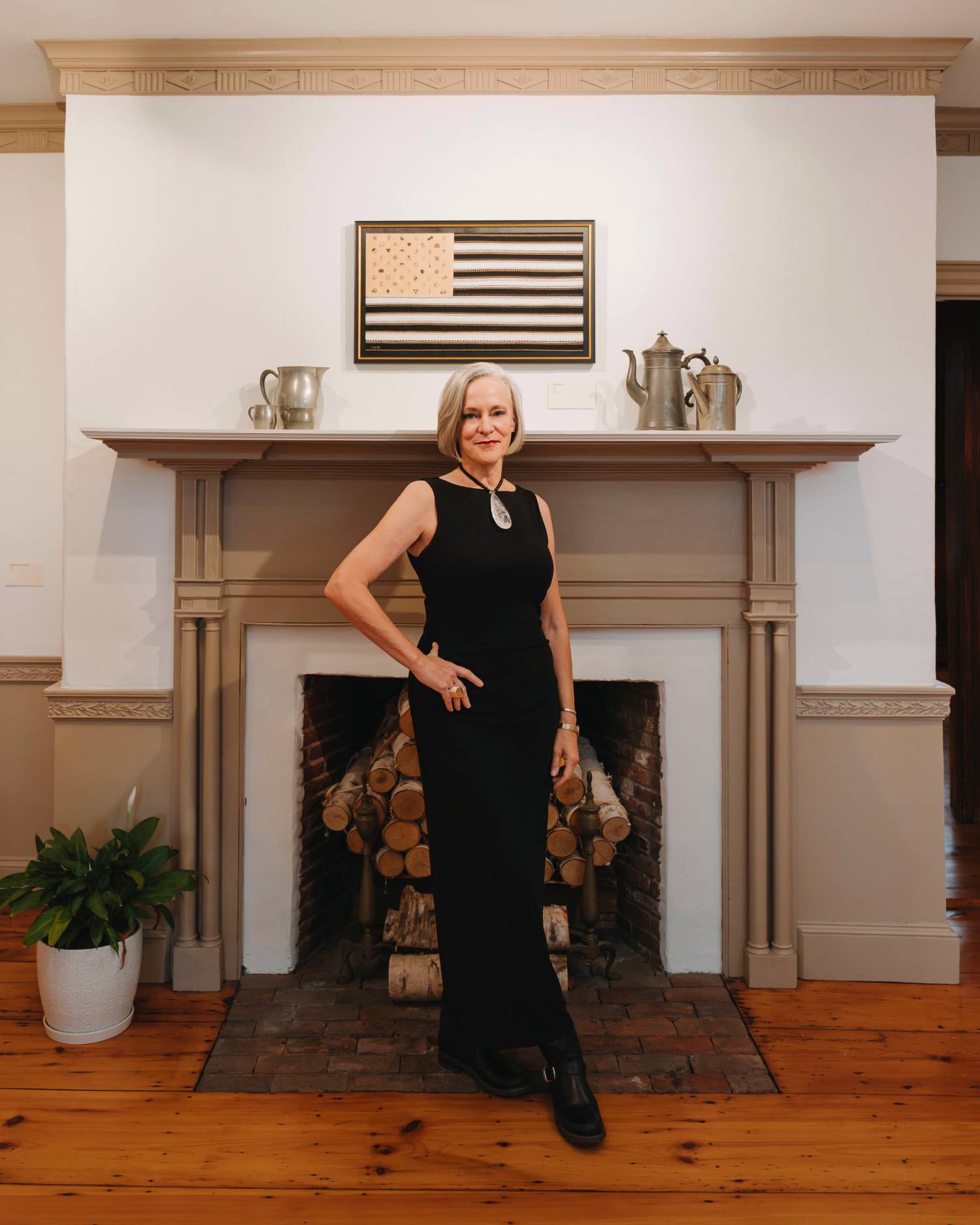
After a career as a professional speechwriter, Tracy Weisman found a new way to tell stories through visual art. In this conversation, she shares how storytelling continues to shape her creative practice, why vintage objects become part of her narratives, and how her work explores democracy, collective memory, discomfort, and empathy.
Before becoming a visual artist, you built a career as a professional speechwriter. What first drew you from crafting narratives through words to telling stories through materials and art instead?
I’ve always told stories ever since I was a child who imagined conversations between the stuffies and dolls on my bed. As a speechwriter, I encouraged my clients to embrace storytelling as a way to make ideas stick, and I do that today in my visual arts practice. The only difference is I’m now using objects instead of words to communicate.
You often describe your work as visual storytelling. Do you approach building an artwork the same way you once approached writing a speech, with a beginning, middle, and emotional resolution, or is the creative process entirely different?
Both creative processes certainly share a common goal: to communicate an idea clearly and compellingly by using stories and metaphor to create a lasting impression in an audience. But the way of arriving at that goal differs between the two disciplines.
In speechwriting, a client would present a specific objective and we’d work collaboratively to develop the support points which consisted of me asking a lot of questions to draw on the speaker’s personal experiences into the final product.
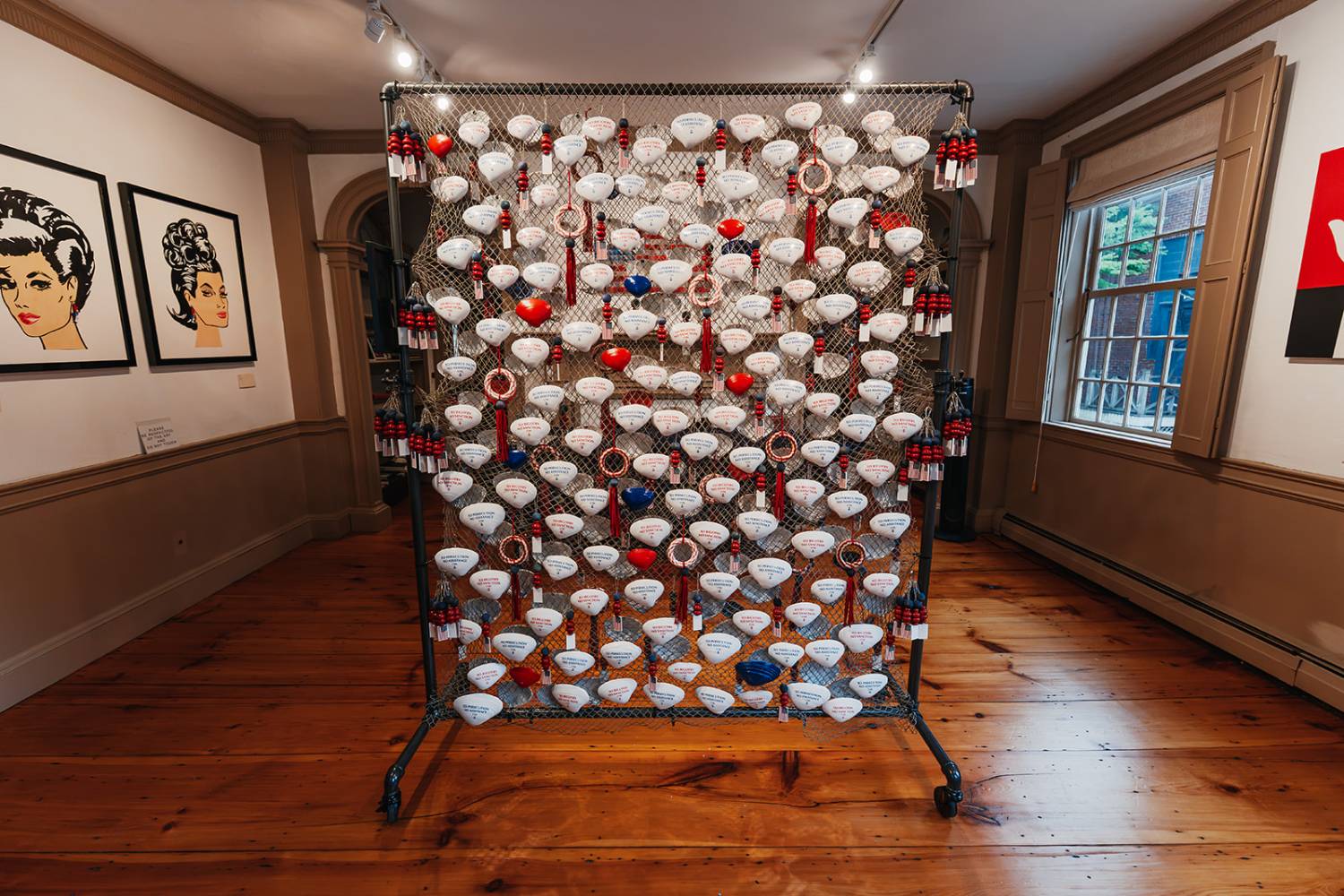
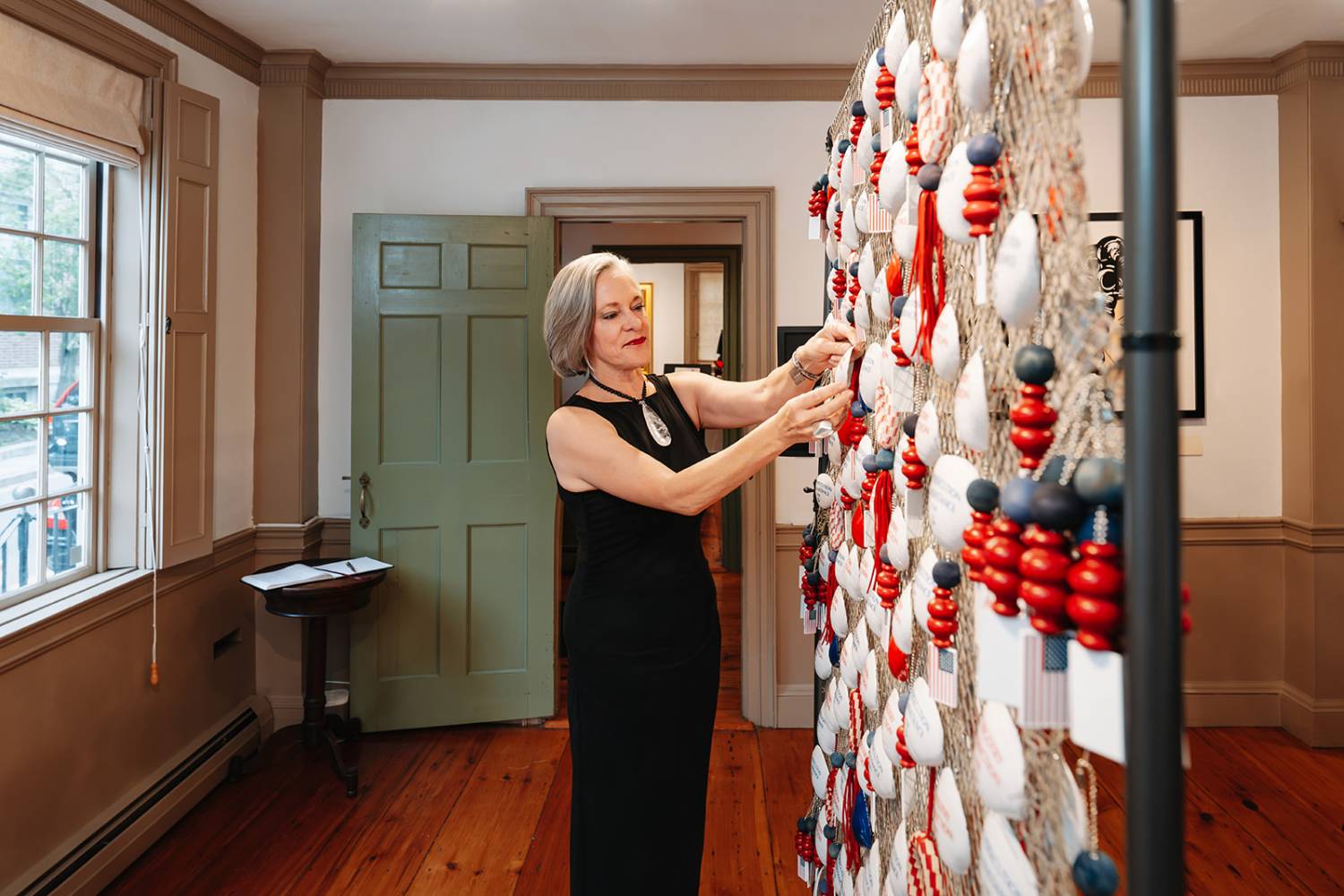
My visual artwork, however, evolves much more intuitively and is often driven by materials, particularly vintage objects, because I value their inherent stories. For example, I’ve been collecting 100-year-old French silk millinery flowers, vintage wooden rolling pins, and hundreds of quahog shells from my local beach. I may not initially have a specific use in mind for these materials, but I intuitively recognize their importance. At some point, my brain will draw a line or a connection between a material and a concept I want to explore and the piece develops from there.
What aspects of your background as a speech writer do you think carried through into your creative practice most and why?
The use of storytelling is the most important element. Humans are hardwired to learn from stories; after all, we’ve only had written communication for 5,500 years or so. Good stories employ metaphors to create lasting visual images and that principle drives my arts practice as well.
Speechwriting also requires concise editing and the elimination of elements that don’t directly serve the narrative. My creative practice functions the same way; you have to be willing to “kill your darlings,” as the saying goes in the writing world. If a piece just isn’t working in the studio, I have to be willing to alter or abandon it, no matter how much effort has gone into its creation. Fortunately that doesn’t happen very often!
How do you feel this has shaped how you ultimately approach creating a body of work or ideating on the theme or the ultimate selection of materials you choose to work with on a given piece.
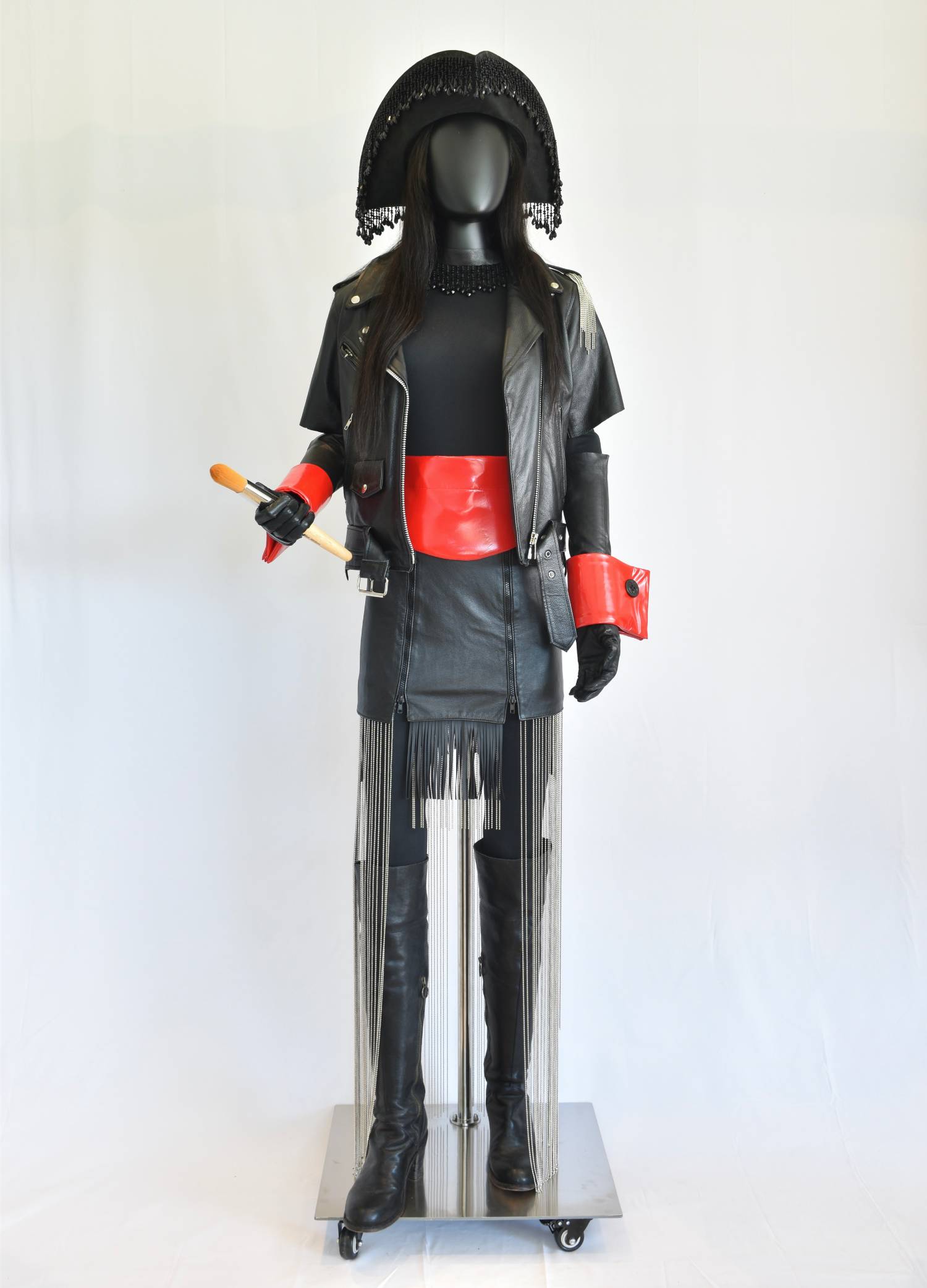
I’m not conscious of working this way, it’s just how I’m wired. Everything has to serve the story. For my recent show, Some Birthday, America, I ultimately chose 22 works; there were quite a few others that didn’t make the cut.
Is there a conversation you hope your work starts that words alone never could?
Yes. In this show, I wanted people to feel the idea that our democracy is in peril and that our history is being shaped every day by the decisions we make or do not make.
Having worked in both public communication and contemporary art, what have these two worlds taught you about how people construct and challenge shared myths and collective memory?
People are much more willing to construct than to challenge and collective memory is a subjective experience.
Which artists whether past or present have most influenced the way you think about art, storytelling, or materiality?
Artists who use familiar materials in unexpected ways have my heart. I deeply admire living artists like Nick Cave and El Anatsui who use upcycled materials to create narratives about race, gender and culture; Kara Walker’s 2023 sculpture Unmanned Drone that transformed a statue of Confederate General Stonewall Jackson took my breath away in the Monuments show at The Brick in LA. Past artists like the fearlessly experimental Louise Bourgeois also inspire me to be courageous in the studio.
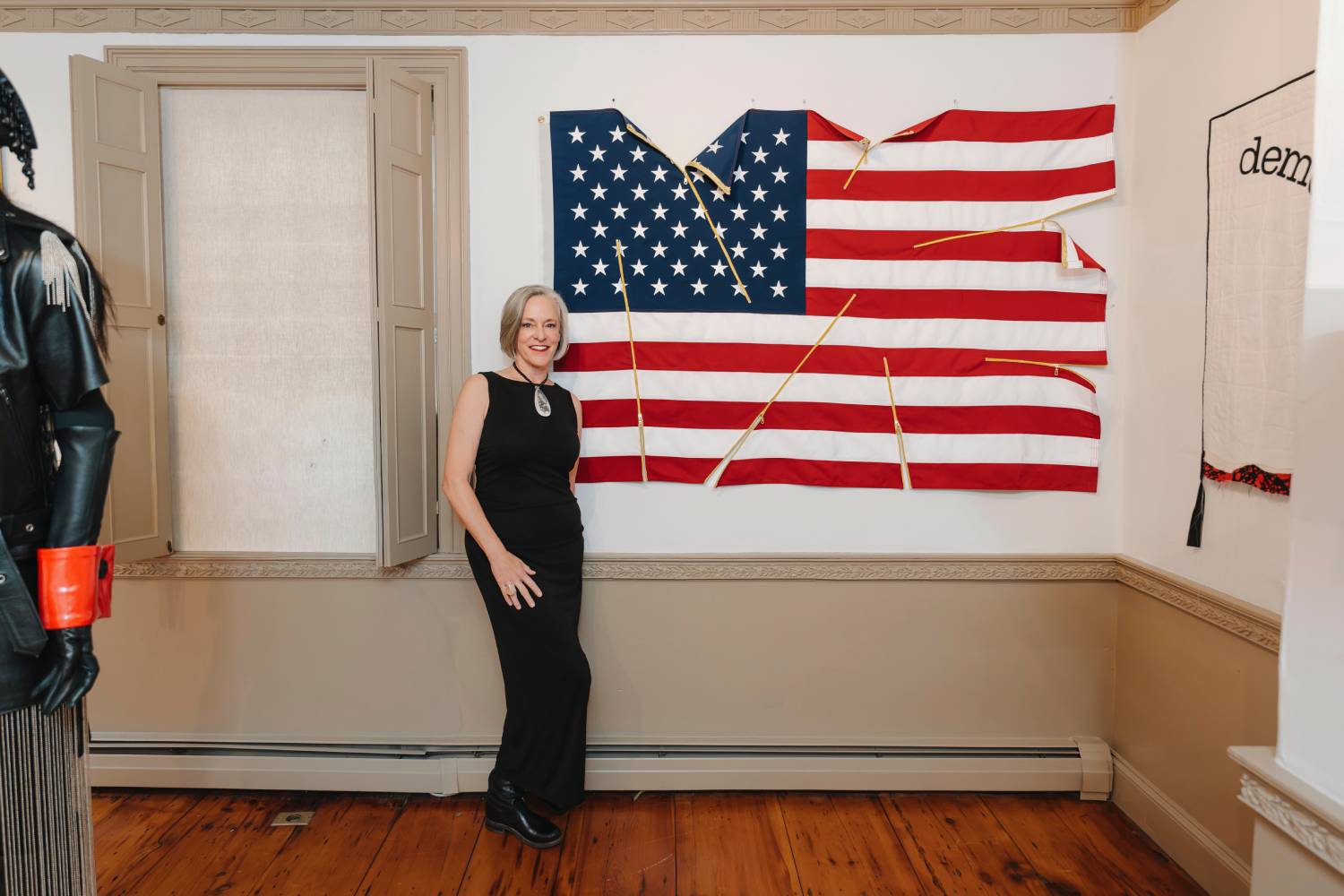
You describe your work as inviting viewers into discomfort, contradiction, and empathy. Do you see these as essential parts of meaningful dialogue? What role do ambiguity and open interpretation play in your work?
I understand why certainty can be comforting, but life is full of contradictions and murky gray areas. I believe art can play the role of gadfly, be a vehicle for challenging established norms and a place to sit with open-ended questions. The work in Some Birthday, America posits that our 250-year-old country is at a precarious crossroads and invites dialogue about how we move closer to the ideals upon which our democracy was founded.
In an era of constant information and polarized conversations, what role do you believe artists play in helping us process the world around us?
We live in a time where a tsunami of input has overcome the human brain’s ability to process. Artists are great condensers of information and have the ability to distill complex ideas in accessible ways. Many of us are also empaths and use that strength to sort, comfort and heal. Those skills are going to be more in demand as AI blurs the distinction between the real and unreal.
Has there ever been a particular artwork or project that you feel has challenged you in an unexpected way, whether technically, emotionally, or conceptually and what did you learn from that experience?
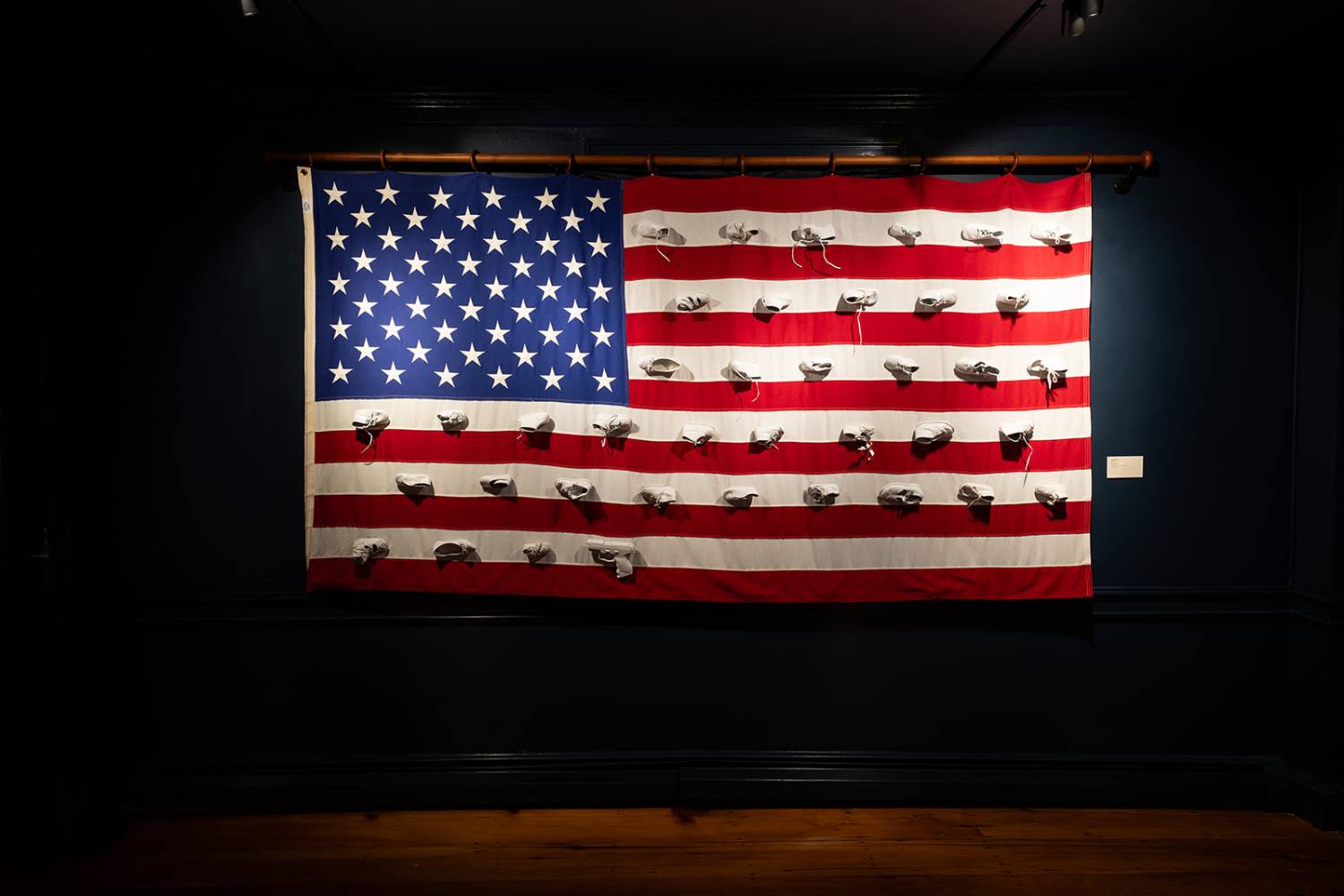
In this show, the gun violence piece Enough! was a heavy lift both technically and emotionally. Hanging baby shoes from a textile flag required a lot of trial and error and I walked away from it in frustration quite a few times before I finally hacked it.
Emotionally, it meant confronting the agonizing reality that our failure to stem gun violence in America is traumatizing our people, starting with our very youngest, precious children. It’s unconscionable. The main takeaway is that Enough! has drawn the attention of people working to combat this unconscionable epidemic; putting the piece to work supporting those efforts would be its highest and best use.
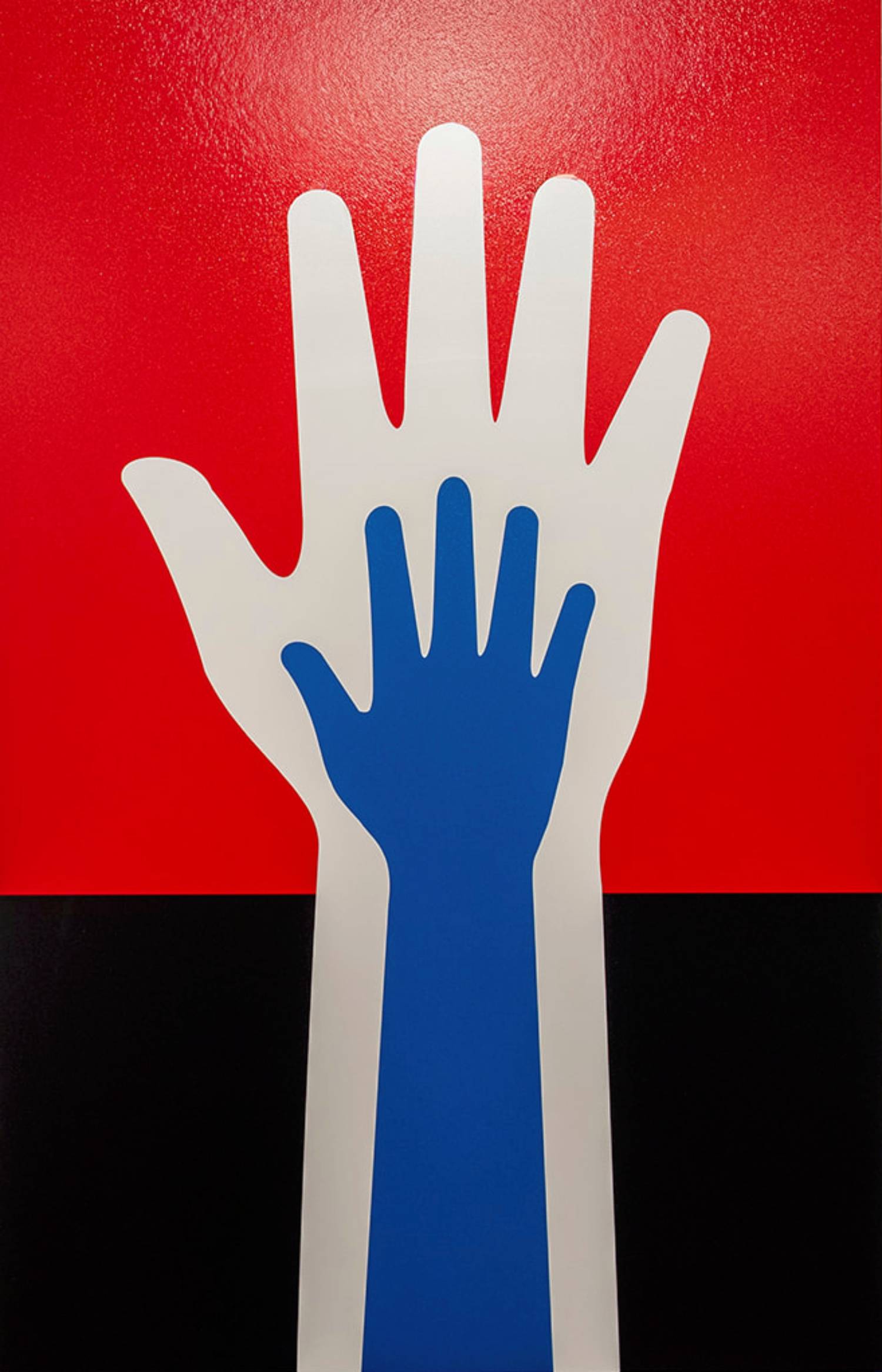
What would you say you consider to be your most significant artwork to date if any and why?
My piece entitled Some Birthday, America which also inspired the name of the show. The work carries enormous emotional weight with just two materials. This American flag cut open and reassembled with gold zippers is about as succinct a metaphor as I can conjure.