What happens when classical antiquity, Amsterdam architecture and modern luxury meet in the hands of three sisters? For Opus Emiliano, the answer is a handbag designed to become more than an accessory.
In a fashion landscape increasingly shaped by seasonal collections and rapidly changing trends, Amsterdam-based luxury handbag house Opus Emiliano is taking a different approach.
Founded by sisters Angelique, Gloria and Elisabeth, Opus Emiliano draws on classical antiquity, architecture, mythology and the Dutch cultural landscape to create handbags that feel considered rather than conventional. The house approaches each design as an object with its own visual language, history and sense of permanence.
Its philosophy is captured in the Latin phrase Fata Viam Invenient: fate will find a way.
For the sisters, the phrase reflects more than the aesthetic foundations of the brand. It speaks to the idea of creating something with intention and allowing it to develop its own history over time.
Instagram @opus.emiliano
A House Built on Sisterhood
Opus Emiliano began with a shared vision between three sisters raised in Amsterdam.
Their shared background in classical Latin, combined with an enduring interest in architecture, art and history, became an unexpected foundation for a contemporary fashion label.
Rather than treating these references as historical decoration, the sisters reinterpret them through modern silhouettes, materials, colour and craftsmanship.
The result is a handbag collection that looks backwards and forwards at the same time.
Classical architectural forms become sculptural proportions. Roman symbolism becomes a contemporary motif. References to the Dutch Golden Age enter a visual world that remains distinctly modern.
The intention is not to reproduce the past, but to give its visual language a new context.
When a Handbag Becomes an Object
The debut collection currently centres around two distinctive designs: the Aemilianus Mini and Caesarea Gold.
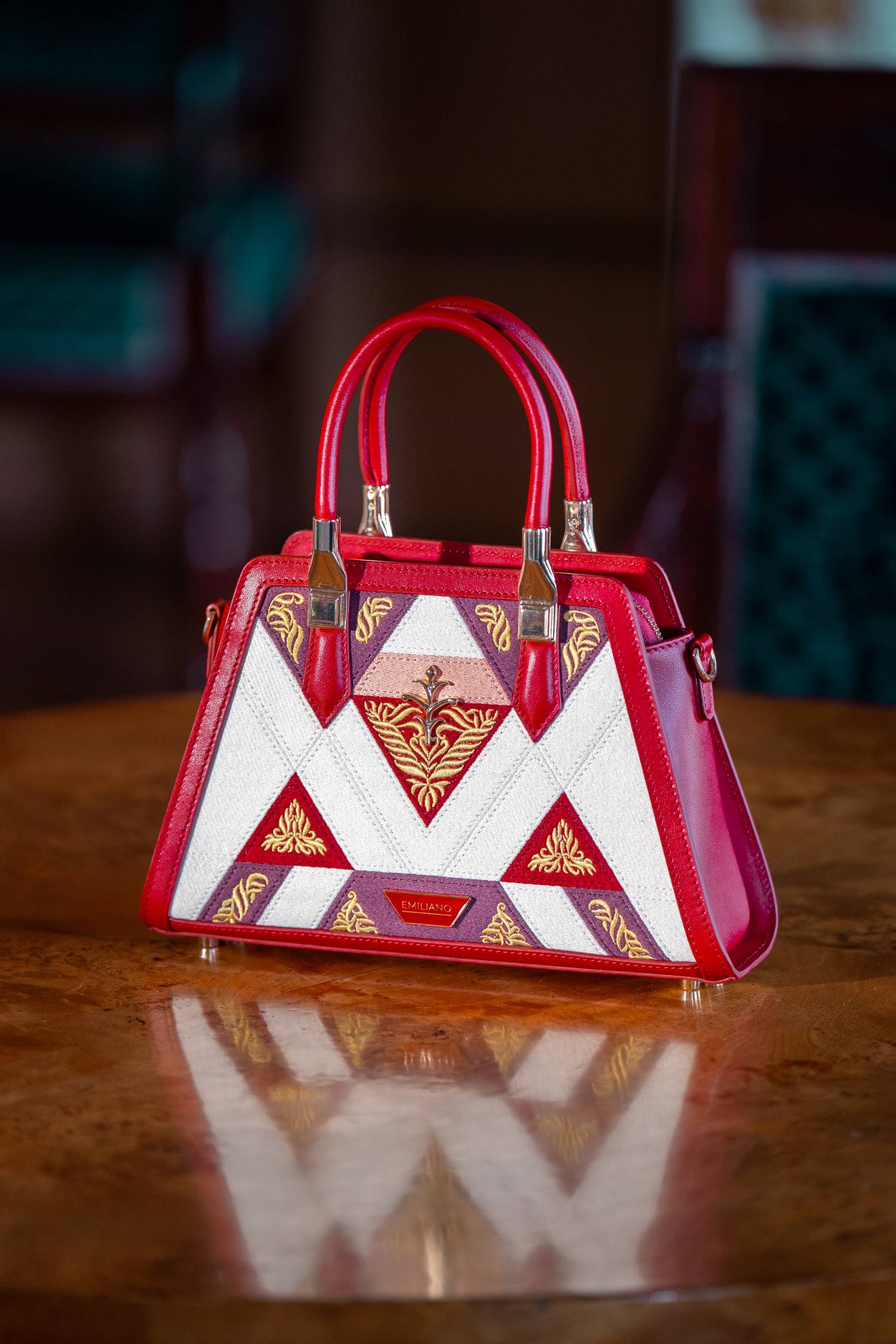
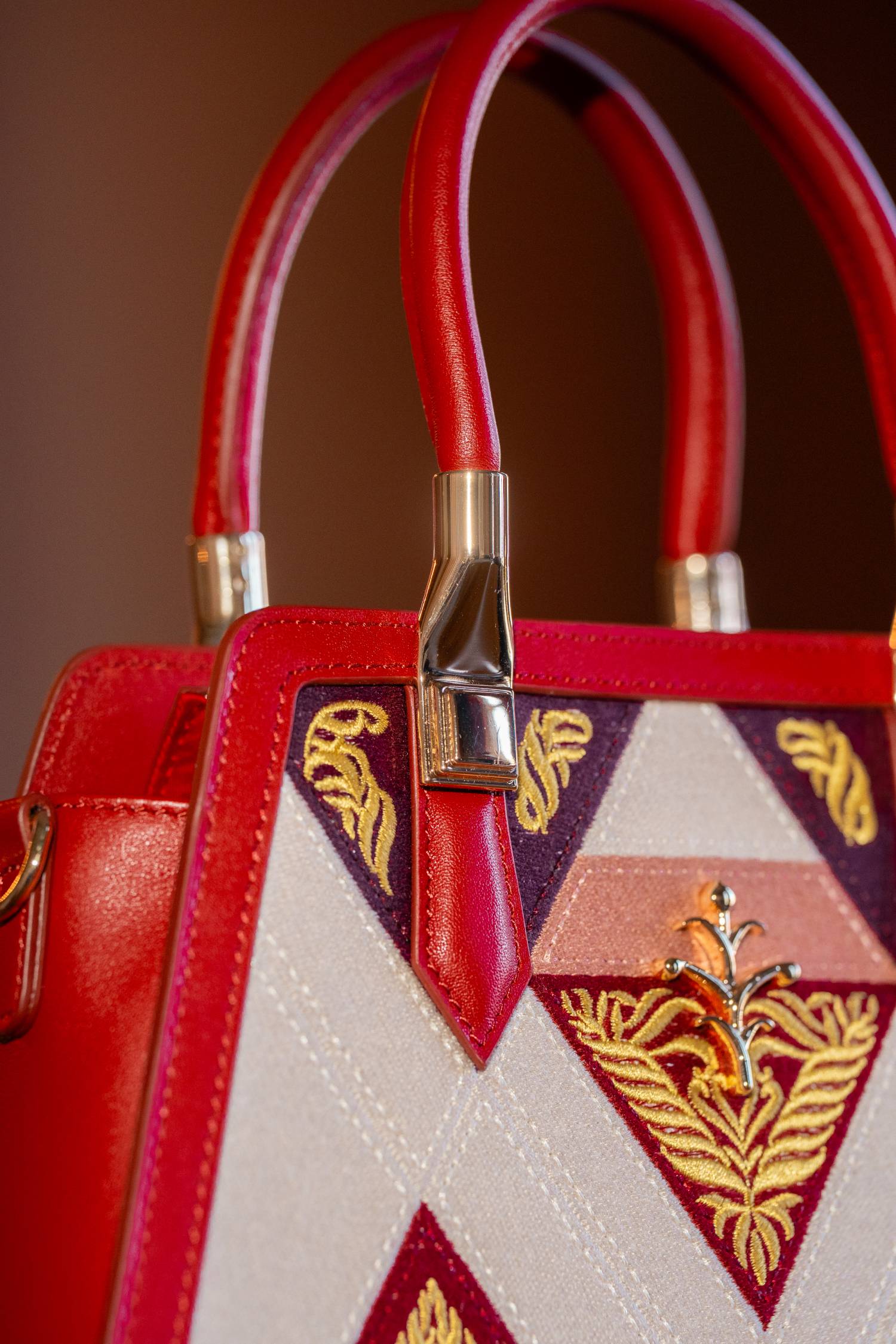
The Aemilianus Mini is the more dramatic of the two. Its trapeze silhouette and geometric patterning draw inspiration from ancient Roman architecture, while rich red tones and intricate embroidered details give the design a distinctly contemporary presence.
Named after the Aemilia gens, one of ancient Rome’s distinguished family lines, the Aemilianus is intended to feel expressive without depending on seasonal trends.
Caesarea Gold takes a different approach.
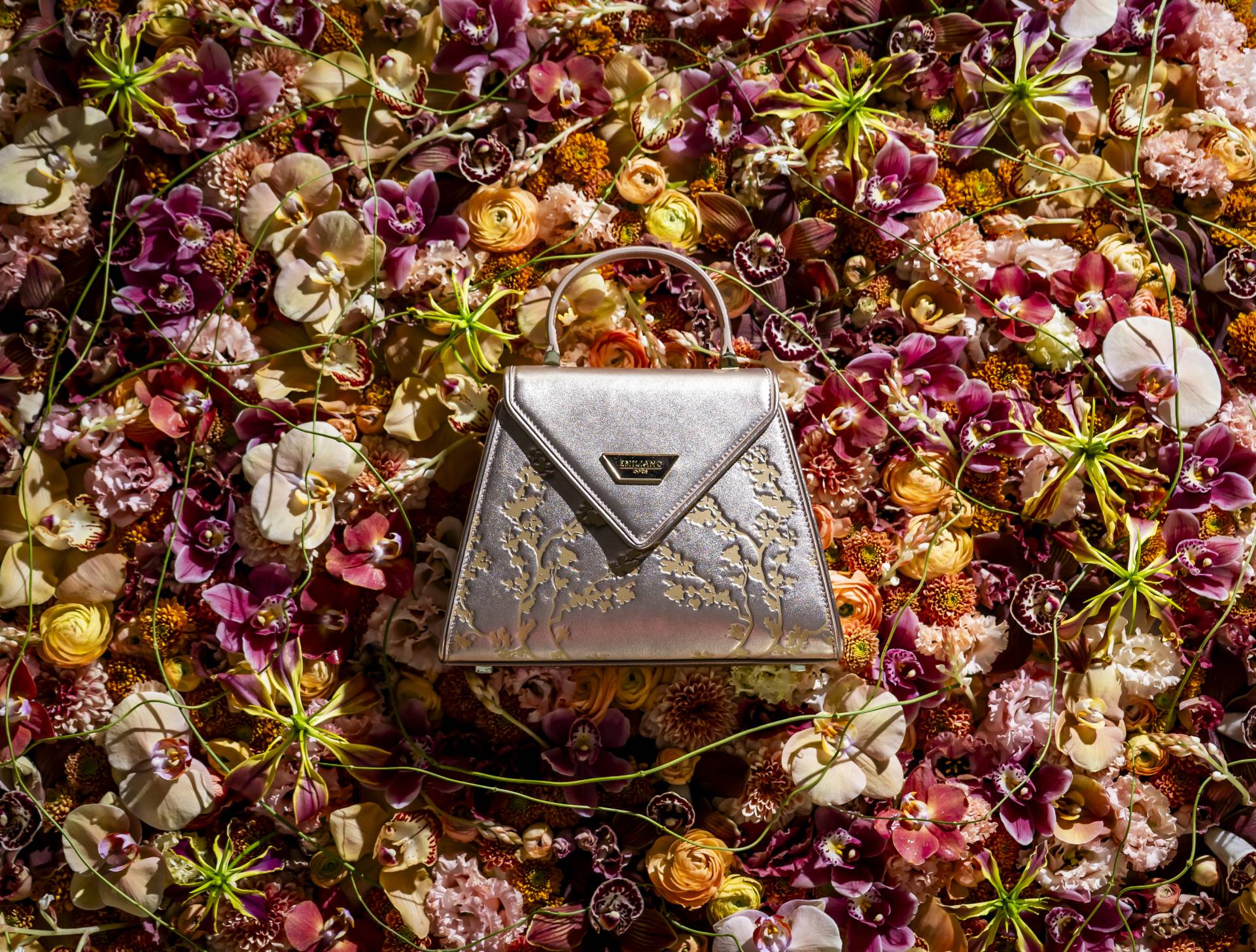
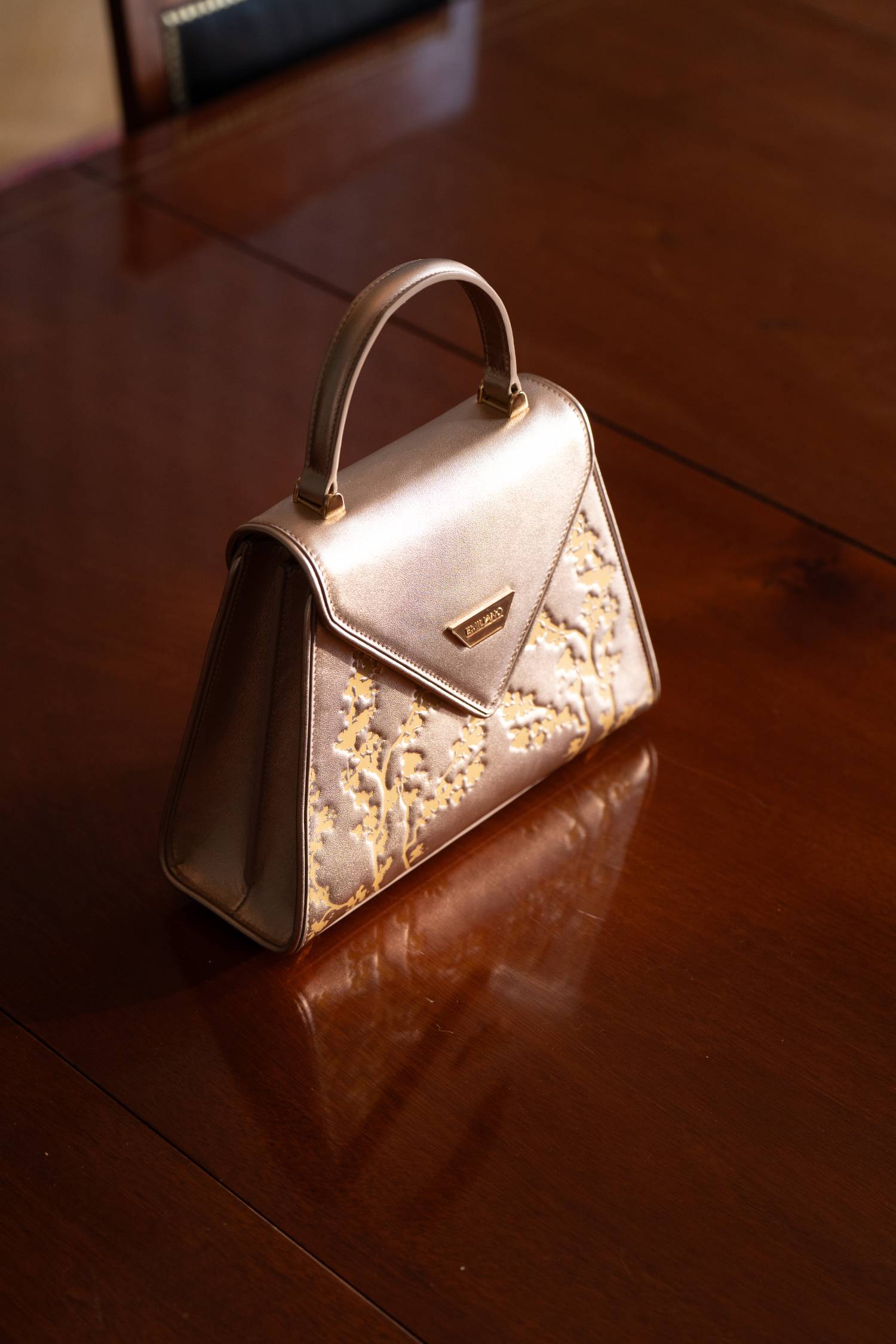
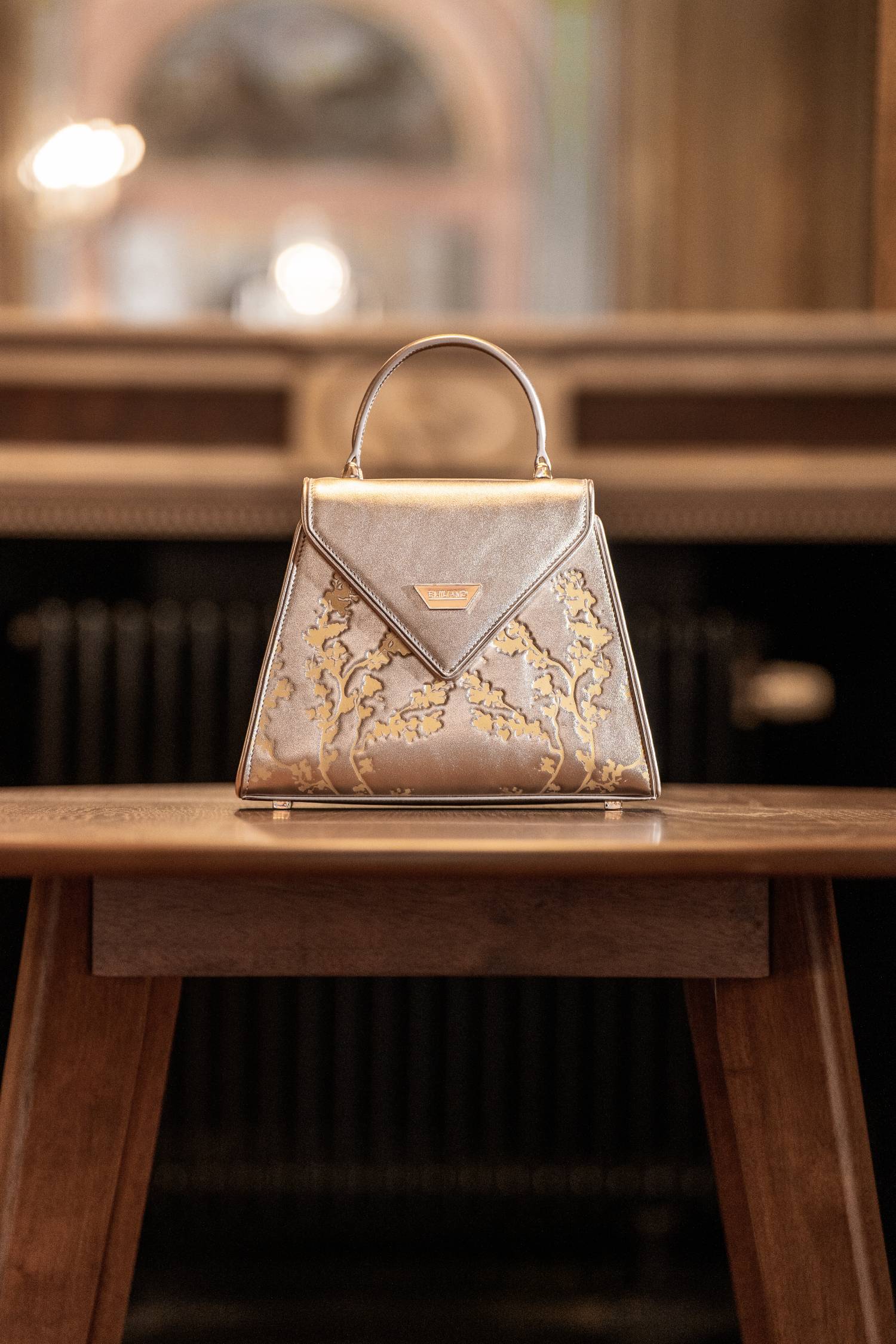
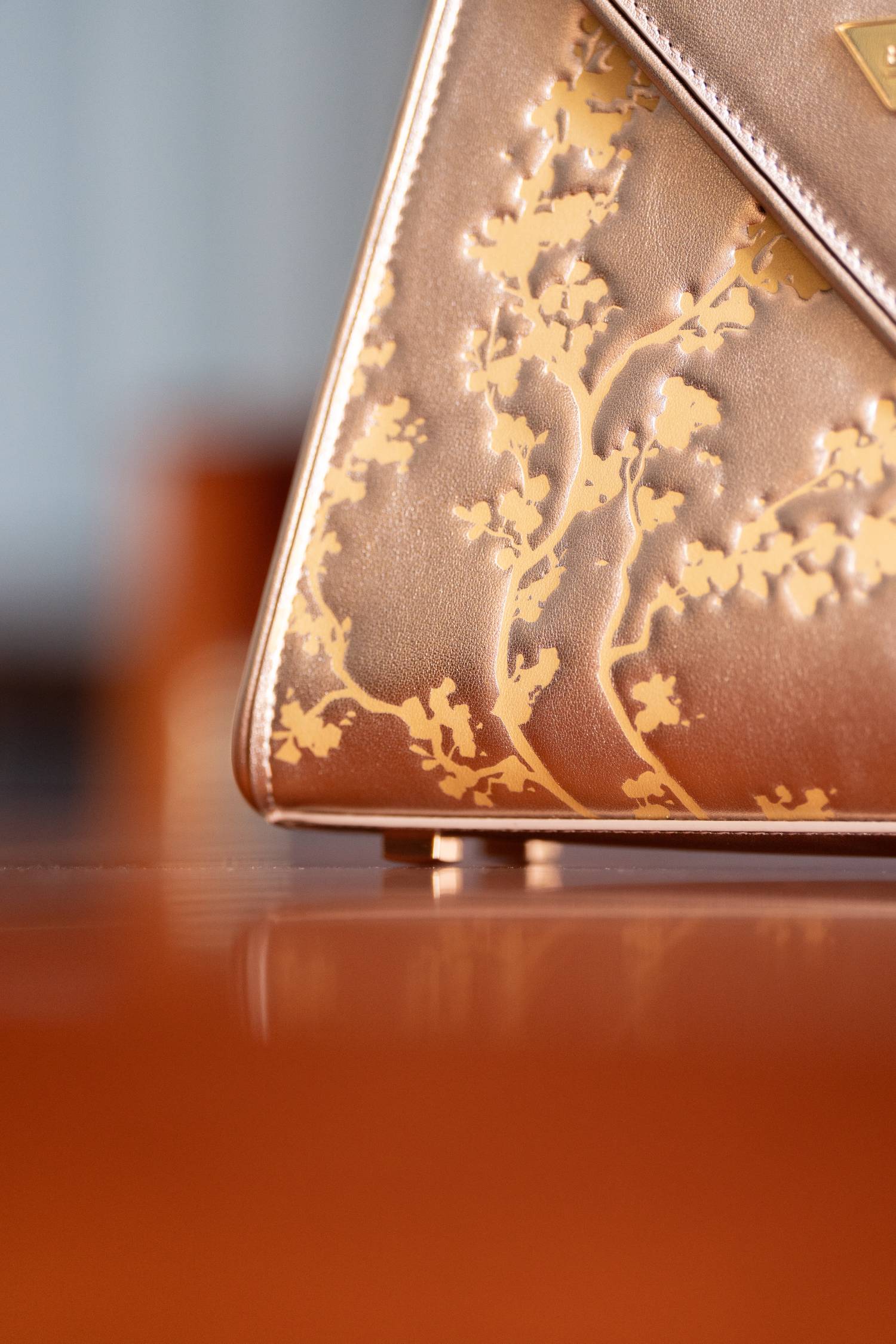
With its reflective metallic finish, sculptural trapeze silhouette, imperial wreath details and embossed crown motif, the design sits somewhere between handbag and jewellery. Its warm gold surface is intended to catch and reflect light, making the object itself part of the visual experience.
The two designs are deliberately distinctive. Rather than producing a large number of styles from the outset, Opus Emiliano is taking its time to establish the visual language of the house.
Beyond Seasonal Luxury
The philosophy behind Opus Emiliano is perhaps best understood through its approach to time.
The house does not position its handbags around a particular season or fleeting trend. Instead, its ambition is to build a collection of enduring objects that can accumulate meaning through the people, places and memories associated with them.
This is why the current collection is intentionally focused.
The Aemilianus Mini and Caesarea Gold represent the first chapter of a broader house that will continue to explore mythology, Renaissance influences, architecture, art and the human instinct to create.
For Opus Emiliano, luxury is therefore not simply about recognition or visibility. It is about the relationship between an object and the person who chooses to keep it.
A handbag can be beautifully made. It can be visually striking. But when its design carries a story, its production is deliberately considered and its presence is intended to endure, it can become something more personal.
Something that acquires memories.
Something that eventually acquires a history of its own.
That is the space Opus Emiliano is interested in occupying: between fashion and art, between antiquity and modernity, and between an object as it is created and the story it develops once it belongs to someone.
For these three sisters, the handbag is only the beginning.